
Hormuz Disruption Extends XLPE Cable Transit
On March 16, 2026, the sharp collapse in actual traffic through the Strait of Hormuz and the suspension of sailings by major carriers signaled more than a transport disruption for the market. For XLPE submarine cable shipments, the longer rerouting cycle on Asia-Europe services points to a practical change in delivery conditions, contract execution assumptions, and procurement risk management. This matters most for project owners, cable manufacturers, logistics providers, EPC teams, and buyers handling offshore wind delivery schedules, because the issue is not only delay, but also how shipping constraints interact with oversized cargo handling, temperature control, and non-splittable transport requirements.
What has been confirmed in this shipping disruption
The reported event date is March 16, 2026. According to the provided information, escalation in the Middle East conflict caused actual traffic through the Strait of Hormuz to fall by 94%.
The same information states that major carriers including Maersk and MSC suspended sailings, while rerouting around the Cape of Good Hope extended average Asia-Europe transit times by about 10 to 14 days.
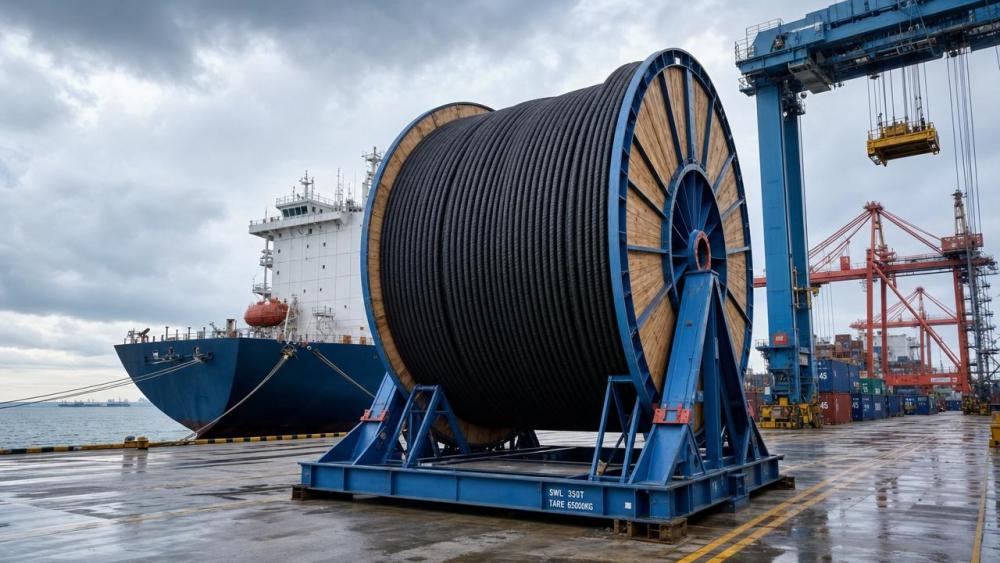
For XLPE submarine cables, the disruption is described as more severe than for ordinary equipment because single cable lengths are overweight, require strict temperature control, and cannot be split into separate shipments. The provided summary also states that offshore wind projects in Europe have already seen delivery warnings.
Where the pressure may emerge across the delivery chain
Project procurement is exposed to timing and specification risk
From an industry perspective, buyers and project procurement teams may be affected first because offshore delivery plans often depend on tightly sequenced transport windows. When ocean transit becomes longer and less predictable, procurement work is no longer limited to price and technical conformity; it must also re-check whether delivery commitments, shipping assumptions, and cargo handling requirements remain aligned with contract terms and project schedules.
What deserves closer attention is the documentation side of procurement. Teams may need to review shipping clauses, delivery milestones, packing limitations, and technical bid language tied to transport conditions, especially for cargo that cannot be split or substituted easily.
Manufacturers face greater pressure at the shipment interface
For cable manufacturers and processing facilities, the main issue is not simply longer voyage time. Analysis shows that XLPE submarine cable logistics are more sensitive because overweight single reels, strict temperature requirements, and indivisible shipment conditions reduce flexibility once a sailing plan changes.
In practice, this may affect dispatch readiness, handover timing, transport packaging control, and coordination of technical documents that accompany shipment. Manufacturers should pay close attention to whether customer acceptance files, transport condition records, and shipment release procedures remain consistent with revised delivery arrangements.
Logistics and forwarding parties may need tighter compliance checks
Supply chain service providers, freight coordinators, and heavy-lift logistics teams may see the strongest operational pressure in route planning and execution control. Observably, once major carriers suspend sailings and rerouting becomes necessary, the compliance focus shifts toward whether transport plans still satisfy cargo restrictions, handling conditions, and agreed delivery obligations.
This means the operational burden may move to booking feasibility, route confirmation, cargo condition management, and shipment documentation accuracy. For specialized cargo such as XLPE submarine cable, any mismatch between transport capability and cargo requirements can create downstream delivery disputes more quickly than with standard equipment.
What companies should review now
Re-check delivery assumptions in contracts and tenders
Analysis shows that companies involved in active tenders, purchase orders, or framework deliveries should revisit lead-time assumptions and shipment language in commercial and technical documents. Where the original planning relied on ordinary Asia-Europe transit conditions, the current disruption may require closer review of schedule buffers, delivery triggers, and responsibilities for route changes.
Examine transport-related compliance records
For XLPE submarine cable shipments, it is more appropriate to understand compliance not only as product conformity but also as shipment-condition conformity. Companies should therefore pay attention to whether transport records, handling instructions, temperature-related controls, and cargo-specific technical files remain complete and internally consistent if routing or timing changes.
Watch for revised execution language from counterparties
Because the provided information does not include detailed regulatory instructions or formal enforcement wording, companies should avoid treating the current event as a fully settled rule framework. What deserves closer attention is whether customers, carriers, contractors, or project parties begin to revise execution language in notices, bid documents, delivery schedules, or acceptance requirements.
Prioritize high-risk cargo and milestone-dependent orders
Observably, not all cargo will carry the same exposure. Firms handling oversized, temperature-sensitive, non-divisible equipment should monitor those orders first, especially where downstream installation or project milestones depend on narrow delivery windows. In such cases, procurement planning, shipment sequencing, and supplier coordination may need earlier intervention than for standard industrial goods.
Why this looks more like an execution signal than a settled rule change
Analysis shows that the immediate importance of this development lies in execution conditions rather than in a newly published formal regulation. The confirmed facts point to a real change in transport availability and transit duration, and that change can function as a market-wide compliance and delivery signal for specialized cargo.
At the same time, it is more appropriate to understand this as a developing operational and trade-rule environment that still requires observation. The provided information confirms disruption, rerouting, and delivery warnings, but it does not establish a full set of new mandatory requirements. Industry participants therefore need to keep watching how contract practice, shipping acceptance conditions, and project documentation standards respond.
How the market should read this stage
The practical significance of this event is that a shipping disruption has begun to alter the execution baseline for XLPE submarine cable deliveries. For the industry, the most relevant issue is not only the extra 12 days of transport extension reflected in the title, but the wider effect on scheduling reliability, cargo-condition control, and document-backed delivery performance.
A neutral reading is that this is already an active operational change, but not yet a fully defined and closed rule outcome. Companies should therefore treat it as a live delivery and compliance signal that requires immediate review of high-risk shipments, while continuing to verify how counterparties and market practice translate the disruption into specific execution requirements.
Basis of this article and points that still need verification
This article is generated from the user-provided news title, event date, and event summary. For events of this kind, relevant source categories typically include official notices, regulator releases, customs or trade authority information, industry association updates, standard-setting documents, and reporting by authoritative media.
No specific official source link was provided in the input, so the underlying details still require continued verification. Observably, the market should continue to watch for any further policy detail, certification interpretation, execution language, tender document revisions, industry feedback, and enterprise-level implementation changes that may follow this disruption.
Related News
- EU Requires EN 50682:2026 for Imported XLPE Submarine CablesJul 27, 2026Transmission Materials Fellow
- Red Sea Disruption Extends XLPE Cable Lead TimesJul 15, 2026Transmission Materials Fellow
- EVN Tender Signals New Bar for XLPE Subsea Cable SupplyJul 12, 2026Transmission Materials Fellow
- Copper Spike and Freight Surcharges Extend XLPE Cable Lead TimesJul 10, 2026Transmission Materials Fellow