
Red Sea Disruption Extends XLPE Cable Lead Times
On July 14, 2026, updated shipping notices from Maersk and Hapag-Lloyd signaled a concrete operating-rule change for the transport of XLPE submarine cables and other oversized, overweight project cargo: mainstream carriers have suspended Suez Canal routing for these shipments because the Red Sea remains a high-risk corridor. For suppliers, project developers, procurement teams, and logistics providers serving Middle East and European delivery programs, this matters because transit planning is no longer a routine scheduling issue; it is now affecting delivery windows, port-cost exposure, and the execution logic of cable installation projects.
What the shipping notices have already changed
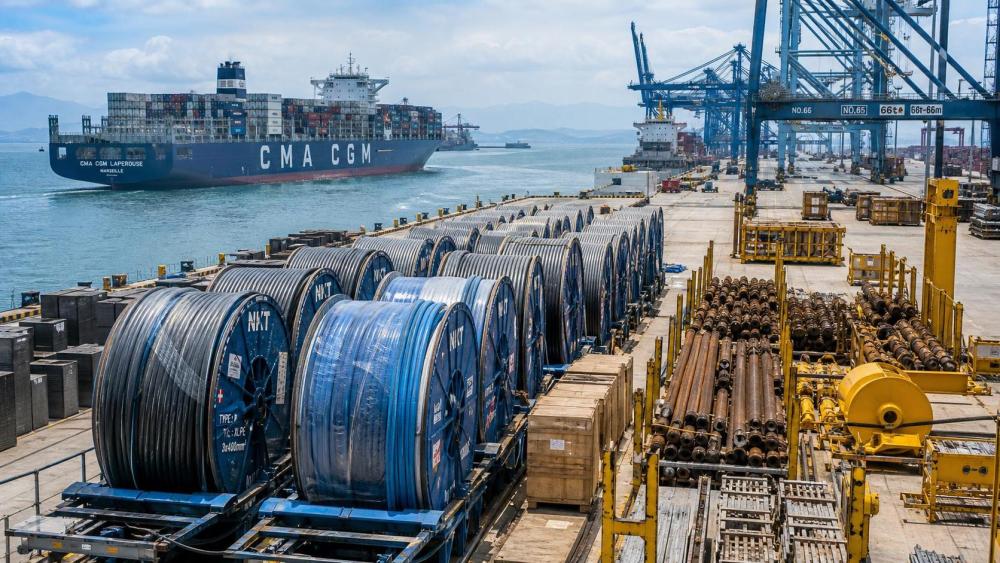
According to the July 14, 2026 notices cited in the event summary, mainstream shipping lines have fully suspended transport of XLPE submarine cables and similar super-long, super-heavy special cargo via the Suez Canal. The alternative routing around the Cape of Good Hope has added 11 to 14 days to the voyage. At the same time, storage charges at the Port of Rotterdam have increased by 35%.
Based on the same summary, the average delivery cycle for XLPE submarine cables shipped from major Chinese ports such as Ningbo and Shanghai to customers in the Middle East and Europe has now risen to 18 to 22 weeks. The summary also states that multiple wind power developers have already activated backup plans combining land transport and phased installation.
Where the pressure is now appearing across the chain
Export delivery programs are facing a different transport-control baseline
From an industry perspective, exporters and cable manufacturers are likely to feel the impact first because the carrier-side routing restriction changes the practical delivery baseline for oversized marine cable shipments. The main effect is not only a longer sea leg, but also a need to recheck delivery commitments, shipment sequencing, and cargo readiness against the new transport conditions. What deserves closer attention is whether existing shipping documents, transport plans, and customer delivery schedules still align with the revised route and lead-time assumptions.
Project procurement teams may need to reassess scheduling and package interfaces
Procurement-side exposure is likely to increase where project schedules were built around earlier marine transit assumptions. The reported extension to 18 to 22 weeks may affect ordering windows, milestone planning, and coordination between cable supply and installation activities. Analysis shows that buyers will need to pay closer attention to tender wording, delivery clauses, and any technical or commercial documents that depend on fixed shipment timing, especially where phased installation or alternative inland transport is being considered.
Logistics and project execution providers are drawn into compliance-sensitive planning
Supply-chain service providers, including project logistics teams and installation coordinators, may be affected because the routing change is tied to carrier operating restrictions rather than a simple market-rate fluctuation. In practice, this can shift attention toward cargo handling arrangements, port dwell risk, route-specific documentation, and coordination across segmented delivery plans. Observably, any move toward backup land transport or split installation requires closer review of interface documents and execution responsibilities, even where the underlying product specification remains unchanged.
What companies should monitor in the near term
Check whether contract and tender assumptions still match transport reality
Analysis shows that one immediate priority is to compare existing contract milestones, bid commitments, and delivery terms against the current 18 to 22 week transport cycle stated in the summary. Where documents were prepared under shorter routing assumptions, companies should pay attention to whether shipment timing, handover points, or installation sequencing need clarification.
Review documentation tied to special-cargo movement
Because the change concerns XLPE submarine cables and other oversized, overweight project cargo, companies should focus on whether transport-related documentation remains consistent with the revised route and handling conditions. This is more appropriate to understand as a documentation-control issue as well as a logistics issue, particularly for cargo plans, technical shipment descriptions, and project execution files used across supplier, carrier, and customer interfaces.
Watch for changes in customer execution requirements
The summary notes that multiple wind power developers have activated backup land transport and phased installation plans. That does not by itself establish a uniform market standard, but it does indicate that customer-side execution requirements may become more flexible or more fragmented. What deserves closer attention is whether future procurement documents, delivery notices, or project instructions begin to reflect that shift more explicitly.
Track cost exposure linked to delay and port handling
Observably, the reported 35% increase in Rotterdam storage charges adds another operational variable beyond sailing time. Companies involved in export planning, customer delivery, and after-sales coordination should therefore monitor how dwell time, cargo release timing, and staging arrangements could affect overall execution, even where no new formal regulatory text has been issued.
Why this reads as an execution signal, not just a shipping update
Analysis shows that this development is better understood as an execution-level rule change in transport practice rather than a routine freight-market fluctuation. The core signal is that mainstream carriers have changed what routes are available for this cargo class under current Red Sea risk conditions. That makes the development relevant not only to shipping teams, but also to contract managers, project planners, and procurement functions whose delivery assumptions depend on route availability.
At the same time, it is more appropriate to understand this as a live operating signal rather than a fully settled long-term framework. The event summary confirms route suspension, longer voyage time, higher storage charges, and the activation of contingency plans by some developers. It does not, however, establish a final industry-wide execution model beyond those confirmed points, so further market feedback and document-level changes still need to be watched carefully.
How the market is most reasonably reading it now
At this stage, the event points to a real and already felt tightening in delivery conditions for XLPE submarine cable projects linked to Middle East and European destinations. The practical significance lies in the shift from nominal shipping availability to constrained routing, longer lead times, and higher exposure to intermediate handling costs. A neutral reading is that the market should treat this as an active delivery and trade-execution change, while avoiding assumptions about broader outcomes that have not yet been confirmed.
Basis of this article and what still needs verification
This article is generated from the user-provided news title, event date, and event summary. For events of this kind, relevant source categories typically include carrier notices, official announcements, regulator publications, customs or trade authority information, industry association updates, standard-setting documents, and reporting by authoritative media. A specific official source link was not provided in the input, so the underlying notices and any follow-on official wording still require ongoing verification. Further observation is also needed on later execution guidance, documentation requirements, tender-language changes, customer feedback, and how companies implement contingency delivery arrangements in practice.
Related News
- National Grid to Invest Up to £400 Million in Extending IFA Link to 2050Oct 30, 2026Transmission Materials Fellow
- Is Submarine Cable Repair More Expensive per Kilometer Than Overhead Line Repair?Sep 10, 2026Transmission Materials Fellow
- Which maintenance practices support offshore cable failure prevention?Oct 18, 2026Transmission Materials Fellow
- EU Requires EN 50684:2026 for XLPE Subsea CablesAug 02, 2026Transmission Materials Fellow