
EVN Tender Signals New Bar for XLPE Subsea Cable Supply
On July 11, 2026, Vietnam Electricity (EVN) issued an emergency tender notice for import-substitution procurement of XLPE submarine cables tied to three offshore wind power export projects scheduled to start in the third quarter. With a budget above USD 120 million and explicit requirements around IEC 62271-208:2026 certification, local agency authorization in Vietnam, and 24 months of on-site technical support, this development is worth close attention from subsea cable manufacturers, project procurement teams, local service partners, and supply-chain operators watching how qualification and service obligations are being built into upcoming power infrastructure purchases.
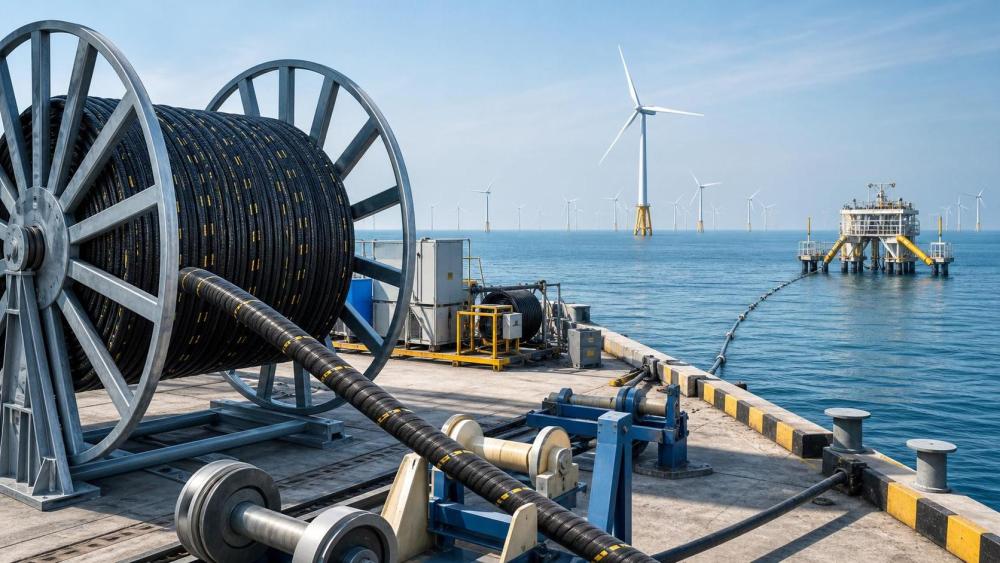
What EVN Has Formally Put Into the Tender
According to the provided event summary, EVN released the emergency tender announcement on July 11, 2026 under Ref: EVN/TP/2026/0711. The tender concerns import-substitution procurement of XLPE submarine cables for three offshore wind transmission projects, with launch targeted for the third quarter of 2026.
The stated budget exceeds USD 120 million. The tender also makes product qualification a central condition: bidding products must have passed IEC 62271-208:2026 certification for type testing of XLPE submarine cable systems with rated voltage at or above 150 kV.
In addition, the manufacturer must provide authorization for a local agent in Vietnam and commit to 24 months of on-site technical support. These points are part of the confirmed tender conditions described in the supplied information.
Where the Immediate Pressure May Fall Across the Market
Manufacturers face a qualification-and-service gate, not only a pricing test
Analysis shows the tender is likely to affect manufacturers first through technical eligibility and service readiness. The explicit reference to IEC 62271-208:2026 means participation may depend not just on production capability, but on whether the relevant cable system has already cleared the required type-test framework. The added requirement for local agent authorization and a two-year on-site support commitment also shifts attention toward post-award execution capacity, not only bid submission.
Procurement teams will need to screen suppliers more tightly
From an industry perspective, buyers and procurement managers connected to offshore wind export infrastructure may need to place greater emphasis on document completeness, certification validity, and local support arrangements. In this case, the procurement scope is tied to import substitution, so supplier review may increasingly center on whether qualification files and local representation can withstand tender scrutiny from the outset.
Local service and channel partners may become more relevant in delivery planning
Observably, the requirement for Vietnam local agent authorization creates a practical role for in-country representatives and service partners. For businesses involved in channel support, technical coordination, or after-sales field response, the main area to watch is whether local presence becomes a more visible threshold in similar tenders, especially where project continuity and fault response matter.
Supply-chain operators should watch schedule risk around compliance evidence
For logistics and supply-chain service providers, the tender points to a workflow where technical compliance documentation and service commitments may shape delivery planning as much as physical shipment. What deserves closer attention is whether tender timelines in the third quarter compress supplier preparation windows, particularly for parties still aligning certification records, authorization documents, and field-support arrangements.
What Companies Should Monitor Before the Tender Moves Further
Check whether certification evidence is tender-ready
The most immediate practical issue is whether the bidding product can clearly demonstrate compliance with IEC 62271-208:2026 for rated voltage at or above 150 kV. Companies evaluating participation should focus on the readiness, consistency, and tender usability of their qualification materials, because the requirement is stated directly in the procurement terms provided.
Clarify the role and authority of the Vietnam local agent
The local agent authorization requirement is not a secondary detail. Manufacturers and commercial teams should pay close attention to whether the agent arrangement is documented in a way that supports tender submission and later execution. The distinction between having commercial contacts in market and having formal authorization for a local agent may become operationally important.
Prepare for a service obligation that extends beyond delivery
The 24-month on-site technical support commitment indicates that supplier responsibility is expected to continue into the field-support phase. Companies should therefore review staffing plans, technical response processes, and communication arrangements tied to in-country support, rather than treating the opportunity as a shipment-only contract.
Watch for any follow-on clarification in official tender language
Analysis shows this notice should be tracked for any subsequent clarification or procedural detail that could affect eligibility, documentation, or implementation. The current information confirms the main conditions, but businesses should distinguish between the policy signal contained in the tender and the exact operational rules that may become clearer through later official wording.
How This News Is Best Read at This Stage
Observably, this is not just a procurement update about three offshore wind export projects. It also signals that technical certification, local authorization, and on-site support are being treated together as part of supplier admissibility. That matters because it suggests a more integrated view of product compliance and execution responsibility within this purchase.
At the same time, it is more appropriate to understand this as an active market signal rather than a completed market outcome. The tender has been announced, and the conditions are clear in the provided summary, but the eventual supplier mix, award results, and any broader replication across later procurements are not yet confirmed by the input information.
Why the Market Should Keep This on the Radar
The immediate significance of this development lies in how EVN has framed access to a large-budget XLPE submarine cable procurement linked to offshore wind transmission. The combination of certification, local representation, and extended technical support points to a more demanding bid environment for relevant suppliers.
From a neutral industry reading, this is better understood as a near-term procurement move with possible longer-term signaling value. It does not yet prove a wider market shift on its own, but it gives companies a concrete reason to review qualification status, local support structure, and bid readiness for similar opportunities.
Basis of This Article and What Still Needs Verification
This article is based on the user-provided news title, event date, and event summary relating to EVN's emergency tender notice dated July 11, 2026. For this type of development, commonly relevant source categories may include official tender notices, company announcements, industry association updates, authoritative media coverage, and standards organization documents.
No specific official source link was provided in the input, so the exact official publication channel still requires ongoing verification. What remains worth monitoring is whether EVN or related parties issue further clarification on tender procedures, supporting documentation, implementation timing, or any additional interpretation of the IEC 62271-208:2026 requirement.
Related News
- National Grid to Invest Up to £400 Million in Extending IFA Link to 2050Oct 30, 2026Transmission Materials Fellow
- Is Submarine Cable Repair More Expensive per Kilometer Than Overhead Line Repair?Sep 10, 2026Transmission Materials Fellow
- Which maintenance practices support offshore cable failure prevention?Oct 18, 2026Transmission Materials Fellow
- EU Requires EN 50684:2026 for XLPE Subsea CablesAug 02, 2026Transmission Materials Fellow