
What drives grid upgrade cost analysis for utility projects?
A reliable grid upgrade cost analysis starts with a difficult but practical distinction: the price of equipment is not the same as the cost of delivering usable grid capacity. A transformer, converter station, battery system, or advanced control platform may be a visible line item, but the investment outcome is shaped by the network constraints around it: land access, outages, protection changes, interconnection studies, construction sequencing, supply-chain exposure, and the operating model after commissioning.
For utility projects, the most expensive option is often not the solution with the highest initial equipment price. It is the option that appears affordable in a procurement schedule but creates extended outages, forces later civil rework, limits future renewable connections, or introduces a control architecture that is difficult to maintain. Cost analysis should therefore test whether a project solves the defined system problem at the required reliability level and retains value when demand, generation, or grid conditions change.
Begin with the network problem, not the asset list
Capital requests often arrive as an equipment package: replace an aging transformer, add a new line bay, install dynamic reactive power support, deploy a grid-scale battery, or modernize the dispatching system. Those descriptions are incomplete until the underlying constraint is clear.
A congested transmission corridor, for example, may be constrained by conductor thermal limits, voltage stability, short-circuit duty, transformer capacity, protection coordination, or the inability to take a critical asset out of service. Each condition produces a different least-cost solution. Reconductoring can be sensible when the main limitation is thermal capacity and the existing corridor can support the work. It may be a poor answer when voltage support or stability is the binding constraint. In that case, reactive power equipment, grid-forming storage, a new substation arrangement, or a different transmission topology may create more usable capacity.
The same discipline applies to renewable interconnections. A request for a new transmission asset may be driven by a local queue of wind or solar projects, but the investment case changes if curtailment, ramping, fault strength, or export congestion is the actual issue. Before comparing bids, the project team should identify the operational limit being removed, the expected duration of that limit, and the consequences of leaving it unresolved.
Without that definition, procurement tends to compare unlike options. One proposal may buy nameplate capacity; another may buy reliable deliverable capacity under contingency conditions. The latter can cost more at first while producing the stronger system outcome.
The cost categories that materially change the decision
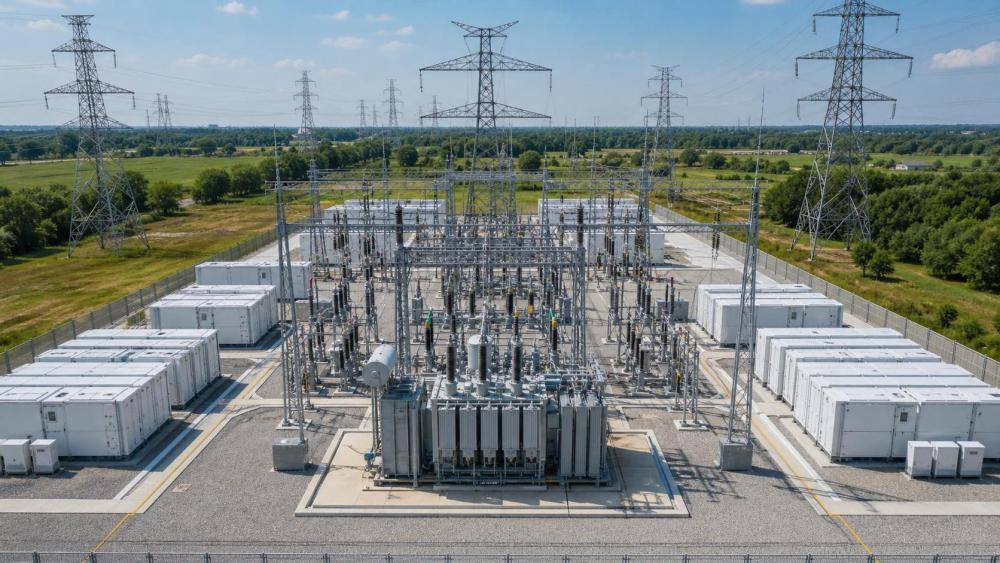
Equipment pricing matters, particularly for large power transformers, GIS, HVDC components, high-voltage cables, power conversion systems, and specialized switchgear. Yet it is only one layer of the total project cost. A useful investment model separates costs that are controllable through procurement from those driven by site conditions and delivery risk.
A cost estimate should show these categories separately rather than burying them in a single contingency amount. This makes the approval decision more transparent. It also reveals whether uncertainty comes from equipment procurement, incomplete engineering, external approvals, or the system operator’s outage requirements. Each uncertainty needs a different response.
Why capacity, resilience, and compliance cannot be priced separately
Grid assets are designed around performance under stressed conditions, not only normal operation. A substation expansion may need to withstand a loss of another major element. A transmission upgrade may need to preserve voltage margins during peak transfer conditions. A battery installation may be evaluated for fast frequency response, black-start capability, congestion relief, or multiple functions, each with different design and control requirements.
This is why a simple cost-per-megawatt comparison can mislead. The relevant question is: how much dependable system value does the option provide under the operating conditions that justify the project? A solution that offers lower nominal capacity but improves contingency performance, reduces restoration time, or avoids a major outage may be more valuable than a larger asset with limited operational flexibility.
Reliability requirements also affect physical design. Redundant transformers, sectionalized bus configurations, spare bays, alternate control paths, fire protection, and enhanced monitoring all add capital cost. Removing them may improve the short-term business case, but only if the resulting service risk is genuinely acceptable. Cost reduction becomes false economy when a future failure requires emergency equipment procurement, extended customer interruptions, or an unplanned rebuild.
The same principle applies to environmental and technical requirements. A decision to use a different insulation medium, cable design, cooling arrangement, or control architecture should be assessed beyond purchase price. The relevant comparison includes site suitability, maintenance capability, safety procedures, availability of replacement parts, and future expansion compatibility.
Schedule is a financial variable, not a project-management detail
Utility upgrade schedules are often determined by the longest and least flexible element: a major transformer, converter equipment, specialized cable system, land acquisition, a transmission outage window, or an interface with another infrastructure project. When the schedule is treated as an operational detail after the capital decision, the budget may underestimate both carrying costs and the value lost from delayed capacity.
A practical analysis uses at least three schedule views. The first is the supplier schedule for long-lead equipment, including design approvals, factory testing, transport, and site acceptance. The second is the construction sequence, particularly whether civil works, cable installation, protection changes, and energization can proceed in parallel. The third is the system schedule: when outages are available and whether network conditions permit phased commissioning.
Procurement timing matters because scarce manufacturing slots can be as significant as unit price. A bid that appears favorable but cannot meet the network need may create a larger economic penalty than a higher-priced offer with credible delivery and service support. Conversely, early ordering is not automatically prudent. It can lock in an immature design, create storage and preservation obligations, or expose the project to costly specification changes. The right timing depends on whether the technical scope, route, permits, and interconnection assumptions are stable enough to support commitment.
Compare alternatives on a common lifecycle basis
Capital expenditure should not be evaluated only through the construction budget. A lifecycle view includes planned maintenance, expected inspections, spares, software or control-system support, energy losses where relevant, insurance implications, environmental handling, and likely future modifications. It should also include the operational consequence of failure, even where that consequence does not appear in the equipment contract.
Different upgrade paths have distinct cost profiles:
- Replacement in kind can be lower risk where the existing asset footprint, protection scheme, and operating role remain suitable. It is less attractive when it preserves a known bottleneck or leaves no room for future capacity.
- Brownfield expansion can avoid land and route costs, but interface risk is high. Work near energized assets, constrained outage windows, legacy drawings, and hidden site conditions can erode the apparent saving.
- New-build capacity usually demands more early development work, yet it can provide a cleaner design, stronger expandability, and fewer operational compromises.
- Digital control and automation upgrades may defer or optimize physical reinforcement, especially when visibility, protection coordination, or dispatch flexibility is limiting performance. They should not be presented as a substitute for physical capacity where thermal or fault-duty limits are absolute.
- Energy storage can be valuable where it addresses constrained peak periods, balancing needs, voltage support, or restoration capability. Its economics depend on the duty cycle, interconnection point, control strategy, augmentation planning, and the extent to which it can reliably defer network reinforcement.
The comparison should state what each alternative does not solve. This is particularly important when a flexible technology is being evaluated against permanent transmission reinforcement. Storage may relieve a local constraint for a defined operating pattern, but it does not automatically replace a line upgrade needed for sustained regional load growth. A new line may deliver durable transfer capability but provide little help with a local voltage-control problem that can be addressed more directly.
Contingency should reflect uncertainty, not compensate for weak scope
Contingency is necessary in utility construction, but it is often used as a catch-all for unresolved design, unclear interfaces, market volatility, route risk, and possible scope expansion. That weakens both governance and forecasting.
A better approach is to maintain a risk register linked directly to the cost estimate. Each major risk should identify its trigger, potential cost effect, likely schedule effect, owner, and mitigation action. Examples include limited access to a substation, uncertain soil conditions, a single-source component, unconfirmed telecom integration, equipment transport constraints, or a required outage that conflicts with peak demand.
This method improves approval quality because it distinguishes a managed risk from an unexamined assumption. It also supports staged authorization. Early funding can cover surveys, system studies, preliminary engineering, and supplier engagement before a full construction commitment is made. That is often more disciplined than seeking a single large approval while fundamental scope issues remain unresolved.
Questions that expose an incomplete investment case
Before approving a grid modernization package, the following questions should have clear answers:
- What measurable network constraint is being removed, and under which operating or contingency conditions does it occur?
- Which elements of the estimate are based on mature design information, and which remain assumptions?
- What is the critical path to energization, including long-lead equipment and outages?
- How will the project interface with existing protection, communications, SCADA, and cybersecurity requirements?
- What operating cost, maintenance burden, and spare-parts exposure will exist after handover?
- Can the selected configuration be expanded without major rework if generation, load, or interconnection demand changes?
- What is the cost of deferring the project, and what temporary measures are available if delivery slips?
These questions do more than test the estimate. They force the project to show whether its design, procurement strategy, and operating assumptions are aligned.
Use market intelligence to test procurement assumptions
Cost analysis is stronger when it is connected to the equipment market rather than relying solely on historic project benchmarks. Historic costs may not reflect current lead times, manufacturing constraints, technical shifts, or the procurement pressure created by simultaneous transmission and renewable-build programs.
For projects involving UHV equipment, heavy generation assets, smart dispatching, large-capacity storage, or specialty cable systems, market intelligence can help test whether a specification is overly restrictive, whether the supplier field is realistically competitive, and whether a proposed delivery sequence is credible. Global Power Grid Dynamics (PGD) tracks these interrelated areas, including transmission equipment, grid control systems, storage strategies, and procurement dynamics. Used properly, that intelligence supports a more defensible question: not merely whether a bid is low, but whether the bid reflects an executable supply and integration plan.
The strongest approval case is therefore neither a lowest-price exercise nor a broad reliability narrative. It is a documented link between a specific grid constraint, a technically suitable solution, a credible delivery path, and a lifecycle cost that remains acceptable when the system is stressed. That is the standard a utility project should meet before capital is committed.
Related News
- Global Energy Transition Report 2026 Projects $550 Billion in Grid InvestmentNov 08, 2026Ms. Elena Rodriguez
- Where grid automation and transmission solutions deliver the most valueOct 11, 2026Ms. Elena Rodriguez
- Steam Turbine Supplier Evaluation: 7 Critical Quality and Delivery Checks for Procurement TeamsSep 21, 2026Ms. Elena Rodriguez
- When do battery energy storage systems need fire suppression?Sep 04, 2026Ms. Elena Rodriguez