
Brazil ANATEL Mandates RCM Certification for SCADA Remote Communication Modules
Effective 1 August 2026, Brazil’s National Telecommunications Agency (ANATEL) will require mandatory RCM certification for all wireless communication modules used in SCADA systems—including 4G LTE-M, NB-IoT, and LoRaWAN gateways. This regulation directly impacts industrial automation, power grid infrastructure, and IoT solution providers operating in or exporting to Brazil.
Event Overview
On 24 May 2026, ANATEL announced that, starting 1 August 2026, all wireless communication modules deployed in SCADA systems for telemetry and telecontrol between master stations and remote substations must obtain ANATEL’s Radio Communication Module (RCM) certification and bear a valid ANATEL ID label. Non-certified modules will be prohibited from connecting to Brazil’s national power grid dispatch system.
Industries Affected by Segment
SCADA System Integrators
Integrators deploying end-to-end SCADA solutions in Brazil’s energy, water, and oil & gas sectors will face immediate compliance requirements. Their hardware bill-of-materials (BOM) must now include only RCM-certified modules for remote communication links—impacting design validation timelines, project bidding documentation, and field commissioning readiness.
Wireless Module Manufacturers & Distributors
Suppliers of 4G LTE-M, NB-IoT, and LoRaWAN gateways targeting the Brazilian industrial market must ensure their products carry valid ANATEL RCM certification prior to shipment. Uncertified inventory may become unsellable for regulated SCADA applications, affecting channel inventory planning and regional go-to-market strategies.
Energy Infrastructure Operators
Utilities and independent system operators managing Brazil’s national grid dispatch infrastructure must verify the certification status of all newly procured or retrofitted SCADA communication hardware. Non-compliant modules—even if previously installed—may be subject to audit or decommissioning during scheduled maintenance or regulatory inspection cycles.
Key Considerations and Recommended Actions for Stakeholders
Monitor official ANATEL guidance on transition timelines and grandfathering provisions
While the 1 August 2026 effective date is confirmed, ANATEL has not yet published details on whether existing installations will be granted a grace period or required to undergo retrofit certification. Stakeholders should track updates via ANATEL’s official portal and certified testing laboratories.
Prioritize certification verification for modules deployed in master-substation telemetry/telecontrol channels
The regulation explicitly covers remote communication used for telemetry and telecontrol between SCADA master stations and substations. Modules used solely for local data logging or non-critical monitoring may fall outside scope—but definitive classification requires review of ANATEL’s technical annexes once published.
Distinguish between policy issuance and operational enforcement
Although the rule takes effect in August 2026, actual enforcement—such as grid access denial or procurement rejection—may be phased in gradually. Early engagement with Brazilian utility procurement departments and ANATEL-accredited conformity assessment bodies is advisable to align expectations.
Review supply chain documentation and update procurement specifications immediately
Procurement teams should revise tender documents and supplier agreements to require RCM certification evidence (including valid ID labels) before delivery. Engineering teams should also update hardware qualification checklists to include ANATEL ID label verification as a mandatory field acceptance test step.
Editorial Observation / Industry Perspective
Observably, this regulation signals ANATEL’s increasing focus on securing critical infrastructure communication layers—not just consumer devices. It reflects a broader trend across emerging markets where telecom regulators extend certification mandates into industrial IoT domains. Analysis shows this is less a sudden enforcement shift and more a formalization of long-standing de facto expectations within Brazil’s power sector. From an industry perspective, it functions primarily as a compliance gatekeeper rather than a technology restriction: no specific radio protocols are banned, but market access now hinges on verifiable regulatory alignment. Continued attention is warranted as ANATEL may issue supplementary technical notes or expand scope to adjacent use cases post-2026.
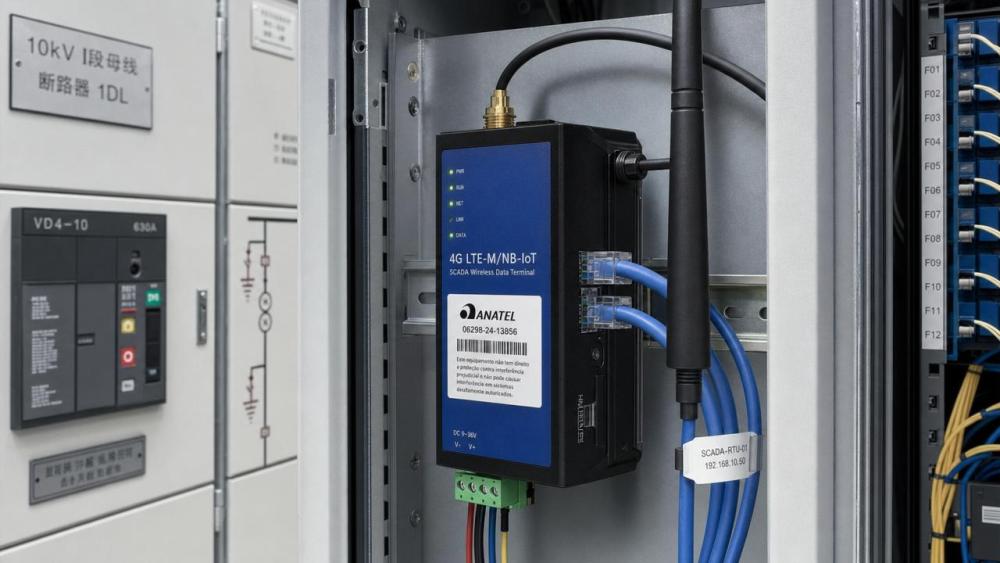
In summary, the ANATEL RCM requirement for SCADA communication modules marks a concrete step toward harmonizing telecom regulation with industrial control system security in Brazil. It is neither a temporary pilot nor a broad-based IoT ban—but a targeted, enforceable standard with clear applicability to grid-critical telemetry infrastructure. Current understanding should treat it as an operational compliance milestone, not a strategic pivot.
Source: Agência Nacional de Telecomunicações (ANATEL), Official Notice No. 524/2026, published 24 May 2026.
Note: Details on transitional arrangements, scope exclusions, and accredited testing laboratories remain pending official publication and are under ongoing observation.
Related News
- China Issues 15th Five-Year Power Safety Plan, Raising Export Compliance for UHV and HVDC EquipmentAug 17, 2026High-Voltage Grid Architect
- China-UAE Launch Direct Sea Route, Cutting UHV and Energy Storage Logistics Time by 30%Aug 16, 2026High-Voltage Grid Architect
- U.S. Imposes Four-Year Safeguard Duty on Quartz CountertopsAug 15, 2026
- China Imposes Temporary Helium Export BanAug 14, 2026Transmission Materials Fellow