
TUV Rheinland names first IEC 63019:2026 labs
On July 13, 2026, TUV Rheinland announced the first group of laboratories authorized to carry out IEC 63019:2026 certification for superconducting cables. For companies involved in superconducting cable manufacturing, procurement, export delivery, and certification preparation, this is not just a lab list update. It signals that the execution path for this standard is becoming more concrete, with direct implications for where type testing can be arranged, how quickly samples can move through certification, and how compliance timing may affect supply commitments.
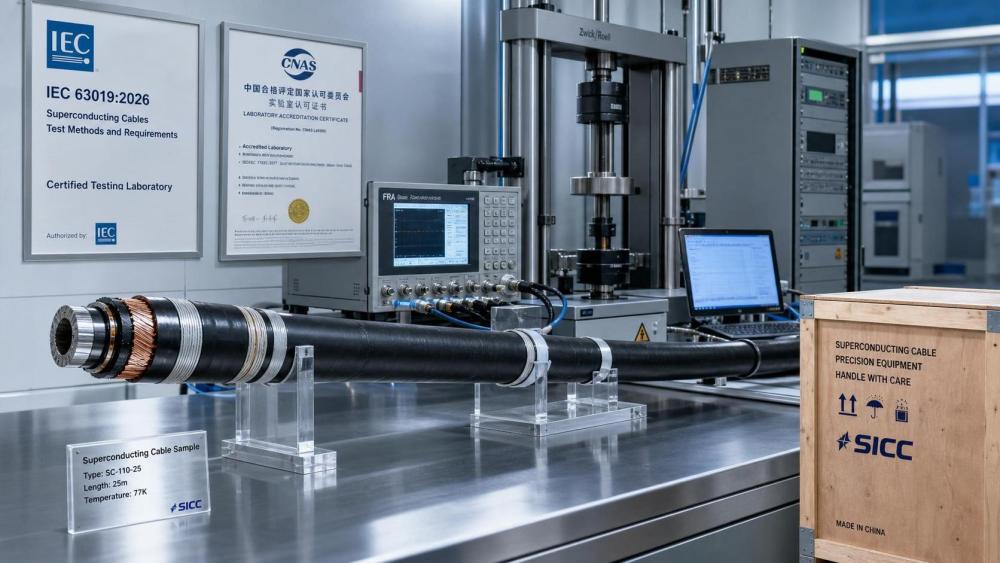
What has been formally announced
According to the announced information, TUV Rheinland identified five laboratories in the first authorized batch for IEC 63019:2026 superconducting cable certification. These are its Frankfurt headquarters and centers in Singapore, Shanghai, Dubai, and Mexico City.
The same announcement states that Chinese superconducting cable manufacturers can send samples directly to the Shanghai laboratory for type testing. The average testing cycle is described as 22 working days, which is 11 days faster than using the European headquarters.
Where the immediate operational effects may appear
For manufacturers planning certification schedules
Analysis shows that the most direct impact falls on manufacturers preparing products for certification under IEC 63019:2026. The practical change is the testing access point: sample submission no longer needs to be understood only through the European headquarters route. For Chinese manufacturers in particular, the availability of the Shanghai laboratory may affect internal planning for sample dispatch, technical file readiness, and certification sequencing before shipment or tender participation.
What deserves closer attention is whether existing project timelines, bid documents, or customer compliance milestones are built around older assumptions about overseas testing lead times. If they are, internal certification planning may need to be updated.
For buyers and project-side qualification reviews
From an industry perspective, procurement teams and project owners may also feel the effect in supplier qualification and delivery assessment. When a recognized local testing path becomes available, the expected timing for obtaining type-test results may change. That can influence how buyers evaluate supplier readiness, documentary completeness, and promised delivery dates.
The practical issue is not that procurement rules have automatically changed, but that the certification timeline behind a supplier's offer may now be different. Buyers should therefore pay closer attention to how suppliers describe test arrangements, laboratory location, and expected certification lead time in commercial and technical submissions.
For export and delivery coordination
Observably, export-oriented businesses and supply chain service providers may need to revisit coordination points around sample logistics and delivery commitments. A shorter average test cycle at the Shanghai laboratory could affect how companies align testing, production release, and shipment windows.
That said, companies should not treat the shorter cycle as a guaranteed outcome for every case. What requires monitoring is how certification timing is reflected in contracts, customer communication, and delivery buffers, especially where compliance evidence is tied to acceptance or shipment conditions.
For testing and certification service participants
The announcement also matters for certification-related service providers because it indicates that IEC 63019:2026 is moving into a more operational stage within an identified lab network. For firms supporting document preparation, test coordination, or supplier onboarding, the immediate task is to track how laboratory authorization is presented in practice and how customers begin to reference it in qualification requirements.
What companies should watch now
Check whether current compliance documents match the new testing route
Analysis shows that companies should review whether internal compliance checklists, customer-facing declarations, and certification planning documents still assume only one testing route. Where sales teams, bid teams, or compliance teams reference older arrangements, those materials may need updating to reflect the newly announced authorized laboratories.
Reassess bid timing and delivery promises
For companies quoting on upcoming projects, it is more appropriate to reassess the timing logic behind certification milestones. If the Shanghai laboratory route is being considered, teams should verify how that affects promised submission dates, expected report timing, and downstream production or dispatch planning. The key point is to align commercial commitments with the certification path actually intended for use.
Keep technical files and sample preparation under tighter control
Even where testing access becomes more convenient, document and sample readiness remains a gate for execution. Companies should therefore pay attention to the completeness of technical files, report consistency, and the condition of samples prepared for type testing. The announcement supports a potentially faster route, but it does not remove the need for disciplined certification preparation.
Continue tracking implementation language and market use
What deserves closer attention is how this announcement begins to appear in customer qualification language, purchasing specifications, and supplier communication. Since the input information does not provide broader execution details, companies should treat this as a development that may influence practice, while continuing to verify how the authorized laboratory list is used in actual certification and procurement workflows.
Why this looks like an execution signal rather than a finished rule story
Observably, this development is better understood as an execution signal tied to IEC 63019:2026 rather than as a complete picture of market implementation. The key change is that certification capacity has been identified through a first authorized batch of laboratories, and one of those laboratories gives Chinese manufacturers a direct local submission option with a stated average time advantage.
At the same time, analysis shows that the industry still needs to watch how this operational step is absorbed into procurement language, supplier qualification checks, and delivery planning. The announcement clarifies access and timing, but it does not by itself settle every practical question around how different market participants will apply that information.
How this update is best understood at this stage
At this stage, the announcement is most appropriately understood as a concrete implementation development around IEC 63019:2026 certification for superconducting cables. It points to a more defined testing network and a potentially shorter path for some manufacturers, especially those able to use the Shanghai laboratory. The broader industry significance lies less in headline value and more in the operational consequences for certification scheduling, procurement review, and delivery coordination.
A rational reading is that the change is real and usable, but its full market effect still depends on how certification practice, customer requirements, and supplier execution adapt over time.
Basis of this article and points still requiring verification
This article is based on the user-provided news title, event date, and event summary. For developments of this kind, commonly relevant source types may include official announcements, regulatory releases, trade or customs authority information, industry association updates, standards organization documents, and reports from established sector media.
No specific official source link was provided in the input, so the exact official publication path still requires follow-up verification. Further observation is also needed on implementation language, certification interpretation in practice, tender document changes, market feedback, and how companies actually adjust compliance and delivery arrangements in response.
Related News
- China Imposes Temporary Helium Export BanAug 14, 2026Transmission Materials Fellow
- TUV Rheinland names first IEC 63019:2026 labsJul 14, 2026Transmission Materials Fellow
- TUV Rheinland Enables Local IEC 63019 Testing in ChinaJul 13, 2026Transmission Materials Fellow
- IEC 62871-3:2026 Adds Mandatory Tests for EU ExportsJul 09, 2026Transmission Materials Fellow