
Vietnam Mandates EPR Registration for Low-Temp Superconductor Cable Materials
Starting 1 July 2026, Vietnam will require Extended Producer Responsibility (EPR) registration for all low-temperature composite materials used in superconducting cables — including HTS tape claddings, cryogenic insulation tubing, and liquid nitrogen interface modules. This regulation directly affects importers, material suppliers, and system integrators serving Vietnam’s emerging smart grid and clean energy infrastructure sectors. Its enforcement signals a tightening of environmental compliance requirements at the component level within high-tech energy hardware supply chains.
Event Overview
On 25 May 2026, Vietnam’s Ministry of Industry and Trade announced that, effective 1 July 2026, all superconducting cable components incorporating liquid nitrogen cooling structures or low-temperature polymer matrices must complete mandatory EPR registration under Vietnam’s Extended Producer Responsibility framework. Unregistered goods will be detained by customs and denied import licenses. Required submission documents include full material composition tables, documented end-of-life recovery pathway agreements, and information on a locally authorized representative.
Industries Affected by Segment
Direct Importers and Trading Companies
These entities face immediate operational impact: customs clearance for affected products will be blocked without valid EPR registration. The requirement introduces a new pre-import compliance step — distinct from standard customs declarations or product certifications — with no transitional grace period confirmed in the announcement.
Raw Material Suppliers (e.g., HTS Tape Manufacturers, Polymer Compounders)
Suppliers whose materials are incorporated into registered cable assemblies may be contractually required to disclose full chemical formulations and support recycling logistics — even if they do not ship directly to Vietnam. Their role shifts from passive supplier to co-responsible party under the EPR framework, potentially triggering contractual renegotiations with downstream assemblers.
Cable System Integrators and Component Assemblers
Firms assembling HTS cables for export to Vietnam must now verify EPR status across all subcomponents — not just final products. Since registration is tied to specific material configurations (e.g., nitrogen-cooled structures), minor design changes may necessitate re-registration, increasing time-to-market and documentation overhead.
Supply Chain and Compliance Service Providers
Third-party agents offering local representation, regulatory filing, or material certification services will see heightened demand — particularly those with verified experience in Vietnam’s EPR system for industrial materials. However, no official list of accredited representatives or approved recycling partners has been published as of the 25 May notice.
Key Focus Areas and Recommended Actions
Monitor official guidance on registration procedures and timelines
The 25 May announcement confirms the mandate and scope but does not detail application forms, fees, processing windows, or technical validation criteria. Stakeholders should track updates from Vietnam’s Ministry of Industry and Trade and the General Department of Vietnam Customs — especially any draft circulars expected before Q3 2026.
Identify and map affected SKUs against the defined scope
Registration applies specifically to materials with liquid nitrogen cooling functionality or low-temperature polymer matrices — not all superconducting components. Firms should audit their export SKUs to determine whether packaging, thermal interface layers, or substrate carriers meet the technical definitions cited. Ambiguity in terminology (e.g., “low-temperature polymer matrix”) warrants early clarification with local counsel.
Distinguish policy signal from operational readiness
While the 1 July 2026 date is firm, Vietnam’s EPR system for industrial materials remains newly extended beyond packaging and electronics. Implementation capacity — including IT platform readiness and agency staffing — is unconfirmed. Companies should treat initial registrations as pilot engagements rather than assume full system stability from day one.
Prepare documentation and appoint local representation ahead of deadline
Material composition tables must be submitted in Vietnamese or accompanied by certified translations. Recovery pathway agreements require enforceable commitments with Vietnamese-registered recyclers or waste management firms. Appointing a local authorized representative — who assumes legal liability for compliance — should begin no later than Q2 2026 to allow time for due diligence and agreement finalization.
Editorial Perspective / Industry Observation
Observably, this measure marks Vietnam’s first application of EPR obligations to advanced energy infrastructure materials — moving beyond consumer-facing categories. It reflects a broader regional trend toward upstream environmental accountability in climate-critical technologies. Analysis shows the rule functions less as an immediate trade barrier and more as a structural signal: Vietnam is aligning its import controls with circular economy goals, even for niche, high-value B2B components. From an industry perspective, the requirement underscores how sustainability compliance is increasingly embedded at the subassembly level — not just the finished equipment stage. Continued attention is warranted, particularly regarding enforcement consistency and recognition of international recycling standards.
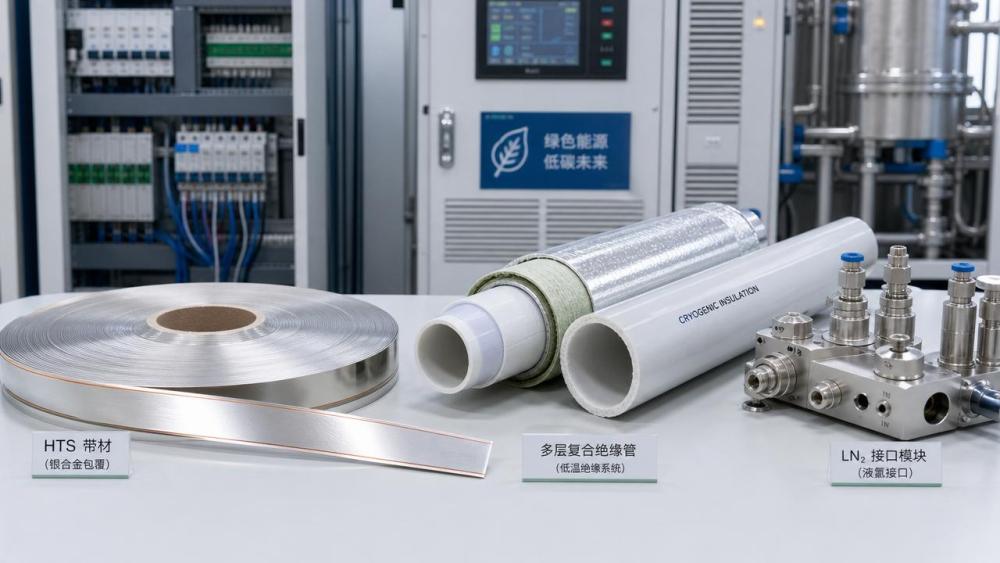
In summary, this regulation establishes a new compliance gate for a narrow but technologically significant category of energy materials entering Vietnam. It does not broadly restrict trade, but it does elevate documentation, traceability, and local partnership requirements for stakeholders engaged in the HTS cable value chain. Currently, it is best understood as an operational adaptation point — not a market access reversal — demanding targeted preparation rather than strategic redirection.
Source: Official notice issued by Vietnam’s Ministry of Industry and Trade, dated 25 May 2026. Note: Implementation details — including registration portal access, fee structure, and approved recycling partners — remain pending and are subject to further official communication.
Related News
- China Issues 15th Five-Year Power Safety Plan, Raising Export Compliance for UHV and HVDC EquipmentAug 17, 2026High-Voltage Grid Architect
- China-UAE Launch Direct Sea Route, Cutting UHV and Energy Storage Logistics Time by 30%Aug 16, 2026High-Voltage Grid Architect
- U.S. Imposes Four-Year Safeguard Duty on Quartz CountertopsAug 15, 2026
- China Imposes Temporary Helium Export BanAug 14, 2026Transmission Materials Fellow