
Egypt Mandates Liquid-Cooled HV Connectors for EV Charging & BESS
Egypt’s national standardization body, the Egyptian Organization for Standardization (EOS), issued EOS 2785:2026 on 22 May 2026 — a landmark technical specification for liquid-cooled high-voltage connectors in electric mobility infrastructure. This regulatory update directly impacts manufacturers, exporters, and system integrators supplying to Egypt’s rapidly expanding fast-charging and battery energy storage markets.
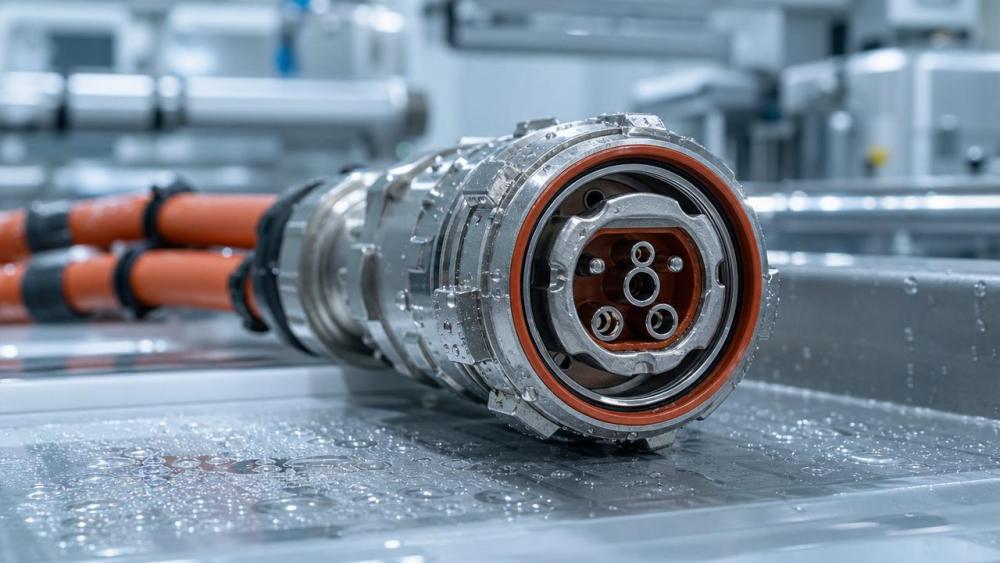
New National Standard for Liquid-Cooled High-Voltage Connectivity
On 22 May 2026, EOS published EOS 2785:2026, titled Technical Specification for Liquid-Cooled High-Voltage Connectors for Electric Mobility. For the first time, the standard mandates compulsory certification for liquid-cooled connectors designed for DC fast-charging applications exceeding 350 kW. It explicitly extends applicability to the energy storage side of Liquid Cooling Battery Energy Storage Systems (Liquid Cooling BESS), covering interface modules that connect with EV charging stations. Key technical requirements include IP68 ingress protection, thermal resistance up to 150°C, and validated compatibility with common cooling fluids used in high-power thermal management systems.
Impact Across the Supply Chain
Exporters and Trading Companies
Companies exporting liquid-cooled connectors or integrated BESS interface modules to Egypt must now ensure compliance with EOS 2785:2026 prior to customs clearance. Non-compliant products may face import rejection or mandatory rework. Certification status will become a prerequisite in public tenders for EV infrastructure projects funded by Egyptian authorities.
Raw Material and Component Suppliers
Suppliers of specialized elastomers, thermally stable insulators, corrosion-resistant metal alloys, and coolant-compatible sealing materials will experience heightened demand for traceable, test-validated grades. Documentation supporting material performance under 150°C operating conditions and exposure to specified coolants is now essential for downstream certification.
Manufacturers and System Integrators
Producers of EV chargers, BESS cabinets, and vehicle-side high-power interfaces must revise product design verification protocols. Design validation now requires joint testing of mechanical integrity, thermal cycling, and fluid-tightness under simulated 350+ kW operational loads — not just electrical safety.
Supply Chain and Certification Support Providers
Third-party testing laboratories, conformity assessment bodies, and local EOS-accredited representatives will see increased demand for EOS 2785:2026-specific test reports and certification support. Lead times for full compliance packages are expected to extend due to newly required coolant compatibility assessments.
Key Compliance Actions for Enterprises
Confirm Certification Scope and Timeline
Verify whether existing CE, UL, or IEC 62196-based certifications cover EOS 2785:2026 requirements — particularly IP68 under dynamic coolant flow, 150°C thermal endurance, and fluid compatibility. Note that EOS has not announced a grace period; enforcement begins upon publication date (22 May 2026).
Review Interface Specifications in Tender Documents
Update technical bids and equipment specifications for Egyptian infrastructure projects to explicitly reference EOS 2785:2026 compliance, including test report numbers for IP68, thermal cycling (IEC 60068-2-14), and coolant immersion tests per Annex C of the standard.
Assess Supplier Readiness for BESS-Side Modules
For Liquid Cooling BESS suppliers, audit sub-tier vendors of liquid-cooled interface modules (e.g., busbar assemblies, quick-disconnect couplings) to confirm their ability to supply certified, traceable components meeting EOS 2785:2026 — especially coolant seal longevity and thermal expansion matching.
Validate Documentation for Customs and Market Access
Prepare bilingual (Arabic/English) DoC (Declaration of Conformity), test reports from EOS-recognized labs, and technical files demonstrating alignment with all clauses of EOS 2785:2026 — including coolant type declarations and batch-level traceability records.
Industry Observation: A Strategic Shift Toward Thermal-Aware Interoperability
Analysis shows that EOS 2785:2026 reflects a broader regional trend: standards bodies in emerging EV markets are moving beyond basic electrical safety to mandate system-level thermal interoperability. What deserves closer attention is how this elevates the role of coolant formulation as a de facto technical barrier — requiring not only hardware certification but also fluid-material co-validation. From an industry perspective, this signals longer qualification cycles, higher upfront R&D investment for connector OEMs, and intensified collaboration between BESS integrators and thermal management subsystem suppliers. Observably, Egypt’s move may catalyze similar updates across North Africa and the Levant, where grid-constrained fast-charging deployment relies heavily on liquid-cooled thermal solutions.
Strategic Implications for Global Clean Energy Infrastructure
This regulation marks Egypt’s formal recognition that high-power EV charging and grid-scale BESS cannot be decoupled at the physical interface level. Rather than representing a narrow compliance hurdle, EOS 2785:2026 establishes a foundational requirement for thermal-aware connectivity — a prerequisite for scalable, safe, and interoperable clean energy infrastructure. Enterprises should treat it not as an isolated standard, but as an indicator of evolving global expectations for electro-thermal system integration.
Source Information and Verification Notes
This article is generated exclusively from the user-provided information: title, event date (22 May 2026), and event summary. Specific official source links were not provided in the input and should be verified continuously. Stakeholders are advised to monitor upcoming EOS implementation guidelines, certification body announcements, and procurement documents from Egyptian ministries (e.g., Ministry of Electricity and Renewable Energy) for further clarification on enforcement scope, transitional arrangements, and accredited testing facilities.
Related News
- China Issues 15th Five-Year Power Safety Plan, Raising Export Compliance for UHV and HVDC EquipmentAug 17, 2026High-Voltage Grid Architect
- China-UAE Launch Direct Sea Route, Cutting UHV and Energy Storage Logistics Time by 30%Aug 16, 2026High-Voltage Grid Architect
- U.S. Imposes Four-Year Safeguard Duty on Quartz CountertopsAug 15, 2026
- China Imposes Temporary Helium Export BanAug 14, 2026Transmission Materials Fellow