
MIIT Launches 2026 Industrial Energy Conservation Inspection
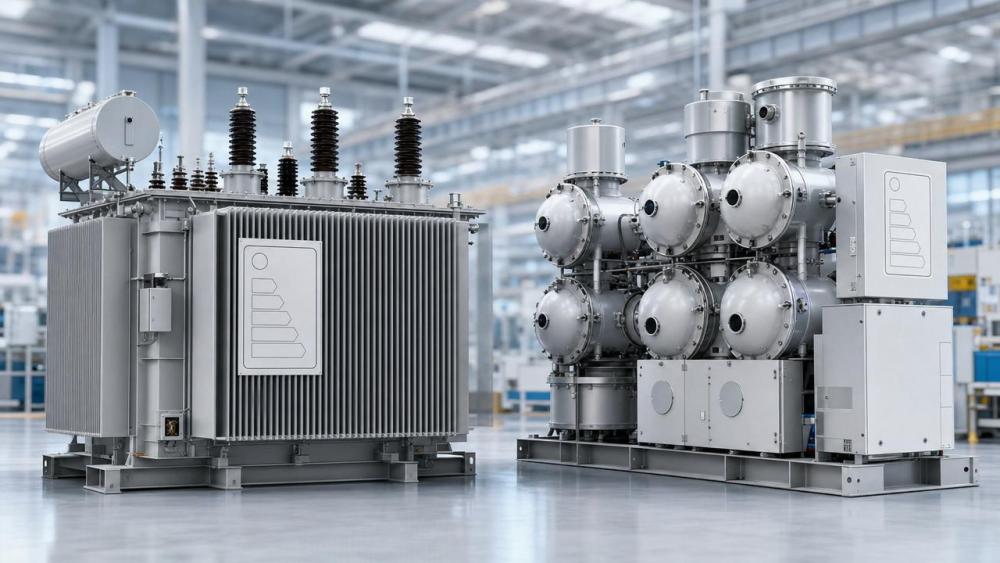
On May 13, 2026, the Ministry of Industry and Information Technology (MIIT) Office issued the Notice on the 2026 Annual Industrial Energy Conservation Inspection, mandating energy efficiency labeling verification for ultra-high-voltage (UHV) transformers and gas-insulated switchgear (GIS) — marking a formal upgrade from voluntary disclosure to compulsory third-party comparative assessment. This development directly affects manufacturers, exporters, and supply chain service providers in high-voltage power equipment, and carries implications for market access compliance in the EU (under the ERP Directive) and India (BEE certification).
Event Overview
On May 13, 2026, the MIIT Office released the Notice on the 2026 Annual Industrial Energy Conservation Inspection. The notice explicitly includes UHV transformers and GIS switchgear in the scope of energy efficiency labeling special inspections. It requires enterprises to publicly disclose verified energy efficiency data and submit to third-party comparative verification. No further implementation details, timelines for enforcement, or penalty provisions were disclosed in the initial notice.
Industries Affected
Direct Exporters of High-Voltage Power Equipment
These enterprises face increased pre-shipment compliance requirements: energy efficiency data must now be verifiable against standardized benchmarks before export. The inspection does not replace overseas certification (e.g., EU ERP or India BEE), but its outcomes may serve as domestic regulatory backing — potentially shortening due diligence cycles for foreign buyers.
Domestic Manufacturers of UHV Transformers and GIS Switchgear
Manufacturers are now subject to mandatory public disclosure and third-party verification of energy performance. This affects product testing protocols, documentation systems, and internal quality assurance workflows — particularly where historical test reports lack traceability to nationally recognized metrology standards.
Supply Chain Service Providers (Testing Labs, Certification Bodies, Compliance Consultants)
Third-party verification demand is expected to rise. However, only institutions accredited by China’s State Administration for Market Regulation (SAMR) for energy efficiency testing of these specific equipment categories are authorized to conduct compliant assessments. Non-accredited labs cannot fulfill the requirement, regardless of technical capability.
What Enterprises and Practitioners Should Focus On
Monitor official updates on verification criteria and accreditation lists
The notice references third-party verification but does not specify which national standards (e.g., GB/T 25446 for transformers) will apply, nor does it publish the list of SAMR-accredited institutions eligible to perform the checks. Enterprises should track subsequent announcements from MIIT and SAMR.
Identify whether your UHV transformer or GIS product models fall under the defined scope
The notice applies specifically to equipment classified as ‘ultra-high-voltage’ (typically ≥800 kV AC or ≥±800 kV DC for transformers; ≥550 kV for GIS). Lower-voltage variants — even if exported alongside UHV systems — are not covered unless separately designated in future revisions.
Distinguish between policy signal and operational readiness
This notice initiates the 2026 inspection cycle but does not confirm immediate on-site audits or enforcement deadlines. Analysis shows it functions primarily as a regulatory signal — aligning domestic oversight with international green trade expectations — rather than an immediate compliance deadline.
Prepare technical documentation and test records for potential submission
Enterprises should inventory existing energy efficiency test reports covering rated load, no-load loss, and load loss (per applicable GB standards), ensuring measurement uncertainty statements, calibration certificates for instruments, and lab accreditation status are readily available — as these are typical prerequisites for third-party verification.
Editorial Perspective / Industry Observation
Observably, this move reflects a strategic alignment between domestic industrial regulation and transnational environmental trade frameworks. It is not yet an enforcement outcome but a procedural escalation — shifting from guidance-based energy management to auditable, label-backed accountability for specific capital goods. From an industry perspective, it signals growing emphasis on verifiable decarbonization credentials embedded in core infrastructure exports. Current relevance lies less in immediate penalties and more in how it reshapes buyer expectations and due diligence thresholds across key markets.
Conclusion: The 2026 MIIT inspection notice represents a calibrated step toward integrating energy efficiency verification into the lifecycle governance of critical power equipment. Its primary significance is procedural and preparatory — establishing a domestic verification anchor that supports, rather than substitutes for, international certification. For stakeholders, it is better understood as an early-phase regulatory alignment effort than a standalone compliance milestone.
Source: MIIT General Office, Notice on the 2026 Annual Industrial Energy Conservation Inspection (issued May 13, 2026).
Note: Accreditation requirements for third-party verification bodies, exact testing standards referenced, and phased rollout schedule remain pending official clarification and are subject to ongoing observation.
Related News
- China Issues 15th Five-Year Power Safety Plan, Raising Export Compliance for UHV and HVDC EquipmentAug 17, 2026High-Voltage Grid Architect
- China-UAE Launch Direct Sea Route, Cutting UHV and Energy Storage Logistics Time by 30%Aug 16, 2026High-Voltage Grid Architect
- DOE UHV Transformer Import Rule Takes EffectAug 13, 2026High-Voltage Grid Architect
- IEC Sets New UHV Transformer Testing Rule for October 2026Jul 30, 2026High-Voltage Grid Architect