
VDE Lowers 2-Furaldehyde Limit in UHV Transformer Oil
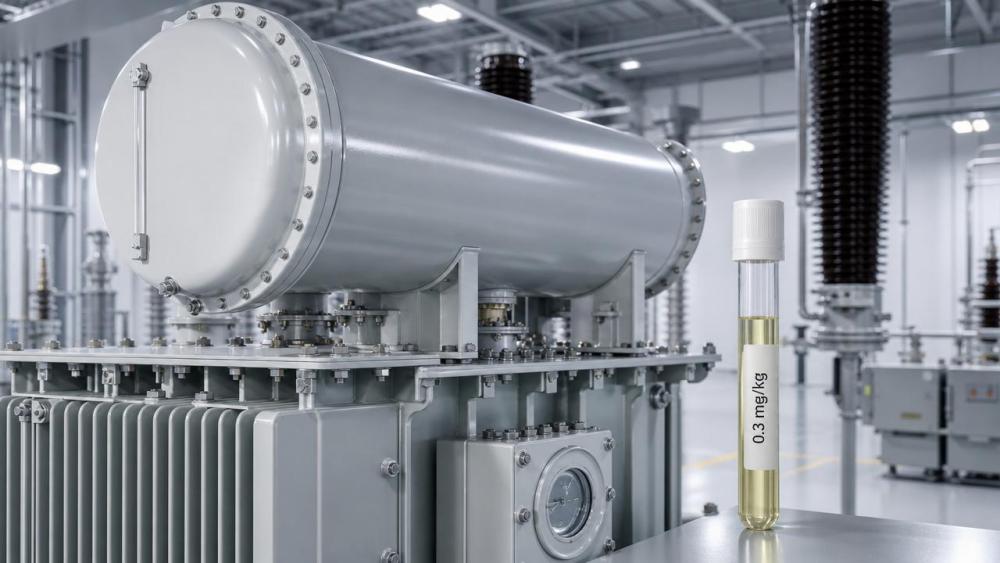
On May 16, 2026, the German Association for Electrical, Electronic & Information Technologies (VDE) revised its application rule VDE-AR-E 2800-100:2026, reducing the permissible concentration limit of 2-furaldehyde (2-FAL) in ultra-high-voltage (UHV) power transformer insulating oil from 0.5 mg/kg to 0.3 mg/kg. This change directly affects manufacturers and exporters of UHV transformers supplying German-standard projects, as well as service providers involved in oil testing, aging assessment, and warranty management.
Event Overview
The VDE updated VDE-AR-E 2800-100:2026 on May 16, 2026. The revision lowers the maximum allowable 2-furaldehyde (2-FAL) concentration in insulating oil used in UHV power transformers from 0.5 mg/kg to 0.3 mg/kg. This parameter serves as a key indicator for evaluating the aging status of cellulose-based paper insulation within transformers. The updated standard is now effective for new certifications and compliance assessments under the VDE framework.
Industries Affected
Transformer Exporters & OEMs Supplying German-Standard Projects
These companies are directly impacted because the revised 2-FAL limit applies to factory acceptance tests (FAT) and commissioning oil analyses for UHV transformers destined for projects referencing VDE standards. A stricter limit raises the bar for initial oil quality control and may trigger retesting or oil replacement prior to shipment.
Oil Testing Laboratories & Third-Party Certification Providers
Laboratories performing routine dissolved gas analysis (DGA) and furanic compound testing—including 2-FAL—must update their reporting thresholds and internal validation protocols to align with the new 0.3 mg/kg benchmark. Calibration standards and method detection limits may require re-evaluation to ensure measurement reliability at the lower threshold.
Insulating Oil Producers & Blenders
Suppliers of naphthenic or paraffinic base oils and inhibited transformer oils must verify that their finished products consistently meet the tightened 2-FAL specification—not only in newly refined batches but also after storage and transport, where trace degradation may occur. This may necessitate tighter process controls or enhanced stabilizer formulations.
Aftermarket Service & Warranty Management Providers
For transformers already in service under VDE-aligned warranties, the revised limit alters the interpretation of in-service oil test results. Aging trend analysis and remaining life estimation models—previously calibrated against the 0.5 mg/kg threshold—may require recalibration or contextual reinterpretation when applied to data collected post-revision.
Key Considerations and Recommended Actions
Monitor official VDE implementation guidance and transitional provisions
VDE-AR-E 2800-100:2026 is an application rule; its enforcement scope (e.g., retroactivity for ongoing contracts, grandfathering of pre-May 2026 test reports) depends on accompanying administrative notes or project-specific specifications. Stakeholders should track any clarifications issued by VDE or notified bodies such as VDE Testing and Certification Institute.
Review oil test specifications in active and upcoming tenders
Procurement documents for UHV transformer projects referencing VDE standards—especially those issued after May 2026—may explicitly cite the updated 2-FAL limit. Exporters and suppliers should audit tender requirements and update internal quality checklists accordingly before submission or FAT planning.
Distinguish between regulatory signal and operational impact
The revision reflects heightened sensitivity to early-stage paper insulation degradation. However, adoption outside Germany—or in non-VDE-referenced projects—remains voluntary unless mandated by local grid operators or certification schemes. Companies should assess whether the change triggers updates to internal technical specifications beyond strictly German-market deliverables.
Update oil sampling, handling, and analytical procedures
A 0.3 mg/kg limit demands improved precision in sample collection (to avoid contamination), storage (to prevent thermal or oxidative furan formation), and analysis (to reduce measurement uncertainty). Labs and OEMs should verify that current methods achieve ≤0.05 mg/kg repeatability at the target level, per ISO/IEC 17025 requirements.
Editorial Perspective / Industry Observation
Observably, this revision signals a shift toward earlier intervention thresholds in UHV asset health monitoring—not a sudden technical discontinuity. Analysis shows the 40% reduction in the 2-FAL limit aligns with growing empirical evidence linking sub-0.5 mg/kg concentrations to measurable cellulose chain scission in accelerated aging studies. From an industry perspective, it is better understood as a calibration refinement than a de facto ban on existing oil batches. Current attention should focus less on immediate compliance panic and more on consistent metrological readiness and transparent communication across supply chains about test methodology and reporting conventions.
Conclusion: The VDE’s adjustment of the 2-FAL limit reflects an evolution in condition-based maintenance criteria for UHV infrastructure—not a wholesale overhaul of oil specifications. It underscores the need for precision in diagnostic oil testing and highlights the growing divergence in aging assessment benchmarks across regional standards. At present, this revision is best interpreted as a forward-looking technical alignment, requiring targeted procedural updates rather than broad product redesign or material substitution.
Source: German Association for Electrical, Electronic & Information Technologies (VDE), VDE-AR-E 2800-100:2026 application rule, published May 16, 2026.
Noted for continued observation: Whether national grid operators (e.g., Tennet, Amprion) or European standardization bodies (e.g., CENELEC) adopt or reference this limit in future technical specifications.
Related News
- Goldman Sachs: China Transformer Exports Fill 30% US-EU GapMay 25, 2026High-Voltage Grid Architect
- Europe Pays 40% Premium for Transformers; China’s Top Orders Extend to 2029May 25, 2026High-Voltage Grid Architect
- Global UHV Transformer Capacity Crunch WorsensMay 24, 2026High-Voltage Grid Architect
- First Cross-Border Power Equipment Train on China-Laos RailwayMay 23, 2026High-Voltage Grid Architect