
Germany's VDE Cuts UHV Transformer Oil Furfural Limit by 40%
On May 15, 2026, Germany’s Verband der Elektrotechnik (VDE) revised its standard VDE-AR-E 2800-100:2026, lowering the permissible furfural (2-FAL) concentration in ultra-high-voltage (UHV) transformer insulating oil from 0.25 mg/L to 0.15 mg/L — a 40% reduction. As furfural serves as a key chemical indicator of cellulose insulation aging, the stricter limit directly raises technical compliance thresholds for UHV transformers exported from China to Germany and the broader EU market.
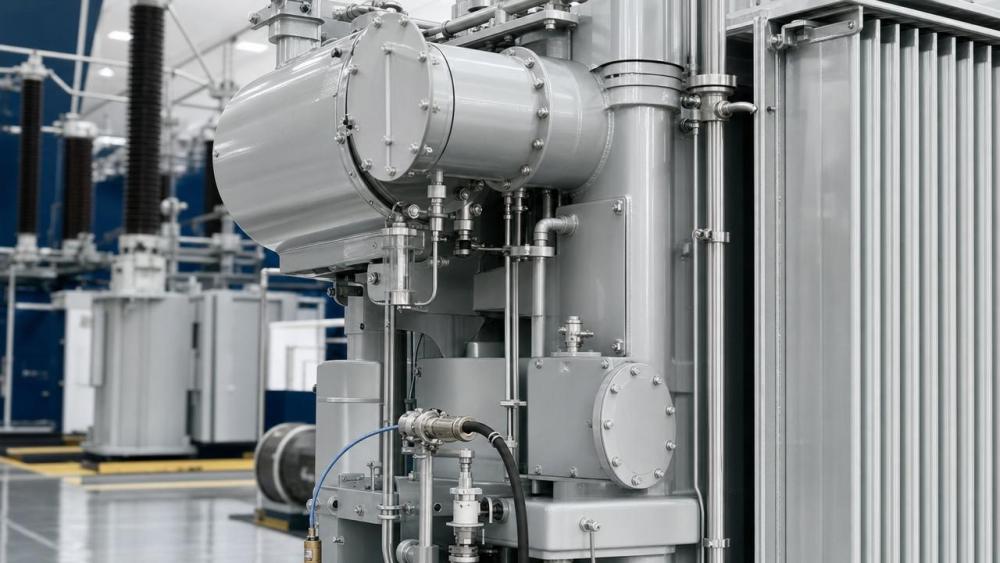
Event Overview
On May 15, 2026, the German VDE published the updated VDE-AR-E 2800-100:2026 standard. The revision explicitly reduces the maximum allowable furfural content in insulating oil used in UHV transformers (≥800 kV) from 0.25 mg/L to 0.15 mg/L. This parameter remains central to type-testing protocols for assessing paper insulation degradation during certification. No transitional period or grandfathering clause was announced in the initial release.
Industries Affected
Direct Exporters: Chinese manufacturers exporting UHV transformers to EU markets — including TBEA (Tebian Electric Apparatus) and Baobian Electric — now face elevated risk of type-test failure during third-party verification at notified bodies such as VDE Testing and Certification Institute. Non-compliance may delay market access, trigger retesting costs, and require design documentation updates.
Raw Material Suppliers: Domestic producers of inhibited mineral insulating oils and specialty additives must adapt formulations to ensure consistent furfural suppression across batch production. Suppliers lacking trace-level analytical capability (e.g., GC-MS detection limits ≤0.05 mg/L) may lose qualification as approved vendors under new OEM sourcing requirements.
Equipment Manufacturers: UHV transformer OEMs are accelerating deployment of on-site or off-line furfural removal technologies — notably vacuum dehydration coupled with selective adsorption media — to treat aged oil prior to commissioning. Both TBEA and Baobian Electric have initiated joint witness testing programs with European utilities to validate process repeatability and residual furfural stability over 72-hour hold periods.
Supply Chain Service Providers: Third-party oil analysis labs, certification consultants, and logistics firms offering pre-shipment conformity support must now calibrate instruments to the tighter specification and revise test report templates to reflect the updated VDE-AR-E 2800-100:2026 reference. Some labs report lead-time extensions of up to 5 working days due to increased method validation workloads.
Key Focus Areas and Recommended Actions
Verify current oil aging profiles against the 0.15 mg/L threshold
Manufacturers should audit historical dissolved gas and furfural data from field units and pilot batches. Oil samples showing >0.18 mg/L furfural under routine monitoring warrant immediate process review — not just for export units, but also for domestic grid projects where future harmonization with IEC standards is anticipated.
Validate furfural removal efficacy under real-world operating conditions
Lab-scale adsorption tests alone are insufficient. Companies must document removal kinetics, regeneration cycle life of media, and post-treatment oil dielectric strength retention — especially after thermal cycling between −25°C and +70°C — as required in VDE-AR-E 2800-100:2026 Annex D.
Engage early with EU notified bodies on interpretation and test scheduling
Given the absence of official guidance on sampling frequency, storage conditions, and acceptable measurement uncertainty, direct dialogue with VDE, DEKRA, or TÜV SÜD prior to submission is advised to avoid procedural rejection unrelated to technical nonconformance.
Editorial Perspective / Industry Observation
Analysis shows this adjustment is less about sudden safety concerns and more a strategic calibration toward predictive maintenance maturity in EU transmission infrastructure. Observably, the 0.15 mg/L threshold aligns closely with median furfural levels observed in newly commissioned UHV units in Germany — suggesting VDE aims to enforce ‘as-new’ insulation integrity throughout service life, not merely baseline acceptance. From an industry perspective, this signals a broader shift: aging diagnostics are transitioning from post-failure forensic tools to mandatory lifecycle KPIs embedded in procurement contracts. Current more relevant than compliance alone is the capacity to demonstrate longitudinal furfural trend control — i.e., proving that oil treatment does not merely reset but sustains low-furfural states over time.
Conclusion
This regulatory refinement underscores how niche chemical specifications in high-reliability power equipment can rapidly cascade across global supply chains. It is not merely a testing hurdle; rather, it functions as a de facto technology gatekeeper — favoring firms with integrated oil management systems, metrology-grade analytics, and cross-border validation agility. A rational conclusion is that competitive differentiation in the UHV transformer space will increasingly hinge on measurable, auditable oil health stewardship — not just core winding or tank design excellence.
Source Attribution
Official publication: VDE-AR-E 2800-100:2026, issued May 15, 2026, by Verband der Elektrotechnik, Elektronik und Informationstechnik e.V. (VDE). Full text available via VDE Publishing House (ISBN 978-3-8007-5921-4).
Supplementary technical notes referenced: VDE Application Rule AR-E 2800-101:2025 (Oil Sampling Guidance), Annex F (Furfural Measurement Uncertainty Budget).
Note: Pending clarification on enforcement timelines, equivalence recognition for IEC 60429:2023-based test reports, and potential alignment with upcoming CENELEC CLC/TC 99/WG 16 revisions — all subject to ongoing monitoring.
Related News
- US Energy Department Offers $237 Million for Grid Component and Transformer Supply ChainsNov 02, 2026High-Voltage Grid Architect
- Gansu–Zhejiang UHV Line Completes Conductor Stringing Across the YangtzeOct 28, 2026High-Voltage Grid Architect
- Gansu–Zhejiang UHV Project Completes Yangtze River Crossing Conductor StringingOct 27, 2026High-Voltage Grid Architect
- How UHV transformer transport limits shape substation planningOct 20, 2026High-Voltage Grid Architect