
Vietnam Sets New GIS Import Declaration Rule
On June 18, 2026, Vietnam’s Ministry of Industry and Trade (MOIT) issued a new rule affecting imported GIS switchgear, with enforcement starting on October 1, 2026. The update is worth close attention from GIS exporters, import compliance teams, documentation specialists, and cross-border supply chain providers because it links market access not only to technical conformity, but also to localized paperwork and document verification at customs.
What the new requirement confirms
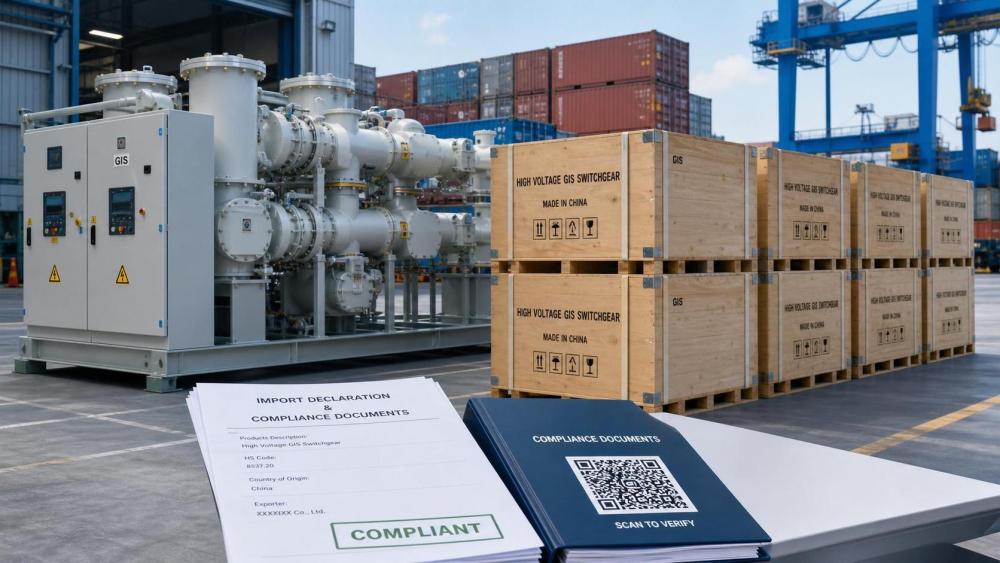
According to the information provided, MOIT signed Circular No. 17/2026/TT-BCT on June 18, 2026. The rule states that from October 1, 2026, all imported GIS switchgear must be accompanied by a Vietnamese-language declaration of conformity to IEC 62271-1:2025.
The declaration must be issued by an institution recognized by Vietnam’s national metrology body, STAMEQ. The document must also carry an anti-counterfeit QR code.
The information provided also indicates that the rule will affect document localization costs and customs clearance timing for Chinese GIS switchgear exporters.
Where the impact is likely to be felt first
Export-side document preparation becomes more operationally sensitive
From an industry perspective, companies exporting GIS switchgear to Vietnam may be affected first at the documentation stage. The main issue is not only whether a product meets the required standard, but whether the conformity declaration is available in Vietnamese, issued by a recognized institution, and presented in the required format.
Customs and logistics workflows may face tighter document checks
Analysis shows that customs-facing processes may become more time-sensitive because clearance may depend on whether the declaration package is complete and properly localized. For logistics coordinators and customs service providers, closer attention may be needed on document readiness before shipment arrival.
Vietnam market-facing sales and account teams may need earlier coordination
For teams managing Vietnam-bound orders, the practical impact may appear in quotation timing, delivery planning, and customer communication. What deserves closer attention is whether compliance documents are prepared early enough to avoid delays near the effective date.
What companies should watch now
Track how the rule is implemented in practice
Analysis shows that businesses should distinguish between the published rule itself and how it is applied in day-to-day import procedures. Operational interpretation, document review standards, and acceptance practices are areas that still require close attention.
Review affected product shipments against the October 1 timeline
Companies with GIS switchgear shipments planned around the effective date may need to review whether existing documentation can meet the new requirement. This is especially relevant for orders already in preparation, where document lead time may affect delivery schedules.
Confirm document issuance and localization arrangements early
For exporters and their service partners, a practical focus is whether the required Vietnamese-language declaration can be issued by a STAMEQ-recognized institution and whether the anti-counterfeit QR code requirement can be met without last-minute adjustments.
Prepare for customer and partner communication on timing and cost
Observably, the rule may not only affect compliance files but also commercial coordination. Businesses may need to explain possible changes in documentation cost, submission timelines, and clearance expectations to distributors, buyers, or project counterparts.
Why this matters beyond a single filing requirement
Observably, this update is more appropriate to understand as a near-term compliance change with broader regulatory signaling. The immediate fact is clear: imported GIS switchgear will need a Vietnamese-language IEC 62271-1:2025 conformity declaration with a specified recognition and anti-counterfeit feature. The broader question for the industry is how strongly Vietnam will continue to emphasize localized and verifiable technical documentation in import control.
At this stage, it would be premature to treat the rule as evidence of wider market outcomes beyond the affected compliance process. However, it is reasonable to view it as a development that could increase the importance of document governance in electrical equipment trade with Vietnam.
How this update is best understood for now
For now, this development is best read as a concrete procedural change with immediate relevance for GIS switchgear import documentation, customs preparation, and exporter coordination. It is not simply a technical paperwork update, because the language requirement, recognized issuer condition, and anti-counterfeit QR code together may directly affect execution speed and compliance cost.
From an industry perspective, the most balanced conclusion is that the rule has already created a clear short-term compliance requirement, while its longer-term regulatory meaning still needs continued observation.
Basis of this article and what still needs verification
This article is based on the user-provided news title, event date, and event summary. The specific official source link was not provided in the input, so continued verification remains necessary.
For this type of industry update, relevant source categories usually include official government notices, corporate announcements, industry association updates, authoritative media coverage, and standards-related documents. If businesses are directly affected, the next areas to watch are official wording, implementation details, and any follow-up clarification related to document acceptance and compliance execution.
Related News