
EU Rule Makes Supply Chain Diversity a Solar Bid Requirement
From 8 July 2025, a new EU rule takes effect that changes how renewable energy projects are evaluated in tendering by introducing supply-chain resilience as a formal consideration. For the solar segment, the shift is especially relevant because final photovoltaic products may not be assembled in a single country and at least four key components must come from different origins. That makes this more than a policy headline: it directly affects bidding strategy, sourcing design, export delivery planning, and compliance preparation for solar equipment suppliers and related system providers.
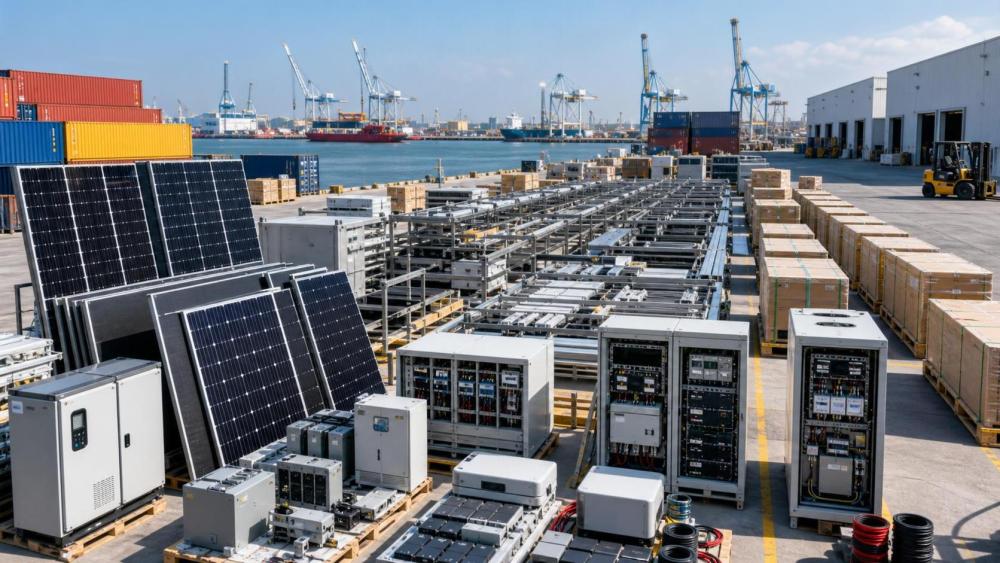
What the rule changes from 8 July 2025
The confirmed change is that, from 8 July 2025, at least 30% of renewable energy project tenders in the EU must assess supply-chain resilience. The rule also sets a specific condition for photovoltaic final products: they must not be assembled in a single country, and at least four key components must come from different places of origin.
The background data provided with this update shows that the EU currently depends on imports for 85% of installed systems and 96% of modules, while China accounts for 79% of supply. The same input indicates that this rule is expected to push Chinese exporters of supporting photovoltaic equipment, including GIS switchgear, SCADA systems, and EMS platforms, to reconsider local assembly and multi-country supply allocation.
Why procurement and delivery structures now matter more
Tender participants face a new entry condition
From an operational perspective, companies participating in renewable energy tenders need to pay closer attention to whether their offer can demonstrate supply-chain resilience in a way that aligns with the new requirement. The impact is not limited to price or technical performance; bid preparation may now also depend on how assembly locations and component origins are structured and documented.
Export suppliers may need to redesign sourcing paths
For exporters serving the EU solar market, the rule raises practical questions around where final products are assembled and how component origin is distributed. Analysis shows that suppliers with highly concentrated sourcing or single-country assembly models may need to reassess procurement arrangements, supplier combinations, and delivery coordination if their products are tied to projects subject to this tender framework.
System and support equipment providers are also exposed
The input specifically highlights Chinese exporters of GIS switchgear, SCADA systems, and EMS platforms. Observably, even where these products are not the photovoltaic module itself, they are linked to project execution and system integration. That means related suppliers may need to monitor how buyers, EPC teams, or project developers adjust technical documents, supply requirements, and delivery expectations in response to the new rule.
What companies should watch before the rule is tested in practice
Check whether origin and assembly records are tender-ready
What deserves closer attention is whether existing documentation can clearly support claims about assembly location and component origin. Where bidding documents begin to reflect resilience criteria, traceable records and consistent technical paperwork may become more important in pre-qualification and contract review.
Track changes in procurement language and bid specifications
Because the input does not provide detailed enforcement language, companies should not assume a single settled compliance method. It is more appropriate to watch how tender documents describe resilience assessment, what kind of origin-related evidence is requested, and whether project buyers distinguish between core products and supporting systems in their procurement requirements.
Review delivery planning against multi-country sourcing needs
Analysis shows that suppliers may need to compare current lead times and delivery commitments with any future requirement for more distributed sourcing. If a business has been operating with concentrated component supply, changes in supplier qualification, scheduling, and logistics coordination could become a practical issue even before any formal rejection occurs.
Prepare for closer scrutiny in after-sales and traceability
From an industry perspective, once supply-chain resilience becomes part of tender evaluation, post-delivery traceability may also receive more attention from buyers. Companies involved in export, integration, or service support should therefore watch whether customers begin requesting clearer origin records, supplier mapping, or technical file consistency across project stages.
Why this looks like an execution signal, not just a policy headline
Analysis shows that this development is better understood as a concrete market-access signal than as a general statement about diversification. The rule has a defined effective date and introduces explicit sourcing and assembly conditions for photovoltaic final products. At the same time, because the input does not include detailed implementation guidance, the market still needs to observe how contracting authorities, buyers, and project documents translate the rule into operational compliance thresholds.
Observably, the most important near-term issue is not only whether suppliers recognize the policy change, but whether they can adjust procurement logic and documentation in time for tender use. That is why the industry is likely to focus on execution language, evidentiary expectations, and the interaction between resilience scoring and actual supplier selection.
How this update is best understood at this stage
This update points to a rule change that connects market access more directly with supply-chain structure in the EU renewable energy procurement context. For solar-related exporters and project suppliers, the practical significance lies in sourcing design, assembly planning, and the ability to support bid compliance with clear records.
It is more appropriate to understand this as an already defined rule change with immediate compliance relevance from its effective date, while also recognizing that the exact market impact still depends on how tender documents, procurement practice, and industry responses evolve after implementation.
Basis of this article and what still needs verification
This article is generated from the user-provided news title, event date, and event summary. For developments of this type, relevant source categories usually include official announcements, regulatory publications, trade or customs authority information, industry association releases, standards-related documents, and reporting by authoritative media.
No specific official source link was provided in the input, so the exact official reference still requires continued verification. What should continue to be monitored includes detailed implementation wording, certification or compliance interpretation, changes in tender documents, market feedback, and how companies actually adjust sourcing and delivery arrangements after the rule takes effect.
Related News
- Which Asian Grid Code Differences Affect Substation Equipment Selection?Sep 11, 2026
- U.S. Imposes Four-Year Safeguard Duty on Quartz CountertopsAug 15, 2026
- EU Sets New GIS F-Gas Rule From August 15Aug 04, 2026
- IEC 62271-305:2026 Takes Effect for EU-Bound GISJul 20, 2026