
ANATEL Urgently Revises XLPE Subsea Cable Certification
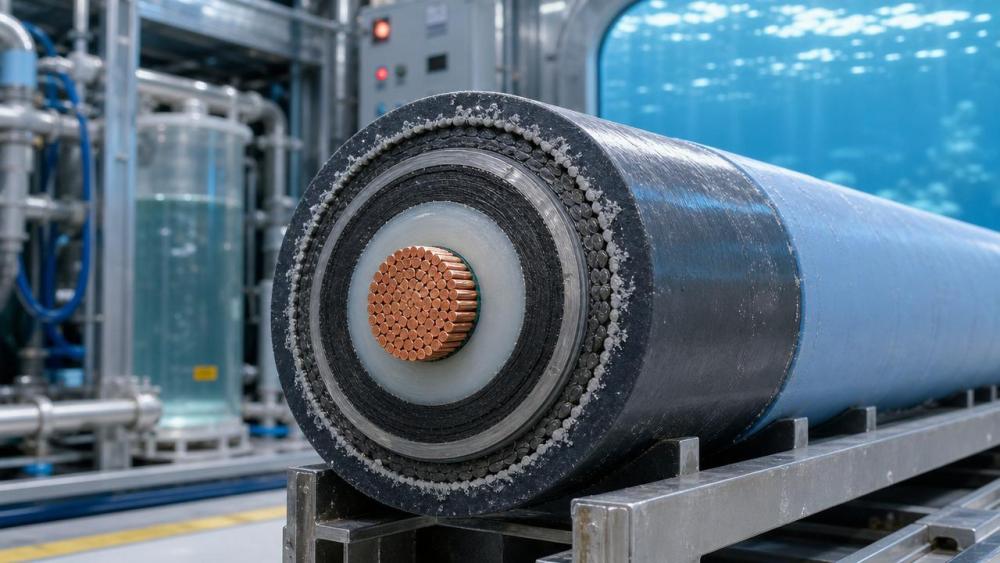
On May 23, 2026, Brazil’s National Telecommunications Agency (ANATEL) issued Technical Notice No. 117, mandating a new biological erosion–accelerated aging test for cross-linked polyethylene (XLPE) subsea cables seeking ANATEL type approval. Effective June 1, 2026, the requirement introduces significant timeline and technical implications for global suppliers serving Brazil’s offshore telecom and energy infrastructure markets.
Event Overview
On May 23, 2026, ANATEL published Technical Notice No. 117, stipulating that all XLPE subsea cable models submitted for ANATEL network access certification must undergo the newly introduced ‘tropical marine bioerosion + salt fog cyclic aging’ coupled environmental test—defined in Annex D of NBR 16972:2026. The test duration is fixed at 120 days. Certification applications received on or after June 1, 2026, will be deemed incomplete without valid test reports meeting this requirement.
Industries Affected
Direct Trading Enterprises
Trading firms exporting XLPE subsea cables to Brazil face immediate scheduling risk. As ANATEL does not accept pre-submission test data unless generated under the exact conditions of Annex D, previously certified or pending cables must now re-enter testing. This extends time-to-market by 3–4 months per model—and may trigger contractual penalties or delivery delays where supply agreements lack force majeure clauses covering regulatory updates.
Raw Material Procurement Enterprises
Suppliers of XLPE insulation compounds, anti-biofouling sheath additives, and halogen-free flame-retardant fillers are seeing renewed technical inquiry—particularly regarding long-term stability under combined biological and saline stress. While no material specification revision has been mandated yet, early adopters report increased requests for accelerated aging data aligned with Annex D parameters, suggesting potential upstream R&D pressure over the next 6–12 months.
Manufacturing Enterprises
Cable manufacturers must now allocate dedicated production slots for test-sample fabrication—using identical materials, extrusion parameters, and curing protocols as commercial batches. Because the 120-day test includes live macrofouling exposure (e.g., barnacle settlement and microbial sulfate reduction), pilot-scale validation runs are impractical; full-scale sample preparation is required. This adds non-recoverable cost and capacity strain, especially for SMEs with limited batch flexibility.
Supply Chain Service Providers
Third-party testing laboratories accredited for NBR standards—and particularly those with marine biofouling simulation chambers—are experiencing surging demand. Lead times for Annex D testing have already extended beyond 180 days at major South American and European labs. Logistics providers handling cable transport to test sites must now ensure temperature- and humidity-controlled staging prior to exposure cycles, adding documentation and compliance overhead.
Key Considerations and Recommended Actions
Verify existing certifications against the June 1 cutoff
Any ANATEL certificate issued before June 1, 2026 remains valid for its original term—but renewal or modification (e.g., voltage rating extension, jacket color change) triggers full re-evaluation under the new requirement. Firms should audit their active certificates and flag models due for renewal between Q3 2026 and Q1 2027.
Engage accredited labs with Annex D capability now—not after submission
Only three labs globally (two in Germany, one in Singapore) currently hold ANATEL-recognized accreditation for Annex D testing. Pre-booking slots—especially for multi-core or high-voltage variants—is essential. Delays in lab onboarding could push first submissions into late Q3 2026.
Review technical documentation for biological exposure traceability
Annex D requires documented evidence of natural seawater sourcing, microorganism species identification, and salinity/pH monitoring logs across all 120 days. Manufacturers must ensure their test partners provide auditable digital logs—not just final pass/fail reports—to avoid rejection during ANATEL’s documentary review stage.
Editorial Perspective / Industry Observation
Observably, ANATEL’s move reflects a broader regulatory shift in emerging economies: from prescriptive dimensional and electrical compliance toward performance-based resilience under localized environmental stressors. Unlike previous updates—which focused on fire safety or EMC—the inclusion of tropical bioerosion signals heightened attention to climate-adaptive infrastructure. Analysis shows this is not an isolated case: similar proposals are under consultation at Indonesia’s BAKTI and Nigeria’s NCC, suggesting a regional convergence rather than a unilateral Brazilian measure. However, it remains unclear whether Annex D will become a de facto benchmark for other LATAM regulators—or remain a Brazil-specific hurdle.
Conclusion
This revision marks more than a procedural update—it underscores how climate-informed certification is evolving from niche consideration to core market access gate. For subsea cable stakeholders, the 120-day test is less a delay than a signal: resilience under complex, real-world marine conditions is now a baseline expectation—not an optional differentiator.
Source Attribution
Official source: ANATEL Technical Notice No. 117, published May 23, 2026, available at www.anatel.gov.br/legislacao/atos-normativos/117-2026.
Standard reference: ABNT NBR 16972:2026, Annex D (published April 15, 2026).
Current status: Implementation confirmed; list of accredited labs pending official ANATEL update (expected June 10, 2026)—to be monitored closely.
Related News
- Is Submarine Cable Repair More Expensive per Kilometer Than Overhead Line Repair?Sep 10, 2026Transmission Materials Fellow
- EU Requires EN 50684:2026 for XLPE Subsea CablesAug 02, 2026Transmission Materials Fellow
- EU Rule Sets EN 50674-2:2026 as Entry Gate for XLPE Submarine CablesJul 31, 2026Transmission Materials Fellow
- EU Requires EN 50682:2026 for Imported XLPE Submarine CablesJul 27, 2026Transmission Materials Fellow