
XLPE Subsea Cable Lead Times Stretch to 42 Months
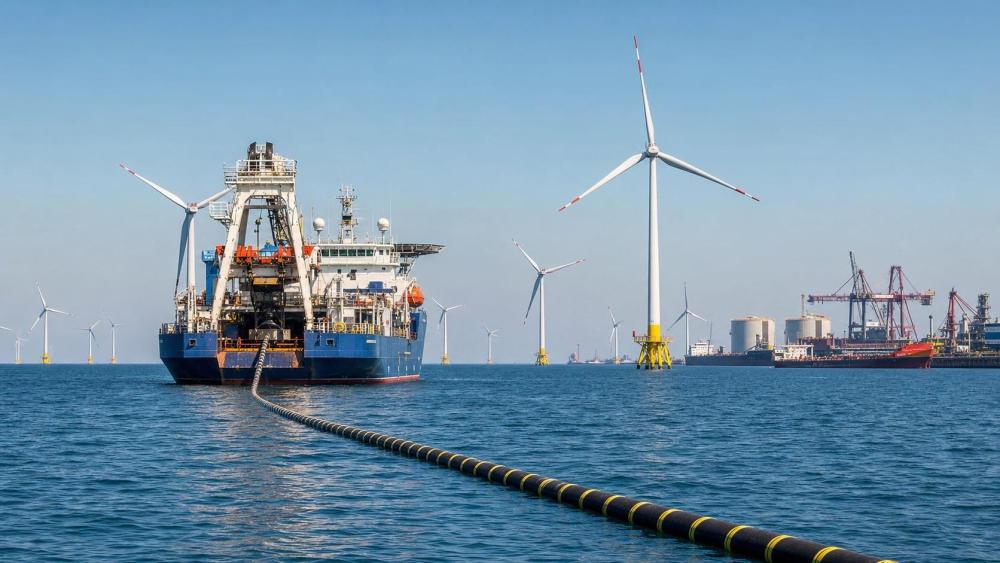
On July 7, 2026, the latest update tied to the Global Subsea Cable Index (GSCI Q2 2026) pointed to a sharp extension in delivery timelines for XLPE submarine cables rated at 220kV and above. Average lead times have moved well beyond the prior quarter, while offshore wind tendering activity in the UK, Germany, and Japan is cited as the immediate driver. For offshore wind developers, procurement teams, cable manufacturers, financing stakeholders, and supply chain service providers, this matters because cable availability is not just a purchasing issue; it can directly shape project sequencing, supplier access, and the ability to secure production slots.
What the latest index update confirms
According to GSCI Q2 2026, the average lead time for XLPE submarine cables rated at 220kV or higher has extended to 36-42 months. In Q1, the comparable average was 28 months. The reported increase is linked to record offshore wind tendering activity in the UK, Germany, and Japan. At the same time, key manufacturers are reported to have full order books through 2028. The same update also states that priority allocation is being given to projects backed by sovereign-supported financing or by green bond certification.
Where the pressure is likely to be felt first
Project procurement and developer timelines
From an industry perspective, offshore wind developers and procurement teams are among the first groups likely to feel the impact. The reason is straightforward: when lead times for high-voltage submarine cable extend from 28 months to as much as 42 months, supplier engagement and production slot booking become more critical parts of project planning. What deserves closer attention is whether procurement strategies, bid timing, and financing readiness are aligned early enough to match the current allocation environment.
Manufacturing capacity and order allocation
For cable manufacturers, the reported full order books through 2028 indicate that capacity management and customer prioritization are now central commercial issues. The effect is likely to show up less in broad demand visibility, which is already implied by the backlog, and more in how manufacturers evaluate project bankability, documentation quality, and delivery commitments. Observably, access to production capacity may increasingly depend on the strength and structure of project financing rather than on demand alone.
Financing and transaction support functions
Supply chain service providers, commercial advisers, and financing-related participants may also be affected because the update explicitly links priority allocation to sovereign-backed financing and green bond certification. Analysis shows that this does not automatically change technical demand, but it can change the competitive position of projects seeking manufacturing slots. In practical terms, documentation, financing structure, and certification status may carry more weight in supplier discussions than in a looser market.
What companies should watch now
How allocation criteria are applied in practice
What deserves closer attention is the gap between a stated allocation preference and its actual application in procurement decisions. Companies involved in project execution should watch for whether sovereign-backed financing or green bond certification becomes a consistent condition for priority access, or remains one factor among several in supplier selection and scheduling.
Which business stage becomes the main bottleneck
Analysis shows that the key issue is not only cable pricing or supplier availability in general terms, but the timing of commitment. For buyers and project teams, the critical business stage may shift toward earlier supplier engagement, internal approvals, and contract readiness. Delays in these steps could carry larger consequences when manufacturers are already booked out for multiple years.
Supplier communication and delivery assumptions
Companies should also review how they communicate delivery expectations to customers, investors, and internal teams. When the average lead time range itself has widened, assumptions used in project scheduling, bid submissions, and execution planning may need to be checked carefully against current supplier feedback rather than prior-quarter benchmarks.
Documentation linked to financing status
For teams seeking procurement certainty, financing-related credentials may become more operationally relevant than before. Observably, projects that can clearly demonstrate qualifying financing support or green bond status may be better positioned in allocation discussions. That makes document readiness and cross-team coordination a practical issue, not just a finance-side matter.
Why this reads as more than a short-term scheduling issue
Analysis shows that this development is not simply a one-off delivery fluctuation. The move from 28 months in Q1 to 36-42 months in Q2, together with full manufacturer order books through 2028, points to a tighter supply-access environment around high-voltage XLPE submarine cable. At the same time, it is more appropriate to understand this as an industry signal rather than a finished outcome. The available information confirms longer lead times and selective allocation, but it does not yet establish how broadly these conditions will alter project behavior across all markets and counterparties.
How to read the signal at this stage
The immediate significance of this update is that submarine cable procurement for major offshore wind-related applications appears to be moving into a more constrained and more selective phase. A neutral reading is that this is best understood as a meaningful market signal with direct operational implications, especially for projects that depend on timely access to 220kV-and-above XLPE submarine cable. It should not yet be treated as a universal conclusion for every project path, but it clearly warrants continued attention from companies whose schedules, financing structure, or supplier strategy depend on this segment.
Basis of this article and what still needs checking
This article is based on the user-provided news title, event date, and event summary. Source types commonly relevant to developments like this include official statements, company disclosures, industry association updates, authoritative media reporting, and technical or standards-related documents. A specific official source link was not provided in the input, so further verification remains necessary. For follow-up tracking, the most relevant areas to watch are any updated manufacturer statements, future GSCI releases, and any clearer market disclosures on how financing status and green bond certification affect allocation in practice.
Related News
- National Grid to Invest Up to £400 Million in Extending IFA Link to 2050Oct 30, 2026Transmission Materials Fellow
- Is Submarine Cable Repair More Expensive per Kilometer Than Overhead Line Repair?Sep 10, 2026Transmission Materials Fellow
- Which maintenance practices support offshore cable failure prevention?Oct 18, 2026Transmission Materials Fellow
- EU Requires EN 50684:2026 for XLPE Subsea CablesAug 02, 2026Transmission Materials Fellow