
Hormuz Strait Closure Drives Up SWIV Rates, Delays Chinese Offshore Wind Exports
Since late March 2026, the sustained closure of the Strait of Hormuz has tightened global availability of offshore wind installation vessels (SWIVs), pushing charter rates up sharply—especially in emerging markets such as Southeast Asia and Latin America—and extending delivery timelines for key Chinese-exported offshore wind equipment to 18 months. This development directly affects maritime logistics-dependent segments of the offshore wind value chain, including equipment manufacturers, international project developers, and marine transport service providers.
Event Overview
As confirmed by multiple industry sources, the Strait of Hormuz has remained closed since late March 2026. This disruption has severely constrained global SWIV deployment capacity. In response, SWIV charter rates in Southeast Asia and Latin America rose 42% month-on-month in May 2026. Concurrently, several leading Chinese offshore wind equipment manufacturers reported delays in scheduled Q2 2026 deliveries of cross-linked polyethylene (XLPE) submarine cables, high-temperature low-sag (HTLS) conductors, and ultra-high-voltage (UHV) substation equipment. Delivery windows have shifted by 5–7 months on average. Some orders are now being restructured into phased shipments combined with overseas local assembly.
Industries Affected
Offshore Wind Equipment Exporters
Exporters face extended lead times due to vessel scheduling bottlenecks—not technical or production constraints. The delay stems from inability to secure SWIV slots for transoceanic transport, particularly for oversized, heavy-lift components requiring specialized vessels.
International Project Developers (Especially in SEA & LATAM)
Developers in Southeast Asia and Latin America are experiencing upward pressure on total installed costs, driven by higher SWIV charter fees passed through via EPC contracts. Delayed equipment arrivals also risk schedule slippage for grid connection milestones tied to regulatory incentives.
Marine Logistics & Chartering Services
Chartering intermediaries and marine logistics coordinators report intensified competition for available SWIV capacity. Lead time for vessel booking has lengthened from typical 3–4 months to over 9 months for certain routes, reducing flexibility for just-in-time planning.
Subsea Cable & Power Component Suppliers
Suppliers of XLPE cables, HTLS conductors, and UHV substations—particularly those relying on single-point ocean freight—face inventory planning challenges. Extended transit uncertainty complicates consignment timing, customs coordination, and port readiness alignment.
What Stakeholders Should Monitor and Do Now
Track official updates on Strait of Hormuz status and regional maritime advisories
Given the direct link between Strait accessibility and SWIV routing feasibility, stakeholders should monitor statements from the International Maritime Organization (IMO), regional port authorities, and naval security briefings—not only for reopening signals but also for interim routing guidance (e.g., Cape of Good Hope detours).
Reassess shipping modalities for priority equipment categories
For XLPE cables, HTLS conductors, and UHV substations—where size, weight, and sensitivity constrain alternatives—stakeholders should evaluate split-load strategies, pre-positioning at regional hubs, or modular design adaptations that enable partial overseas assembly, as already adopted in some revised orders.
Verify contractual force majeure clauses and insurance coverage scope
Parties engaged in long-lead offshore wind supply agreements should review whether Strait-related disruptions qualify under existing force majeure definitions, especially regarding vessel unavailability versus port congestion. Marine cargo insurance policies should be audited for coverage gaps related to extended transit duration or rerouting surcharges.
Engage early with local partners on assembly and commissioning readiness
Where phased shipment + local assembly is implemented, technical documentation handover, skilled labor mobilization, and import clearance protocols for semi-knocked-down (SKD) kits must begin concurrently with initial shipment—not upon arrival—to avoid compounding delays.
Editorial Perspective / Industry Observation
Observably, this is not merely a short-term logistics hiccup but a stress test of offshore wind’s globalized supply chain architecture. The Strait of Hormuz closure has exposed critical dependencies on a narrow set of heavy-lift marine assets—assets whose global fleet remains highly concentrated and difficult to scale rapidly. Analysis shows that while SWIV order books are full through 2027, newbuild deliveries are still 12–18 months away, meaning tight capacity will persist beyond the immediate Strait issue. From an industry perspective, this event functions less as an isolated incident and more as a structural signal: offshore wind’s expansion into geographically dispersed, infrastructure-light markets increases exposure to chokepoint risks previously associated mainly with oil trade. Current conditions warrant ongoing monitoring—not because resolution is imminent, but because mitigation options remain limited and timeline adjustments are now material to financial modeling and permitting compliance.
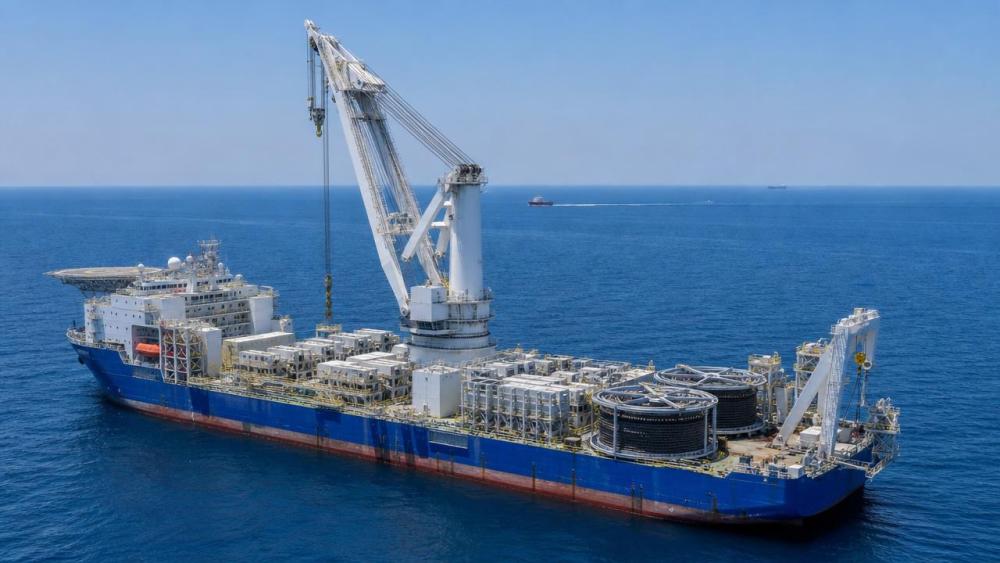
In summary, the Strait of Hormuz closure has triggered measurable cost and schedule impacts across offshore wind equipment export, marine chartering, and international project execution—particularly in emerging markets reliant on imported hardware. It underscores that geopolitical maritime constraints can propagate quickly through capital-intensive, asset-constrained segments of the clean energy supply chain. This situation is best understood not as a temporary anomaly, but as a consequential inflection point highlighting systemic vulnerabilities in global offshore wind logistics resilience.
Source: Public statements from Chinese offshore wind equipment manufacturers (confirmed delivery delays and revised logistics models); SWIV charter rate indices published by Clarksons Research (May 2026 update); IMO navigational warnings and regional maritime security bulletins (March–May 2026). Note: Ongoing observation is required for Strait of Hormuz reopening status and SWIV fleet redeployment patterns.
Related News
- National Grid to Invest Up to £400 Million in Extending IFA Link to 2050Oct 30, 2026Transmission Materials Fellow
- Is Submarine Cable Repair More Expensive per Kilometer Than Overhead Line Repair?Sep 10, 2026Transmission Materials Fellow
- Which maintenance practices support offshore cable failure prevention?Oct 18, 2026Transmission Materials Fellow
- EU Requires EN 50684:2026 for XLPE Subsea CablesAug 02, 2026Transmission Materials Fellow