
IMO Adopts XLPE Submarine Cable Carbon Footprint Guidelines for Bids
On 16 May 2026, the International Maritime Organization (IMO) adopted the Guidelines for Life Cycle Carbon Emission Accounting of XLPE Submarine Cables (IMO-MEPC.387(81)), introducing mandatory carbon reporting requirements for XLPE submarine cables used in offshore wind transmission projects — a development directly impacting global cable exporters, manufacturers, and supply chain service providers.
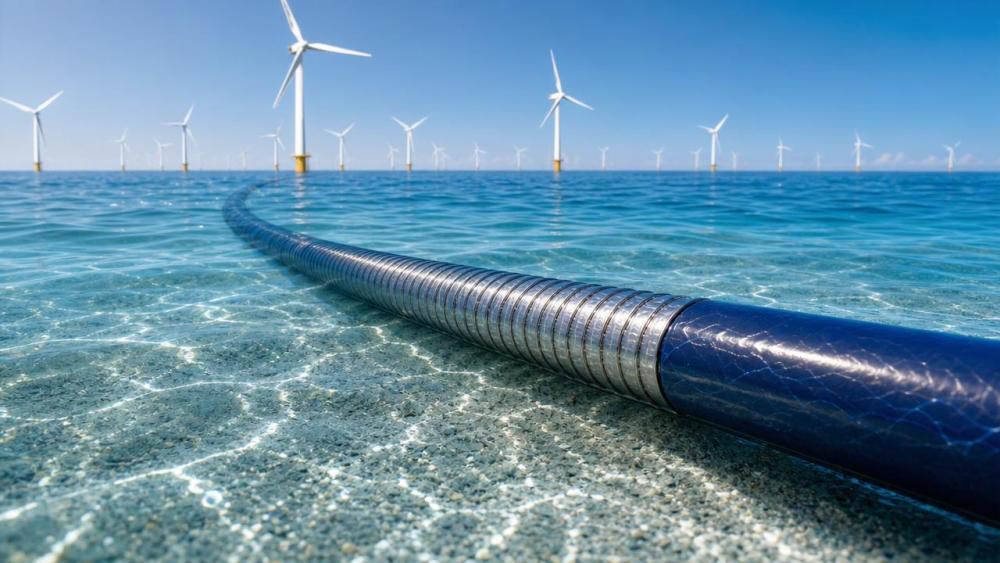
Official Adoption of First-Ever Carbon Accounting Standard for XLPE Submarine Cables
On 16 May 2026, the IMO formally approved IMO-MEPC.387(81), the first international guideline specifying life cycle assessment (LCA) requirements for XLPE submarine cables. Effective from 2027, all tender submissions for offshore wind interconnection projects must include a third-party-verified life cycle carbon report covering raw material extraction, extrusion processing, armoring, and cable-laying vessel energy consumption. Chinese submarine cable manufacturers are actively engaging DNV GL to develop compliant LCA models.
Impact Across Supply Chain Roles
Export-oriented cable suppliers
These enterprises now face new bidding prerequisites: carbon data must be embedded directly into commercial quotations. Failure to provide verified LCA documentation will disqualify bids for major offshore wind grid connection tenders starting in 2027.
Raw material procurement firms
Suppliers of polyethylene resins, copper conductors, and steel wire armoring must begin disclosing upstream emissions data — including mining, refining, and polymerization energy use — to enable downstream LCA modeling.
Cable manufacturing facilities
Production lines must track real-time energy inputs per process stage (e.g., extrusion temperature profiles, cooling water usage, armoring line throughput), as these parameters feed directly into LCA calculations and verification audits.
Marine installation and logistics service providers
Cable-laying contractors must document vessel fuel type, engine load profiles, and route-specific energy consumption during deployment — data previously uncollected but now essential for full-system carbon reporting.
Key Compliance Priorities for Manufacturers
Integrate LCA modules into commercial quoting systems
Export quotations must now include carbon intensity values (kg CO₂-eq/km) alongside price and technical specifications — requiring ERP or bid management system updates before Q4 2026.
Initiate third-party LCA model validation with accredited bodies
DNV GL, Bureau Veritas, and TÜV SÜD are among the few certification bodies currently qualified to verify XLPE cable LCAs under IMO-MEPC.387(81); early engagement is critical to avoid bottlenecks ahead of 2027 tenders.
Align technical tender documentation with carbon reporting boundaries
Bid submissions must explicitly define system boundaries (e.g., cradle-to-gate vs. cradle-to-site), allocation methods for multi-output processes, and assumptions on cable lifetime — all subject to verification review.
Prepare upstream supplier engagement protocols
Manufacturers must formalize data-sharing agreements with resin producers, metal smelters, and sheath compound suppliers to secure primary emission factors required for ISO 14040/44-compliant LCAs.
Industry Observation: From Voluntary Reporting to Contractual Obligation
Analysis shows this shift marks a structural transition: carbon footprinting is no longer a sustainability add-on but a binding contractual requirement embedded in marine infrastructure procurement. Observably, the 12-month lead time between adoption (May 2026) and enforcement (2027) reflects deliberate calibration — yet it compresses typical LCA implementation cycles (often 18–24 months) into less than one year. What deserves closer attention is how national maritime authorities and project owners interpret ‘third-party verification’ — divergence in accreditation scope or audit depth could create uneven compliance burdens across regions.
Strategic Implication for Global Subsea Infrastructure Markets
This guideline establishes the first internationally harmonized carbon accounting framework for submarine power cables — signaling that environmental performance is now inseparable from technical and commercial qualification. Its significance lies not only in regulatory precedent but in reshaping value propositions: competitive advantage will increasingly hinge on transparency, traceability, and verifiable decarbonization capability — not just voltage rating or burial depth.
Source Attribution and Monitoring Guidance
This article is generated exclusively from the provided title, event date (16 May 2026), and summary. It does not cite external documents or official publications. Specific official source links were not provided in the input and should be verified continuously. Stakeholders are advised to monitor upcoming IMO circulars clarifying verification criteria, national transposition timelines, and pilot tender specifications issued by leading offshore wind markets (e.g., UK, Germany, South Korea, and Taiwan).
Related News
- Steam Turbine Supplier Evaluation: 7 Critical Quality and Delivery Checks for Procurement TeamsSep 21, 2026Ms. Elena Rodriguez
- How Often Should SCADA Systems Be Upgraded for Cybersecurity?Sep 11, 2026Grid Automation Expert
- Which Asian Grid Code Differences Affect Substation Equipment Selection?Sep 11, 2026
- Is Submarine Cable Repair More Expensive per Kilometer Than Overhead Line Repair?Sep 10, 2026Transmission Materials Fellow