
Germany Tightens No-Load Loss Limits for 1000kV UHV Transformers by 12%
On May 12, 2026, Germany’s Federal Ministry for Economic Affairs published an amendment to the Energy-Efficient Equipment Act, introducing stricter no-load loss requirements for ultra-high-voltage (UHV) power transformers—specifically targeting the 1000 kV class. The change directly impacts manufacturers and exporters supplying to German and broader EU energy infrastructure markets.
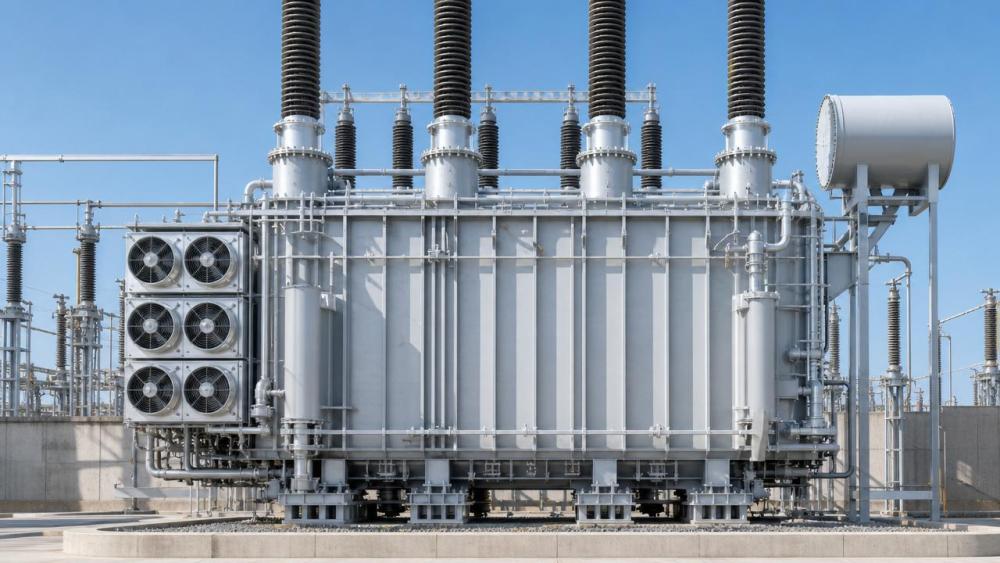
Regulatory Update: Key Facts of the Amendment
Effective October 1, 2026, the amended Energy-Efficient Equipment Act lowers the maximum allowable no-load loss for 1000 kV UHV transformers from 0.055% to 0.0485% of rated capacity—a 12% reduction. The amendment was formally issued by Germany’s Federal Ministry for Economic Affairs on May 12, 2026. Leading Chinese UHV transformer manufacturers have already initiated validation of amorphous metal core designs and step-lap core stacking processes to meet the revised German efficiency threshold.
Supply Chain Impact Across Business Roles
Export-oriented equipment suppliers
These companies face immediate compliance pressure: units shipped to Germany after October 1, 2026 must demonstrate conformity with the new no-load loss limit. Product certification, technical documentation, and type-test reports will require revalidation under the updated standard—potentially delaying shipments if testing capacity or lab accreditation is constrained.
Raw material procurement firms
Suppliers of high-permeability electrical steel, amorphous alloy ribbons, and specialized insulation materials may see increased demand for premium-grade inputs. Procurement teams must now verify supplier traceability and material certifications aligned with tighter magnetic core performance targets—not just bulk availability.
Transformer OEMs and system integrators
Manufacturers must reassess core design, winding configuration, and thermal management to meet the lower loss target without compromising short-circuit withstand or service life. This affects engineering timelines, prototype iteration cycles, and qualification testing scope—especially for custom-engineered UHV units intended for grid interconnection projects.
Logistics and compliance support providers
Third-party verification bodies, CE marking consultants, and customs advisory services will need to update technical checklists and audit protocols. Documentation packages for German market access must now explicitly reference no-load loss test conditions—including ambient temperature, waveform distortion limits, and measurement uncertainty thresholds—as defined in the amended regulation.
Strategic Priorities for Affected Enterprises
Revalidate type-test reports against the 0.0485% threshold
Existing test certificates based on the prior 0.055% limit are no longer sufficient for post-October 2026 deliveries. Manufacturers must commission new no-load loss tests under standardized IEC 60076-1 and EN 50588-1 conditions—and ensure test labs hold DAkkS or equivalent accreditation recognized by German market surveillance authorities.
Accelerate adoption of advanced core technologies
The 12% loss reduction exceeds typical incremental gains from conventional grain-oriented silicon steel. Firms are prioritizing amorphous metal cores and precision step-lap lamination techniques—both requiring new tooling, operator training, and quality control procedures for core gap consistency and flux distribution uniformity.
Align technical tender specifications with updated German requirements
For ongoing and upcoming grid tenders in Germany and neighboring markets referencing national energy efficiency criteria, bidders must update technical proposals, Bill of Materials (BOM), and compliance declarations to reflect the amended no-load loss value—and explicitly state whether test data derives from full-scale prototypes or scaled-down models validated per EN 50464-3.
Industry Observation: Efficiency Standards as De Facto Technical Barriers
Analysis shows that tightening no-load loss limits functions not only as an energy policy instrument but also as a de facto technical barrier shaping global UHV supply chains. Observably, the 0.0485% threshold approaches the theoretical minimum for commercially viable 1000 kV transformers using current materials science—making certification readiness a critical differentiator. From an industry perspective, this amendment accelerates consolidation among Tier-1 manufacturers capable of investing in next-generation core R&D and metrology infrastructure, while raising the entry requirements for smaller or regional suppliers seeking EU market access. What deserves closer attention is the potential ripple effect: other EU member states may adopt similar amendments through harmonized Ecodesign implementing measures, amplifying the compliance burden beyond Germany alone.
Conclusion: A Milestone in Grid-Scale Energy Efficiency Governance
This regulatory update marks a significant step toward embedding stringent energy performance criteria into high-voltage infrastructure procurement—not merely as voluntary best practice, but as enforceable legal obligation. It reflects a broader shift where efficiency standards increasingly drive core technology selection, manufacturing investment, and international competitiveness. A rational interpretation is that compliance is no longer a post-production checkbox, but a foundational design constraint integrated from the earliest stages of product development.
Source Attribution and Verification Notes
This article is generated exclusively from the user-provided information: title, event date (May 12, 2026), and event summary. Specific official source links were not provided in the input and should be verified continuously. Stakeholders are advised to monitor updates from the German Federal Ministry for Economic Affairs, the European Commission’s Ecodesign Working Plan, and notified bodies such as TÜV Rheinland and DEKRA for implementation guidance, test protocol clarifications, and enforcement interpretations as the October 1, 2026 deadline approaches.
Related News
- Vietnam Sets 2026 Standalone Storage Price Ceiling at VND 3,209.98/kWhNov 12, 2026Energy Storage Strategist
- Yangtze River Delta Issues Power-Sharing Rules Including Storage and Virtual Power PlantsNov 11, 2026Dr. Alistair Vaughn
- NTPC Green Energy Tenders 10 GW/40 GWh Storage Systems and Grid-Forming PCSNov 10, 2026Energy Storage Strategist
- Australia’s NEM Battery Storage Reaches Record 20.17 GWhNov 09, 2026Energy Storage Strategist