
CPSC eFiling Mandate Effective July 8, 2026: 600+ HTS Codes Require Electronic Certificates
The U.S. Consumer Product Safety Commission (CPSC) has mandated electronic submission of compliance certificates via the ACE system for over 600 Harmonized Tariff Schedule (HTS) codes—including PCS inverters and EMS-integrated power modules—effective July 8, 2026. This regulatory shift directly impacts importers, manufacturers, and supply chain service providers engaged in consumer electronics and energy storage equipment trade with the United States, primarily increasing pre-clearance compliance burden and port processing complexity at East Coast terminals.
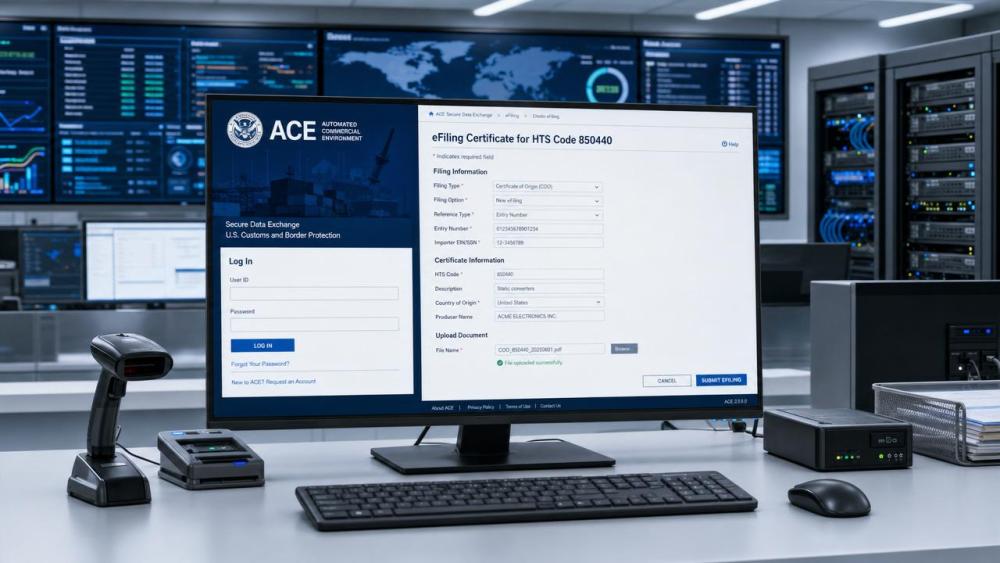
Regulatory Implementation Timeline and Scope
Effective July 8, 2026, the CPSC requires all products falling under the updated HTS list—including PCS inverters, EMS platform power modules, and more than 600 additional HTS classifications—to submit electronic Certificates of Compliance (eFiling) through the Automated Commercial Environment (ACE) system. Importers failing to complete timely eFiling will face automatic detention of shipments upon arrival at U.S. ports. The requirement applies exclusively to products covered by the officially published HTS清单 (list), with no grace period announced.
Impact Across Supply Chain Roles
Direct Trading Enterprises
Importers and export-oriented trading companies must now integrate ACE eFiling into their standard customs clearance workflows. Delays in certificate generation or data entry errors may trigger shipment holds, directly affecting delivery schedules and contractual penalties. They are required to verify HTS classification accuracy and ensure alignment between product descriptions in commercial invoices and CPSC-mandated compliance documentation.
Raw Material Procurement Firms
Procurement entities sourcing components for regulated end-products—such as power semiconductors or embedded controllers used in PCS inverters—must confirm upstream suppliers’ ability to provide traceable, CPSC-compliant technical documentation. This extends due diligence requirements upstream and increases scrutiny of bill-of-materials (BOM) transparency.
Manufacturing Enterprises
Producers of covered products must align internal quality assurance and labeling processes with CPSC’s electronic certification framework. Factory-level test reports, conformity declarations, and product identification markings must be structured to support rapid eFiling—especially for batch-level submissions tied to specific production runs.
Supply Chain Service Providers
Customs brokers, freight forwarders, and compliance consultants must upgrade their systems and staff training to support ACE eFiling integration. Their role expands from document handling to active compliance gatekeeping—verifying HTS eligibility, certificate validity windows, and data consistency across commercial, technical, and regulatory records.
Key Compliance Priorities and Operational Adjustments
Verify HTS Classification and Certificate Eligibility
Companies must cross-check current product HTS codes against the latest CPSC-published list—not relying on historical classifications. PCS inverters and EMS-compatible power modules require particular attention, as their classification may vary depending on function, output rating, and integration scope.
Integrate eFiling into Pre-Shipment Quality Gateways
eFiling must become a mandatory checkpoint before goods leave origin facilities. This includes finalizing test reports, assigning unique certificate IDs, and validating ACE-compatible metadata (e.g., importer of record number, manufacturer address, model-specific compliance statements).
Update Supplier Management Protocols
Importers should require certified suppliers to maintain up-to-date CPSC compliance documentation—and to designate authorized personnel capable of supporting eFiling verification. Contracts and supplier scorecards should reflect accountability for electronic certificate timeliness and accuracy.
Adjust Lead Times and Inventory Planning
Given the risk of detention and rework, firms should extend procurement-to-clearance timelines by 5–7 business days. Buffer stock planning is advisable for high-turnover items covered under the mandate, especially ahead of peak shipping seasons.
Industry Perspective: A Shift Toward Embedded Compliance Infrastructure
Analysis shows this mandate signals a broader transition from paper-based, post-arrival verification to real-time, system-integrated compliance enforcement. From an industry perspective, it elevates the strategic value of digital regulatory infrastructure—particularly ERP and PLM systems configured to auto-generate ACE-ready compliance packets. What deserves closer attention is how rapidly mid-tier exporters adapt: those lacking internal regulatory IT capacity may face disproportionate cost escalation relative to larger peers with dedicated eFiling automation. It is more appropriate to understand this as not merely a filing change—but a structural recalibration of compliance ownership across the supply chain.
Strategic Implications for Global Market Access
This rule reinforces that U.S. market access for consumer-grade power electronics now hinges on operational readiness—not just technical conformity. Success depends less on passing a one-time lab test and more on sustaining a repeatable, auditable, and digitally interoperable compliance process. For manufacturers targeting North America, investing in ACE-aligned documentation management is no longer optional; it is foundational to predictable market entry and brand reliability.
Source Attribution and Ongoing Monitoring
This article synthesizes the event title, effective date (July 8, 2026), and summary provided by the user. It reflects confirmed CPSC policy direction but does not cite specific Federal Register notices, CPSC guidance documents, or ACE implementation bulletins—as none were included in the input. Specific official source links were not provided in the input and should be verified continuously. Stakeholders are advised to monitor forthcoming CPSC FAQs, ACE system release notes, and updates from U.S. Customs and Border Protection regarding data field requirements, certificate renewal intervals, and enforcement thresholds.
Related News
- China Issues 15th Five-Year Power Safety Plan, Raising Export Compliance for UHV and HVDC EquipmentAug 17, 2026High-Voltage Grid Architect
- China-UAE Launch Direct Sea Route, Cutting UHV and Energy Storage Logistics Time by 30%Aug 16, 2026High-Voltage Grid Architect
- U.S. Imposes Four-Year Safeguard Duty on Quartz CountertopsAug 15, 2026
- China Imposes Temporary Helium Export BanAug 14, 2026Transmission Materials Fellow