
US Court Blocks Trump's Global Tariffs, Easing HVDC Valve Export Clearance
On May 8, 2026, the U.S. Court of International Trade ruled that the Trump administration’s 2025 ‘blanket global import tariff’ lacked statutory authority, suspending its enforcement effective immediately. This decision directly impacts exporters of HVDC converter valves from China, potentially reducing customs clearance delays and cost burdens associated with previously imposed additional duties.
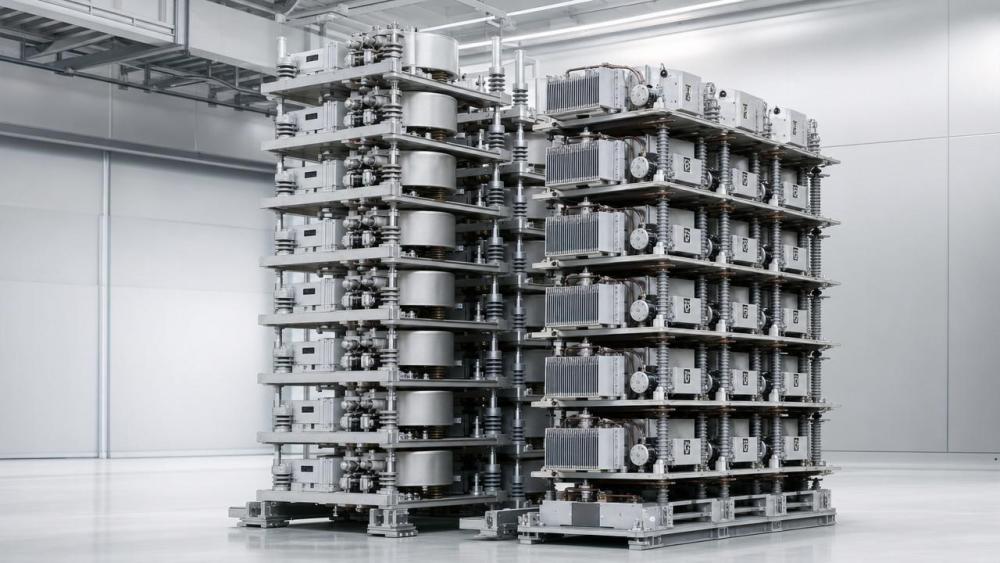
U.S. Court Invalidates Unilateral Global Tariff Measure
The U.S. Court of International Trade determined on May 8, 2026, that the 2025 blanket global import tariff—applied without product- or country-specific justification—exceeded the executive branch’s statutory authority under U.S. trade law. The court ordered immediate suspension of the tariff imposition. As a result, HVDC converter valve exports—including ultra-high-voltage thyristor valve towers and IGBT valve modules—previously subject to an additional 25% duty, are expected to revert to Most-Favored-Nation (MFN) tariff rates beginning in June 2026.
Impact Across the HVDC Power Equipment Supply Chain
Direct Exporters
Exporters of HVDC converter valves face immediate relief in customs processing time and landed cost calculation. With the 25% ad valorem surcharge suspended, pre-shipment planning, invoice valuation, and Harmonized System (HS) code classification for U.S.-bound shipments no longer require contingency buffers for tariff uncertainty.
Raw Material Suppliers
Suppliers of silicon carbide substrates, gate drive units, and heat-sink assemblies may observe revised order timing and volume forecasts, as downstream exporters adjust procurement cycles in anticipation of restored MFN treatment—potentially accelerating raw material demand in late May and early June.
Power Electronics Manufacturers
Manufacturers integrating thyristor/IGBT valve modules into complete HVDC valve stacks must reassess export documentation workflows, particularly technical specifications referenced in customs declarations. Alignment between product datasheets, test reports (e.g., IEC 62543), and tariff line descriptions becomes more stable under MFN conditions.
Logistics and Trade Compliance Service Providers
Certification agents, customs brokers, and freight forwarders specializing in high-voltage power equipment will need to update tariff databases, revise client advisories, and verify updated CBP entry requirements—including potential re-evaluation of origin documentation and preferential tariff eligibility claims.
Key Operational Considerations for Exporters
Revalidation of Customs Classification and Origin Documentation
Exporters should proactively confirm HS code assignments (e.g., 8543.70 for semiconductor-based power control apparatus) and ensure Certificate of Origin formats comply with current U.S. Customs and Border Protection (CBP) expectations—especially where regional value content or assembly location affects MFN eligibility.
Alignment of Technical Specifications with Tariff Descriptions
Technical tender documents, test reports (e.g., IEEE 1895, IEC 62543), and product brochures must clearly support classification under MFN-applicable headings—not just functional descriptions—to avoid post-entry customs challenges.
Adjustment of Delivery Schedules and Inventory Planning
With reduced customs clearance risk and predictable duty costs, exporters can optimize shipping windows and reduce safety stock levels for U.S.-bound valve modules—particularly for projects tied to North American grid modernization timelines.
Review of Supplier Qualification Records
Manufacturers should audit supplier documentation for critical subcomponents (e.g., snubber circuits, optical trigger units) to ensure traceability and conformity with applicable standards (e.g., UL 62368-1, IEC 61800-5-1), supporting consistent compliance under reinstated MFN treatment.
Industry Perspective: A Temporary Reprieve Amid Structural Uncertainty
Analysis shows this ruling addresses procedural overreach—not the underlying policy debate on trade defense tools. From an industry perspective, the suspension offers near-term operational breathing room but does not eliminate exposure to future targeted measures under Section 301 or national security provisions (e.g., Executive Order 14017). What deserves closer attention is the growing divergence between judicial review standards and executive trade authorities—a dynamic likely to influence how manufacturers structure export compliance programs beyond tariff classification alone.
Strategic Implications for HVDC Equipment Export Strategy
This decision reaffirms the importance of embedding legal defensibility into trade documentation—not only through accurate tariff coding but also via robust technical substantiation and origin transparency. While the 25% surcharge is paused, long-term resilience depends less on tariff rate stability and more on demonstrable adherence to international performance, safety, and traceability frameworks (e.g., ISO/IEC 17025 testing, IECQ QC 080000 for hazardous substances).
Source Information and Verification Guidance
This article was generated exclusively from the provided title, event date (May 8, 2026), and summary. Specific official source links were not provided in the input and should be verified continuously. Stakeholders are advised to monitor updates from the U.S. Court of International Trade, U.S. International Trade Commission (USITC), and U.S. Customs and Border Protection regarding implementation details, potential appeals, and any revised guidance on MFN eligibility verification procedures for power electronics exports.
Related News
- Steam Turbine Supplier Evaluation: 7 Critical Quality and Delivery Checks for Procurement TeamsSep 21, 2026Ms. Elena Rodriguez
- How Often Should SCADA Systems Be Upgraded for Cybersecurity?Sep 11, 2026Grid Automation Expert
- Which Asian Grid Code Differences Affect Substation Equipment Selection?Sep 11, 2026
- Is Submarine Cable Repair More Expensive per Kilometer Than Overhead Line Repair?Sep 10, 2026Transmission Materials Fellow