
ACWA Power Sets Dual-Certification Bar for 2.1GWh BESS
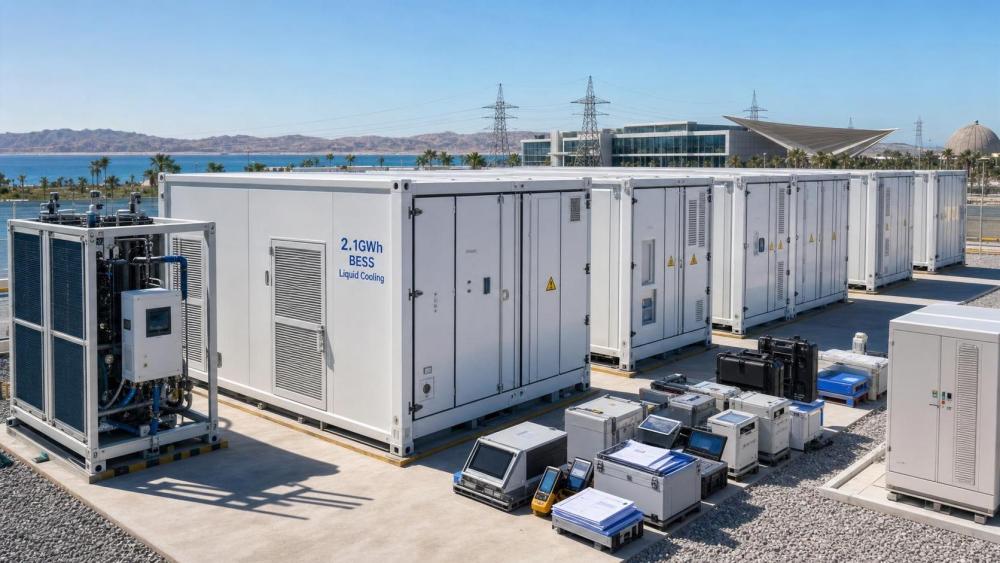
On July 9, 2026, ACWA Power released an international tender for the Red Sea NEOM Phase II liquid-cooling BESS project, introducing a clear procurement and compliance shift: bidders must hold both UL 1973 (Second Edition) and IEC 62933-3-2:2025 certification, while the liquid-cooling plate thermal management module must also pass an on-site retest by a Saudi-designated third party recognized by SASO. For battery energy storage manufacturers, exporters, certification teams, testing partners, and project delivery functions, this is worth close attention because the tender requirement moves certification from a supporting advantage to a hard market-entry condition within a major project bidding process.
What the Tender Explicitly Requires
The confirmed information is limited but commercially significant. ACWA Power, identified in the input as a leading Saudi power developer, issued the Red Sea NEOM Phase II Liquid Cooling BESS international RFP on July 9, 2026, under RFP No. ACWA-BESS-2026-07. The tender covers a total capacity of 2.1GWh. According to the provided event summary, bidders are required to hold both UL 1973 (Second Edition) and IEC 62933-3-2:2025 certification at the same time. In addition, the liquid-cooling plate thermal management module must undergo an on-site retest by a third party designated by the Saudi side and recognized by SASO. The same summary indicates that this requirement raises entry barriers for Chinese suppliers while creating structural opportunities for companies that already possess dual-certification capability.
Where the New Threshold Hits the Value Chain
Bid qualification now starts with certification readiness
From an industry perspective, the most immediate impact falls on BESS manufacturers and export-oriented suppliers seeking direct participation in the tender. The reason is straightforward: the dual-certification requirement is framed as a mandatory bid condition rather than a later-stage optimization item. In practice, affected business steps are likely to include bid eligibility review, technical document preparation, product configuration confirmation, and internal go/no-go decisions on whether to pursue the project. What deserves closer attention is whether the available certification scope, edition alignment, and document completeness are sufficient to support the bid package without gaps.
Thermal management suppliers face an additional verification layer
Suppliers involved in liquid-cooling plate thermal management modules may also feel a more direct compliance burden. Analysis shows that the on-site retest requirement introduces a separate verification checkpoint beyond holding named certifications at system level. For these companies, the impact is likely to appear in testing coordination, sample readiness, technical file consistency, and delivery planning tied to third-party review. The practical issue is not only product performance, but whether module-level evidence can withstand repeat verification under a Saudi-designated laboratory process.
Procurement and project teams must treat compliance as a schedule variable
For procurement functions, EPC-related coordination teams, and project delivery managers, the rule change may alter how supplier qualification is sequenced. Observably, certification status and retest arrangements can no longer be handled as parallel paperwork detached from commercial planning. They may influence supplier shortlisting, document collection, technical bid alignment, and milestone planning around award and delivery preparation. The key point to watch is whether compliance evidence is available early enough to prevent slippage between tender submission and execution readiness.
Testing and certification service providers become more embedded in execution
Certification support firms and testing service organizations may see stronger demand from companies trying to bridge documentation and verification gaps. Their relevance rises because the tender language, as provided, combines international certification requirements with a Saudi-side retest mechanism. The affected business links are likely to include report review, conformity file preparation, test coordination, and communication over acceptance criteria. Companies relying on external compliance partners should therefore pay attention to response time, recognized laboratory pathways, and consistency between existing reports and tender-facing submissions.
What Companies Should Review Before Treating This as Bid-Ready
Check whether existing certifications match the named requirement exactly
Analysis shows that companies should first verify whether they hold both required certifications in the exact form referenced in the tender summary, including the cited edition and standard version. A generic statement of compliance may not be enough if the tender review expects precise documentary alignment. What deserves closer attention is the consistency between certificates, test reports, technical datasheets, and the product configuration actually intended for bidding.
Prepare for retest-related documentation and site coordination
Because the liquid-cooling plate thermal management module must pass an on-site retest by a Saudi-designated, SASO-recognized laboratory, firms should closely review what materials may be needed to support that process. The input does not provide the detailed execution procedure, so this should not be treated as a settled operational pathway. Even so, companies would be prudent to monitor retest notice language, sample requirements, testing arrangements, and any document requests linked to traceability or configuration control.
Reassess supplier qualification and subcontracting exposure
For companies assembling bids through multiple suppliers, this tender condition may require a stricter review of upstream qualification. It is more appropriate to understand this as a practical supply-chain screening issue, not only a legal compliance issue. Firms should pay attention to whether component providers, thermal module partners, and documentation owners can support the full tender package in a consistent way, particularly where certificates and technical evidence are held across different entities.
Watch for changes in wording, interpretation, or tender documents
The provided information confirms the bid requirement, but it does not provide later clarifications, Q&A responses, or updated tender documentation. Observably, companies should continue monitoring for any refinement in interpretation, document format, or evidence thresholds. That matters because bid compliance can be shaped not only by the headline requirement itself, but also by how the purchaser and designated verification bodies apply it in practice.
Why This Looks Like an Execution Signal, Not Just a Headline
Analysis shows that this development is more meaningful as a procurement execution signal than as a general discussion about standards. The reason is that the stated requirement is attached to a live international tender and connects certification status directly to market access. At the same time, it is too early to frame it as a fully settled industry-wide rule beyond the scope of the provided event. It is more appropriate to understand this as a concrete sign of tighter entry requirements within a major project context, while continuing to observe whether similar language appears in later tenders, how strictly retesting is implemented, and how market participants respond.
How the Market Should Read This Development
On the information available, the ACWA Power tender should be read as a real compliance threshold with immediate implications for bidding strategy, certification preparedness, and supplier qualification. It does not by itself prove a universal market shift, but it does show that dual certification plus local verification can be written directly into project access conditions. A cautious industry reading is therefore warranted: this is neither a routine documentation update nor a basis for broad conclusions, but a specific and actionable signal that compliance architecture is becoming more central to participation in high-value BESS procurement.
Basis of This Article and What Still Needs Verification
This article is generated from the user-provided news title, event date, and event summary. For developments of this type, commonly relevant source categories may include official tender notices, purchaser announcements, regulator releases, customs or trade authority information, industry association updates, standards organization documents, certification body materials, and reporting by established industry media. No specific official source link was provided in the input, so the underlying tender documents, formal notice text, and any subsequent clarification materials still need ongoing verification. Further observation should focus on execution details, certification interpretation, tender document changes, industry feedback, and how participating companies handle compliance and delivery preparation.
Related News
- Vietnam Sets 2026 Standalone Storage Price Ceiling at VND 3,209.98/kWhNov 12, 2026Energy Storage Strategist
- NTPC Green Energy Tenders 10 GW/40 GWh Storage Systems and Grid-Forming PCSNov 10, 2026Energy Storage Strategist
- Australia’s NEM Battery Storage Reaches Record 20.17 GWhNov 09, 2026Energy Storage Strategist
- India Approves ₹145 Billion VGF Plan for 92 GWh of Energy StorageNov 07, 2026Energy Storage Strategist