
EU SF6 Phase-Out Roadmap Impacts GIS Exporters
On May 21, 2026, the European Commission published its Implementation Roadmap for Phasing Out SF6 in Medium- and High-Voltage Switchgear (2026–2035), triggering immediate strategic recalibration across the global gas-insulated switchgear (GIS) supply chain — particularly for Chinese manufacturers exporting to the EU market. The regulation directly targets SF6-based insulation systems, a cornerstone of current GIS design, and introduces binding compliance timelines with tangible technical and commercial consequences.
Event Overview
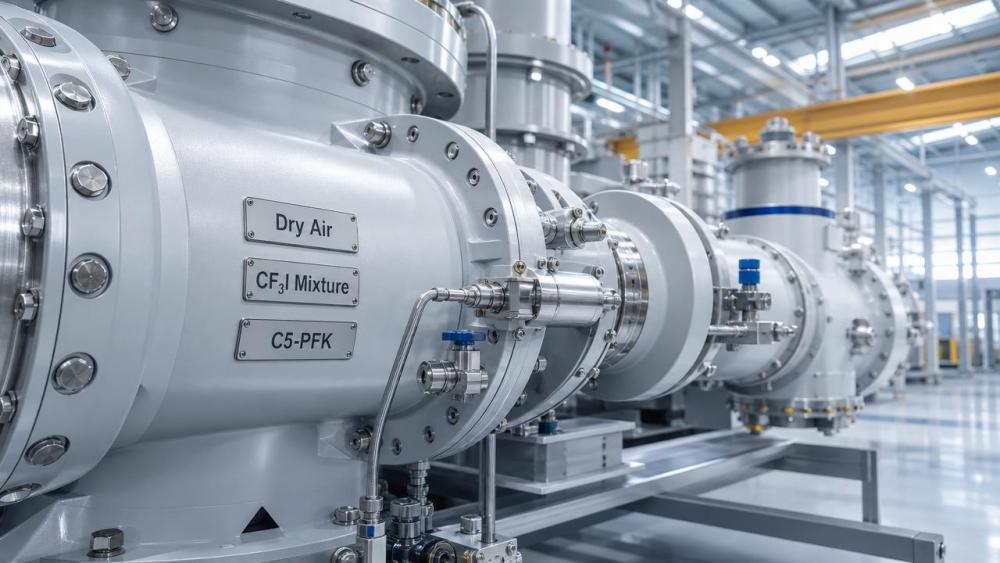
On May 21, 2026, the European Commission officially released the Implementation Roadmap for Phasing Out SF6 in Medium- and High-Voltage Switchgear (2026–2035). It mandates that all new GIS switchgear placed into service in the EU from January 1, 2027 onward must pass pre-commissioning F-gas Regulation compliance review. Only three alternative insulating gases are permitted: CF3I-based mixtures, dry air, and a newly approved perfluoroketone (C5-PFK). As of mid-2026, over 70% of GIS units exported from China to the EU still rely on SF6 as the primary insulating medium. Affected manufacturers must complete gas system redesign, re-engineering of enclosure integrity and thermal management, and full type-test certification within 12 months. TÜV Rheinland and KEMA have launched dedicated fast-track application channels for Chinese manufacturers’ certification submissions.
Industries Impacted
Direct Exporters (OEMs & Tier-1 Suppliers)
Chinese GIS original equipment manufacturers exporting to the EU face direct regulatory exposure: non-compliant units will be barred from market entry after January 2027. Impact manifests in three dimensions — technical (system-level redesign), financial (certification costs estimated at €120,000–€350,000 per model), and commercial (potential order delays or contract renegotiation due to extended lead times).
Raw Material Suppliers
Suppliers of SF6 gas, high-purity nitrogen, fluorinated intermediates (e.g., for CF3I synthesis), and C5-PFK precursors face demand reallocation. While SF6 sales to EU-bound GIS production will decline sharply post-2026, demand for certified alternative gas blends — especially those meeting IEC 62271-4:2023 purity and stability requirements — is rising. Suppliers lacking traceable gas composition documentation or ISO 8573-1 Class 2 certification may lose qualification as approved sources.
Manufacturing & Assembly Facilities
GIS production lines require modifications to accommodate new gas handling protocols: stricter leak-tightness verification (≤0.5% per year vs. prior ≤1%), revised filling procedures under inert atmosphere, and integration of gas quality sensors compliant with EN 50180. Factories without cleanroom-grade assembly zones or calibrated SF6/alternative-gas recovery systems risk failing conformity audits during factory inspections tied to CE marking renewal.
Supply Chain Service Providers
Third-party testing labs, certification bodies, and logistics firms specializing in hazardous gas transport must adapt. Certification bodies now prioritize capacity for alternative-gas dielectric testing (e.g., lightning impulse withstand, partial discharge mapping under C5-PFK). Meanwhile, freight forwarders handling GIS shipments must verify updated UN classification documents — dry air-filled units fall under Class 2.2, whereas CF3I blends may require Class 2.3 or special exemption permits depending on concentration.
Key Considerations and Response Measures
Accelerate Alternative-Gas Type Testing — Prioritize One Gas System Per Platform
Given the 12-month window, manufacturers should select one technically viable alternative (e.g., dry air for ≤145 kV applications; C5-PFK for ≥245 kV) and initiate parallel type tests with TÜV Rheinland or KEMA. Cross-platform reuse of test data is limited due to geometry- and pressure-dependent breakdown behavior.
Reassess Gas Sourcing Contracts and Qualify New Blends
Existing SF6 supply agreements must be reviewed for early termination clauses. Simultaneously, procurement teams must qualify at least two alternative-gas suppliers per selected blend — with verified batch traceability, analytical certificates (GC-MS + FTIR), and compatibility validation against GIS housing materials (e.g., elastomer swelling under C5-PFK).
Update Technical Documentation for EU Market Access
CE Declaration of Conformity must now reference Annex IV of Regulation (EU) No 517/2014 (F-gas), plus EN 62271-4:2023 and EN 62271-203:2021 amendments. Manufacturers must also maintain an internal F-gas logbook per unit, recording gas type, mass charged, recovery rate, and disposal method — subject to EU national authority inspection upon request.
Editorial Perspective / Industry Observation
Analysis shows this roadmap is not merely a ‘green mandate’ but a structural catalyst for consolidation in the GIS export sector. Smaller Chinese OEMs lacking in-house high-voltage lab capabilities or international certification bandwidth may struggle to meet the timeline — potentially accelerating M&A activity or joint ventures with EU-based engineering partners. Observably, the explicit endorsement of dry air (a zero-GWP option) for lower-voltage applications signals a longer-term shift toward simplified, maintenance-light designs — a trend likely to influence specifications beyond the EU, including in UK and South Korean tenders. From an industry perspective, the 2027 deadline is less about ‘compliance’ and more about ‘competitive repositioning’: early adopters gaining reference projects and field performance data will hold negotiating leverage in upcoming framework agreements.
Conclusion
This policy marks a definitive inflection point in the global GIS value chain — transitioning from SF6-centric standardization to multi-gas interoperability. Rather than representing a temporary regulatory hurdle, it reflects a broader recalibration of technical sovereignty, environmental accountability, and export resilience. A rational interpretation is that success hinges less on replicating SF6 performance and more on embracing system-level innovation: optimizing enclosure geometry, contact materials, and monitoring architecture for each alternative gas’s distinct dielectric and thermal profile.
Source Attribution
European Commission Press Release IP/26/2147 (May 21, 2026); Regulation (EU) No 517/2014 on fluorinated greenhouse gases (as amended by Delegated Act (EU) 2026/XXX); IEC 62271-4:2023 High-voltage switchgear and controlgear – Part 4: Handling procedures for sulphur hexafluoride (SF6) and its alternatives; TÜV Rheinland Fast-Track Certification Bulletin #GIS-FG-2026-05. Ongoing monitoring required for national transposition deadlines (e.g., Germany’s BImSchG amendment expected Q3 2026) and potential expansion of scope to include retrofits (currently excluded but under stakeholder consultation).
Related News