
EU Launches Joint Procurement for SF₆-Free GIS Switchgear
The European Commission launched the ‘Green Switchgear Procurement Initiative’ on 15 May 2026, inviting global suppliers of SF₆-free or ultra-low-GWP (GWP < 5) gas-insulated switchgear (GIS) for medium-voltage distribution networks. This initiative directly impacts manufacturers, exporters, and supply chain stakeholders in the high-voltage electrical equipment sector — particularly those engaged in GIS design, production, certification, and EU market access.
Event Overview
On 15 May 2026, the European Commission officially initiated the ‘Green Switchgear Procurement Initiative’, a joint procurement program targeting environmentally sustainable GIS switchgear with zero SF₆ or global warming potential (GWP) below 5. The first pilot phase covers distribution network projects in Germany, the Netherlands, and Sweden. Six manufacturers passed the technical pre-qualification stage; among them are China’s TBEA Co., Ltd. and Pinggao Group Co., Ltd. No further vendor names, technical specifications, tender timelines, or contract values have been publicly disclosed at this stage.
Industries Affected by Segment
Direct Exporters & OEM Manufacturers
Manufacturers exporting GIS equipment to the EU face new technical eligibility criteria tied to fluorinated gas alternatives. Impact arises from mandatory compliance with GWP < 5 thresholds and alignment with EU procurement evaluation frameworks — not just product performance, but also environmental lifecycle documentation and third-party verification readiness.
Raw Material & Component Suppliers
Suppliers of insulating gases (e.g., alternative gaseous dielectrics such as clean air mixtures, fluoronitriles, or CO₂-based blends), epoxy resins, sealing materials, and vacuum interrupter components may experience shifting demand signals. The initiative does not mandate specific chemistries, but successful bidders must demonstrate validated, commercially scalable alternatives — increasing scrutiny on material compatibility, long-term stability, and supply chain traceability.
Testing, Certification & Compliance Service Providers
Third-party testing labs and certification bodies accredited under EU frameworks (e.g., EN 50180, IEC 62271-203, and upcoming revisions addressing low-GWP GIS) may see rising demand for type testing, environmental declaration verification (EPD), and conformity assessment against procurement-specific technical annexes.
Supply Chain & Logistics Operators
Logistics providers handling high-value, precision-engineered GIS units must anticipate tighter documentation requirements — including environmental declarations, gas handling records, and transport certifications aligned with EU F-gas Regulation (EU) No 517/2014 — especially where alternative gases require specialized containment or handling protocols.
What Relevant Companies or Practitioners Should Monitor and Do Now
Track official procurement documents and technical annex updates
The European Commission has published only a high-level announcement. Companies should monitor the TED (Tenders Electronic Daily) portal and national procurement platforms for the formal call for competition, draft technical specifications, and eligibility checklists — expected no earlier than Q3 2026. These documents will define acceptable gas alternatives, test protocols, and reporting obligations.
Validate alignment between current product portfolios and GWP < 5 thresholds
Manufacturers should review existing GIS designs — especially those certified for EU markets — against the GWP < 5 requirement. This includes verifying gas mixture compositions, reviewing supplier declarations for fill gases, and assessing whether current type tests cover low-GWP operational envelopes (e.g., temperature range, pressure stability, arc-quenching performance).
Distinguish policy signal from near-term commercial opportunity
This is a pilot joint procurement, not a regulatory mandate. Analysis shows it functions primarily as a demand aggregation mechanism to de-risk early adoption of alternatives — not an immediate replacement for standard SF₆-based GIS procurement across the EU. Commercial impact remains limited to the three pilot countries and selected distribution projects until scalability and cost-effectiveness are demonstrated.
Prepare internal coordination for multi-stakeholder compliance workflows
Successful participation requires cross-functional alignment: R&D (gas system validation), quality assurance (test report generation), regulatory affairs (EU F-gas and CE marking interface), and export documentation teams. Companies should initiate internal gap assessments now — especially on environmental product declarations (EPDs) and gas handling logs — rather than waiting for formal tender issuance.
Editorial Perspective / Industry Observation
Observably, this initiative represents a coordinated policy signal — not yet a binding market shift. It reflects the European Commission’s strategy to use public procurement as a catalyst for green industrial transition, particularly where regulation alone has not yet driven widespread substitution. From an industry perspective, its significance lies less in immediate volume and more in setting precedent: standardized technical baselines, shared verification pathways, and aggregated buyer expectations for low-GWP GIS. That said, actual deployment scale, unit economics, and interoperability across national grid operators remain unproven. Current evidence suggests this is best understood as a structured learning exercise — one that may inform future revisions to EU harmonized standards or national grid codes.
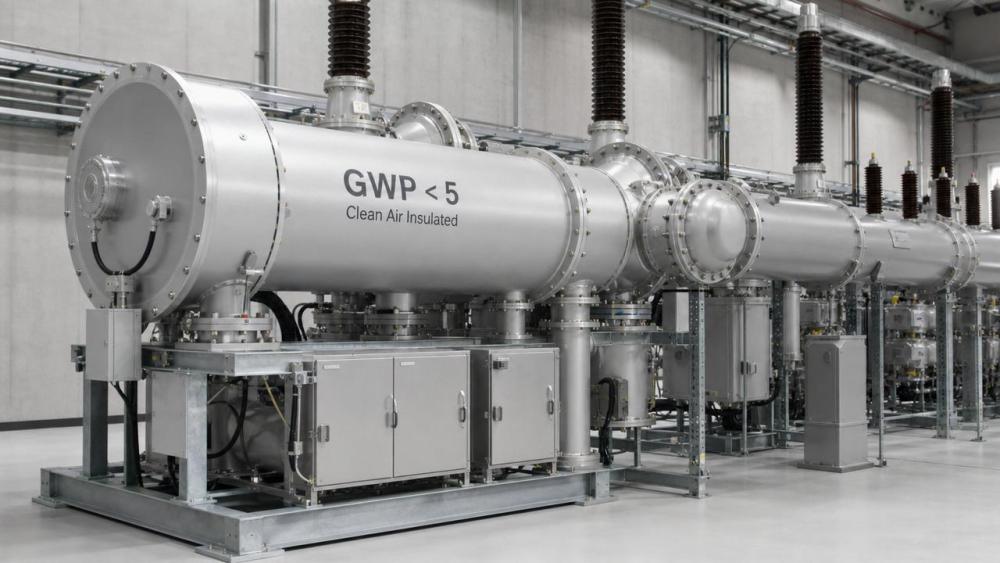
In summary, the Green Switchgear Procurement Initiative marks the first EU-wide institutional effort to jointly procure SF₆-free GIS at scale. Its primary industry value is procedural: it begins formalizing how environmental performance integrates into public infrastructure procurement for power equipment. For now, it is more accurately interpreted as a directional indicator — validating technical readiness while highlighting gaps in standardization, certification capacity, and supply chain transparency for low-GWP alternatives.
Source: European Commission official announcement (15 May 2026); no additional sources cited. Note: Tender documents, vendor selection criteria, and project scope details remain pending and are subject to official publication via TED. Ongoing monitoring is recommended.
Related News