
China Imposes Temporary Helium Export Ban
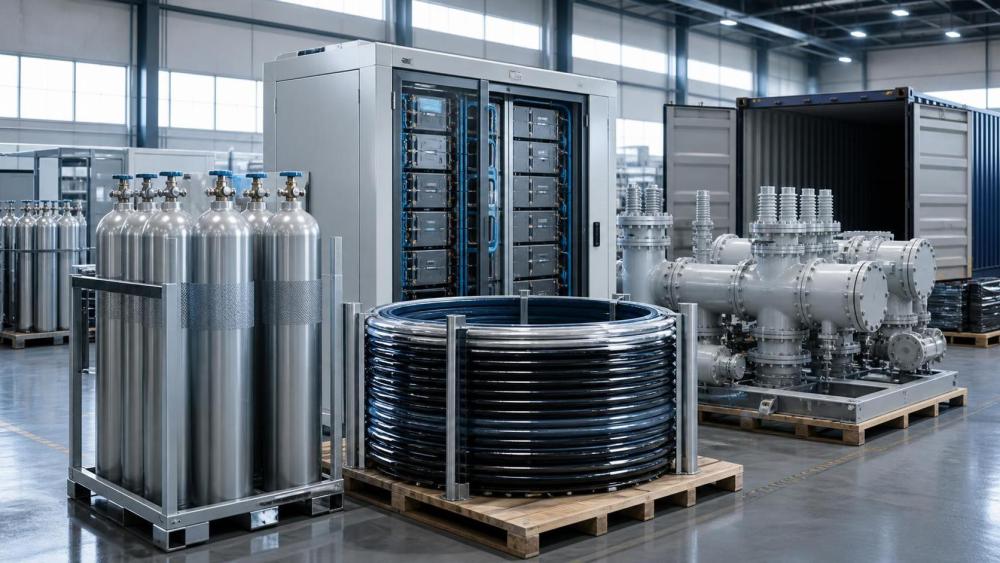
On July 10, 2026, China’s Ministry of Commerce and the General Administration of Customs jointly announced a temporary export prohibition on helium under HS code 2804290010. The move is directly relevant to supply chains built around superconducting cables, liquid cooling BESS, and UHV low-temperature GIS equipment, because helium is a critical cooling and stabilization medium in these applications. What deserves closer attention is not only the trade restriction itself, but also the way it may reshape export delivery feasibility, certification alignment, and sourcing decisions for manufacturers and downstream buyers relying on helium-dependent cooling solutions.
What the announcement changes for helium-linked industrial trade
The only confirmed regulatory change in this event is the temporary prohibition on exporting helium classified under HS code 2804290010, effective immediately on July 10, 2026. The announcement was issued jointly by China’s Ministry of Commerce and the General Administration of Customs. Helium is identified in the provided information as a strategic medium used to keep superconducting cables, liquid cooling BESS, and UHV low-temperature GIS switchgear operating stably. The policy therefore sits at the intersection of trade control and industrial supply continuity.
Based on the disclosed facts, the most direct consequence is not a general market shift, but a specific constraint on export availability for helium-related inputs and equipment configurations that depend on helium-based cooling. The announcement also indicates that overseas manufacturers sourcing Chinese superconducting wire, low-temperature converters, and high-voltage switchgear with helium-cooling solutions may face changes in delivery feasibility and compliance handling.
Where the pressure will be felt first in the chain
Export-oriented manufacturers and direct traders
Export-oriented manufacturers using helium-dependent cooling designs will need to revisit whether existing product configurations can still be delivered under current trade conditions. Direct traders handling related goods are likely to face immediate scrutiny at the export stage, because the restriction is tied to a specific HS code and a clearly identified export control measure. For these participants, the relevant issues are customs classification, shipment eligibility, and whether current contract terms still align with the new rule environment.
Purchasers and project integrators
Buyers planning overseas projects around superconducting cables, liquid cooling BESS, or UHV low-temperature GIS equipment may need to reassess procurement timing and specification assumptions. If a bidding package, technical specification, or acceptance document assumes helium-based cooling, the rule change may affect how the supply chain is structured and how deliverables are accepted. The main concern is not abstract trade friction; it is whether the originally specified configuration remains practical under the new export restriction.
Certification and testing services
Certification-related parties and testing organizations may need to pay attention to whether documentation, product descriptions, and technical reports continue to match the modified sourcing reality. Where certification or compliance files reference helium-dependent performance or cooling arrangements, any change in supply path could require revised evidence, updated declarations, or closer review of conformity materials. The source material does not provide execution details, so the key point here is to monitor how compliance language is applied in practice.
Supply chain and logistics providers
Supply chain service providers will need to evaluate lead times, shipment planning, and documentation flow for affected products. Because the restriction is immediate, even well-established routing and fulfillment arrangements may need adjustment if they depend on helium exports or helium-linked equipment packages. The operational issue is whether existing logistics plans can still support delivery commitments without creating customs or contract risk.
What companies should check now
Review product scope against the export prohibition
Companies should first confirm whether their products, components, or cooling configurations are directly tied to helium under HS code 2804290010 or to helium-dependent equipment deliverables. This is a classification and contract review issue, not just a supply chain issue. Any item that may be affected should be mapped against export documents, commercial invoices, and technical descriptions.
Reconfirm compliance files and technical references
Where product certifications, test reports, or bid documents describe helium-based cooling, firms should check whether those materials still reflect the current sourcing and delivery model. If the specification language assumes helium availability, it may no longer be sufficient for export execution. That makes compliance review a practical prerequisite, especially for products intended for overseas customers.
Reassess substitution and sourcing resilience
The event should be treated as a signal to review alternative technical paths and supplier resilience. The provided information explicitly notes that affected parties need to reassess substitute routes and supply chain robustness. At this stage, that is best understood as a planning requirement rather than a confirmed market outcome. Any substitution work should be tied to product performance, acceptance criteria, and exportability.
Watch for follow-up execution language
Because the available information does not include detailed implementation guidance, the next practical step is to monitor whether additional official clarification changes how the ban is applied to specific product categories, paperwork, or delivery scenarios. That includes customs handling, certification interpretation, and any industry-level feedback that may surface in procurement or project execution.
How to read the signal
From an industry perspective, this is more appropriately understood as an immediate enforcement signal than as a fully mapped-out end-state. The rule itself is clear at the headline level, but the operational impact will depend on how trade, certification, and procurement actors interpret the restriction in day-to-day execution. Observably, the announcement places helium-linked industrial goods in a more constrained compliance environment, especially where export delivery depends on a specific cooling architecture.
What deserves closer attention is the gap between the formal export prohibition and the practical handling of downstream contracts, technical documents, and acceptance terms. For affected companies, the key question is not whether the rule exists, but how quickly their documentation, sourcing model, and delivery commitments can be brought into alignment with it.
Industry takeaway
The most reasonable reading of this development is that it is already a live rule change with immediate trade implications, while the broader operational impact still needs to be observed through execution details. For companies tied to superconducting cables, liquid cooling BESS, and UHV low-temperature GIS equipment, the issue now is compliance readiness, supply chain redesign, and document consistency rather than broad market forecasting. It is more appropriate to treat this as a concrete regulatory shift that still requires close observation on implementation.
Source note and pending verification
This article is based on the title, event time, and summary provided by the user. For this type of event, the relevant source categories typically include official announcements from regulatory authorities, customs or trade主管部门 notices, industry association updates, standard-setting documents, and authoritative media reporting. The specific official source link was not provided in the input and should continue to be verified. Follow-up attention should remain on implementation details, certification interpretation, tender and bid language, industry feedback, and any enterprise-level execution outcomes.
Related News
- China Imposes Temporary Helium Export BanAug 14, 2026Transmission Materials Fellow
- TUV Rheinland names first IEC 63019:2026 labsJul 14, 2026Transmission Materials Fellow
- TUV Rheinland Enables Local IEC 63019 Testing in ChinaJul 13, 2026Transmission Materials Fellow
- IEC 62871-3:2026 Adds Mandatory Tests for EU ExportsJul 09, 2026Transmission Materials Fellow