
Which power electronics ratings matter in industrial power conversion?
Which Power Electronics Ratings Matter in Industrial Power Conversion?
Introduction: In industrial power conversion, selecting power electronics requires more than comparing headline efficiency figures. Technical evaluators must examine electrical, thermal, insulation, and fault ratings against actual operating conditions.
The most important ratings are those that protect converter reliability under normal variation, transient grid events, overloads, and thermal cycling. A device that looks adequate at nominal conditions may fail quickly at system limits.
For industrial drives, battery energy storage systems, renewable interfaces, HVDC stations, and smart-grid equipment, rating selection directly affects uptime, maintenance exposure, equipment footprint, and lifetime cost.
Technical evaluators should therefore assess ratings as an interconnected operating envelope. Voltage, current, switching frequency, cooling performance, insulation design, and protection response cannot be approved independently.
Start with the Actual Electrical Operating Envelope
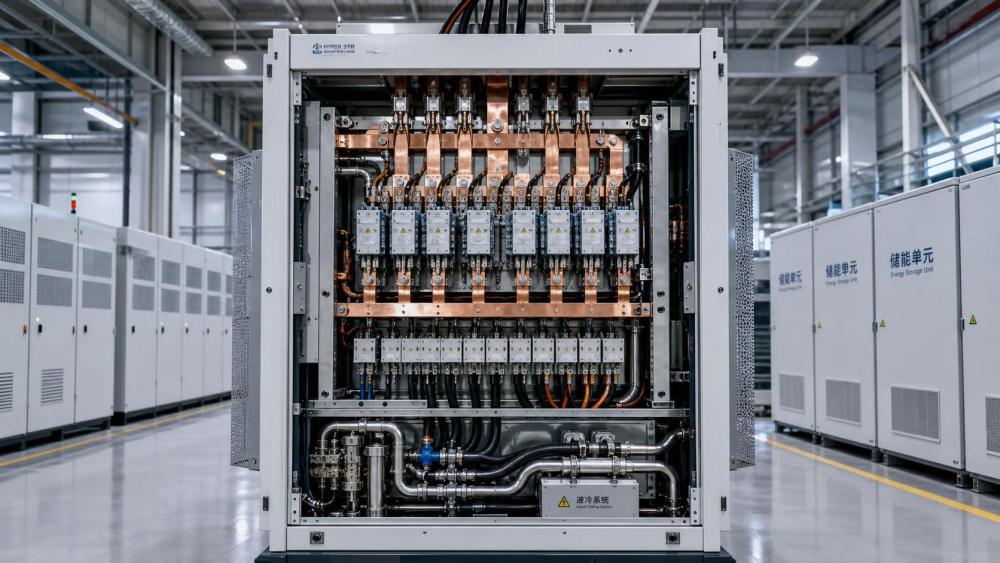
The first question is not “What is the converter’s rated power?” It is “What electrical stresses will its power electronics experience across every credible operating condition?”
Nominal voltage and current remain essential, but they describe only the center of operation. Procurement specifications should define continuous, maximum, temporary, and abnormal operating conditions separately.
For voltage-source converters, the semiconductor blocking-voltage rating must exceed the highest possible DC-link voltage, including control overshoot, regeneration, capacitor tolerance, and transient grid disturbances.
In high-power industrial conversion, designers commonly apply voltage derating rather than operating devices near their stated repetitive blocking limits. The correct margin depends on topology, surge environment, and protection speed.
IGBT, MOSFET, silicon carbide MOSFET, and thyristor technologies have different practical voltage capabilities. Technology selection should follow the required voltage class, switching duty, thermal environment, and serviceability strategy.
Current ratings need the same discipline. The relevant value is not simply the catalog continuous current figure, because module current capability depends heavily on case temperature, cooling conditions, and switching frequency.
Evaluate RMS current, peak current, average current, ripple current, and short-duration overload current. Each creates different losses and thermal stresses in semiconductors, busbars, capacitors, connectors, and cooling paths.
Motor drives may face high starting torque, frequent acceleration, regenerative braking, and low-speed high-current operation. These events can dominate component stress even when annual average load remains moderate.
Grid-connected storage converters require similar analysis. Frequency response, grid-forming operation, reactive-power support, black-start duty, and fault ride-through can create temporary current demands beyond ordinary charging cycles.
A useful specification approach is to request a mission profile. This profile should state load duration, ambient temperatures, grid voltage range, overload intervals, switching modes, and anticipated disturbance conditions.
Voltage Rating Is Also an Insulation and Transient Question
Semiconductor voltage rating is only one part of voltage withstand capability. Industrial power conversion equipment must survive insulation stress throughout the complete electrical path, not merely inside the switching module.
Insulation coordination should cover clearance, creepage distance, dielectric strength, partial-discharge performance, pollution degree, altitude, humidity, and expected overvoltage category. These factors become more significant at higher voltages.
Fast-switching silicon carbide devices deserve particular attention. Their high dv/dt can improve efficiency and reduce passive-component size, while also increasing insulation stress and common-mode noise.
High dv/dt may accelerate motor-winding insulation degradation, create bearing currents, interfere with sensors, and complicate electromagnetic compatibility. A superior semiconductor rating does not automatically deliver a superior system.
Technical evaluators should ask for the converter’s permitted voltage slew rate, output-filter requirements, cable-length limits, and motor compatibility guidance. These details often reveal hidden integration costs.
Surge voltage withstand is particularly important where converters connect to long cable systems, transformers, overhead lines, offshore wind assets, or weak industrial networks. Reflections can raise local voltage far above nominal values.
For UHV transmission and high-voltage DC applications, converter valve insulation requires a broader perspective. Valve halls, bushings, arresters, cooling circuits, and control systems must coordinate under lightning and switching impulses.
Review the basis for insulation tests rather than accepting a single withstand number. Test waveforms, polarity, repetition, temperature, humidity, and equipment configuration determine whether results represent field exposure.
Partial discharge is a leading indicator for insulation degradation in high-voltage equipment. Where applicable, specifications should define acceptable discharge levels, measurement methods, and factory acceptance testing requirements.
Current, Overload, and Short-Circuit Capability Determine Grid Support
Continuous current rating describes steady production duty, but overload capability often determines whether industrial power electronics can protect process continuity during short, high-stress events.
Converters serving pumps, compressors, crushers, rolling mills, and marine propulsion systems may need substantial torque or current margins. The duration and recovery time of overload events must be documented.
In grid applications, temporary current capacity supports voltage regulation, reactive-power injection, frequency stabilization, and fault ride-through. These functions can be more valuable than a small improvement in conversion efficiency.
Evaluators should distinguish between semiconductor overload capability and complete-system overload capability. The latter depends on transformers, inductors, capacitors, busbars, cooling loops, protective devices, and control software.
Short-circuit ratings are equally important, yet they are frequently misunderstood. A device may withstand fault current briefly, but safe survival depends on detection speed, gate control, interruption design, and energy dissipation.
Ask suppliers to state short-circuit withstand time at relevant DC-link voltage, junction temperature, and gate-drive condition. Generic device data is insufficient for validating the assembled converter.
Protection coordination must show how faults are detected and isolated. Critical scenarios include shoot-through, output short circuit, ground fault, DC bus fault, cooling failure, sensor failure, and loss of control power.
For battery energy storage systems, DC faults can escalate rapidly because battery strings provide high fault current. Contactors, fuses, disconnects, pre-charge circuits, and converter controls must operate as one protection system.
Grid-forming converters create additional questions because they may be expected to remain connected during disturbances. Their current-limiting logic must preserve semiconductor protection while maintaining stable voltage and frequency behavior.
Thermal Ratings Often Decide Service Life
Thermal performance is one of the most consequential power electronics ratings because semiconductor lifetime is strongly influenced by junction temperature, temperature swing, and repeated thermal cycling.
A module’s maximum junction-temperature rating is a survival limit, not a preferred operating target. Sustained operation near that limit generally reduces lifetime margin and increases sensitivity to cooling degradation.
Technical evaluations should examine maximum junction temperature, average junction temperature, junction-temperature ripple, case temperature, heatsink temperature, coolant inlet temperature, and ambient design conditions.
Loss calculations must include conduction losses, switching losses, reverse-recovery losses, magnetic losses, capacitor losses, and auxiliary consumption. Ignoring any one of these can understate the required cooling capacity.
Switching frequency creates an important tradeoff. Higher frequency can reduce filter size and improve waveform quality, but it also increases switching losses and may narrow thermal operating margins.
The thermal impedance path deserves review from semiconductor junction to the surrounding environment. Interfaces, mounting pressure, thermal grease, cold plates, coolant quality, pumps, fans, and heat exchangers all influence performance.
Liquid-cooled systems can provide high power density, but they introduce requirements for water quality, corrosion management, leak detection, pump redundancy, filtration, and maintenance access. Cooling reliability belongs in the rating review.
Air-cooled equipment may simplify service in remote sites, but dust, salt, high ambient temperatures, and restricted airflow can significantly reduce usable current capacity. Derating curves should match the installation environment.
Request lifetime evidence tied to thermal cycling, not only steady-state temperature testing. Power cycling and temperature cycling data are particularly relevant for converters with frequent load changes or renewable generation variability.
A credible supplier should also define monitoring thresholds. Temperature sensors, coolant-flow alarms, fan status, derating logic, and controlled shutdown sequences can prevent thermal events from becoming catastrophic failures.
Switching, Efficiency, and Harmonics Must Be Evaluated Together
Efficiency remains a critical power electronics rating, but its value depends on the load profile. Peak efficiency at one operating point may have little relevance to annual energy losses.
Ask for an efficiency map across voltage, load, power factor, switching frequency, coolant temperature, and operating direction. Bidirectional converters require data for both charging and discharging modes.
Even a fractional efficiency improvement can be financially meaningful in utility-scale storage or continuously loaded industrial systems. However, it should not be purchased at the expense of fault tolerance or maintainability.
Switching behavior affects more than losses. It influences output waveform quality, electromagnetic emissions, bearing currents, acoustic noise, insulation stress, and the size of filters, reactors, and transformers.
Harmonic performance should be evaluated at the point of common coupling, not only at converter terminals. Cable impedance, transformers, grid strength, parallel equipment, and filters shape actual network distortion.
For weak grids, stability analysis matters alongside harmonic limits. Converter controls may interact with grid impedance, synchronous machines, other inverters, capacitor banks, and protection systems in unexpected ways.
Specify applicable harmonic and electromagnetic compatibility requirements early. A converter that needs extensive field-added filtering may lose its apparent advantage in size, cost, and installation speed.
Switching device selection should therefore balance efficiency, voltage margin, controllability, electromagnetic behavior, thermal performance, and component availability. No single rating captures this tradeoff adequately.
Verify Ratings Through Evidence, Not Datasheet Comparisons
Datasheets are necessary, but they are not a complete qualification package. They normally describe component capability under controlled conditions rather than the performance of a finished industrial converter.
Technical evaluators should require a traceable rating matrix that links each application requirement to equipment design limits, test evidence, monitoring functions, protection actions, and acceptance criteria.
Factory acceptance tests should verify electrical function, insulation strength, cooling operation, protection response, control behavior, communications, and alarms. For critical installations, witnessed tests are appropriate.
Type-test evidence should cover representative equipment ratings and construction. Confirm that the tested configuration uses comparable semiconductors, busbar layout, insulation materials, cooling arrangement, and control architecture.
Environmental qualification matters for outdoor substations, offshore platforms, mines, factories, and desert sites. Temperature, vibration, salt mist, dust, humidity, altitude, and seismic exposure can change usable ratings.
Pay attention to rating assumptions hidden in footnotes. Values may require reduced switching frequency, forced cooling, limited duty cycles, specific mounting orientation, or an ambient temperature lower than site conditions.
Service strategy also affects rating value. Modular power stacks, replaceable gate drivers, spare-part availability, remote diagnostics, and documented failure analysis can reduce restoration time after an event.
For long-lived grid assets, assess obsolescence risk. Semiconductor generations evolve quickly, so suppliers should explain lifecycle support, equivalent replacement policy, firmware management, and component end-of-life planning.
A robust evaluation compares total risk rather than selecting the highest numerical rating. The best industrial power conversion platform is the one with verified margin in the actual mission profile.
Build a Practical Rating Review for Procurement Decisions
A disciplined review begins by translating operating requirements into measurable limits. Avoid broad phrases such as “heavy duty” or “grid ready” unless they are converted into voltage, current, time, and temperature values.
Create separate requirement lines for continuous operation, cyclic operation, overload, startup, regeneration, grid disturbance, fault conditions, maintenance states, and emergency operation. This prevents critical scenarios from being overlooked.
Then assess power electronics ratings at three levels: semiconductor device, converter assembly, and connected system. A rating at one level cannot be assumed to apply at another.
For each proposed converter, document voltage margin, current margin, thermal margin, overload duration, short-circuit response, insulation class, harmonic compliance, cooling constraints, and derating rules.
Use worst-case combinations rather than isolated extremes. High ambient temperature, elevated grid voltage, reduced cooling flow, and overload demand can occur together during the events that matter most.
Where uncertainty remains, request model-based studies or application testing. Thermal simulations, harmonic studies, electromagnetic compatibility tests, and fault analyses often provide stronger evidence than commercial claims.
Comparisons should also include system consequences. A higher-rated converter may reduce transformer size, filter complexity, auxiliary load, downtime risk, or future retrofit requirements, changing the lifecycle economic result.
For PGD’s focus areas, this framework supports more informed decisions across heavy generation equipment, UHV converter technology, smart dispatching assets, energy storage, and specialized cable-connected systems.
Conclusion: Prioritize Verified Margin Where Failure Is Expensive
The power electronics ratings that matter most are the ones that define behavior beyond nominal operation. Voltage withstand, current capacity, overload response, thermal cycling, insulation coordination, and fault protection deserve priority.
Efficiency should remain part of the decision, but it must be examined across the real operating profile. A highly efficient converter without sufficient electrical and thermal margin can create larger lifecycle costs.
Technical evaluators should require application-specific evidence, coordinated protection data, realistic derating information, and test results for the complete converter system. These are stronger indicators of dependable industrial performance.
In demanding power conversion projects, the right question is not which product has the highest headline rating. It is which design maintains verified margin throughout its expected grid, load, and environmental conditions.
Related News
- Which power electronics ratings matter in industrial power conversion?Sep 02, 2026Dr. Alistair Vaughn
- SAMR Releases 2026 Standard Revision List, Accelerating 12 Mandatory GBs for EV Battery RecyclingMay 14, 2026Dr. Alistair Vaughn
- Black start capability is back in focus as grids decentralizeMay 07, 2026Dr. Alistair Vaughn
- Hydrogen blending targets are rising, but pipeline limits remainMay 07, 2026Dr. Alistair Vaughn