
UHV Transformer Lead Times Stretch to 2028 Q2
The timing of this development is not explicitly stated in the input, but the latest supply-chain tracking cited from BNEF on June 15, 2026 points to a sharper divide in global UHV transformer availability. New orders from Siemens Energy and Hitachi Energy are now averaging 32 months for delivery, while leading Chinese manufacturers remain at 9 to 12 months. For grid upgrade developers, procurement teams, EPC participants, and supply-chain service providers, this matters because delivery timing is no longer just a scheduling issue; it is increasingly shaping which suppliers can realistically support near- to medium-term project execution.
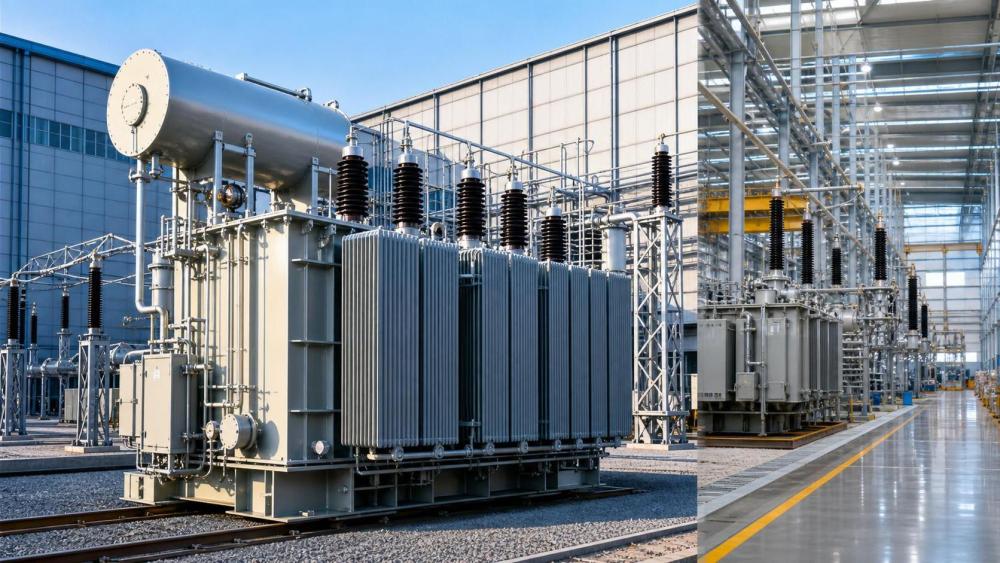
A widening gap in confirmed delivery schedules
According to the information provided, BNEF's latest supply-chain tracking report dated June 15, 2026 shows that average lead times for new UHV transformer orders from Siemens Energy and Hitachi Energy have extended to 32 months, placing delivery in the second quarter of 2028. This is six months longer than in the same period of 2025.
The same input states that the extension is linked to a severe shortage of domestic production capacity in Europe and the United States.
By contrast, leading Chinese manufacturers including TBEA, Baobian Electric, and Chint Electric are still maintaining delivery windows of 9 to 12 months. The provided information also indicates that expedited production can be initiated after a 30% advance payment, making these suppliers the only currently feasible delivery source for global grid upgrade projects.
Where the pressure is likely to be felt first
Project procurement is moving from price comparison to delivery feasibility
From an industry perspective, buyers and project procurement teams may be affected first because long equipment lead times can directly shape bid strategy, contracting sequence, and project commissioning expectations. What deserves closer attention is whether procurement decisions are now being filtered primarily through achievable delivery windows rather than through conventional vendor preference alone.
Grid upgrade execution faces tighter scheduling risk
For end users and project owners involved in grid modernization, the main pressure point is execution timing. Analysis shows that when one group of global suppliers is booked out to 2028 Q2 and another remains within a 9 to 12 month window, schedule risk becomes concentrated around equipment sourcing, factory slot allocation, and coordination across project milestones.
Supply-chain service providers may need to adjust coordination priorities
For logistics, contract support, and broader supply-chain service roles, the impact is likely to appear in order sequencing, advance payment arrangements, and customer communication. Observably, the ability to support accelerated production after a 30% prepayment could become a practical issue in transaction planning rather than a secondary commercial detail.
What companies should watch now
Track whether lead time is becoming the core qualification filter
Analysis shows that companies involved in tenders or project planning should pay close attention to whether customer qualification standards are shifting toward confirmed delivery windows. In this context, lead time may influence supplier selection earlier than usual in the sales cycle.
Review payment terms tied to accelerated production
What deserves closer attention is the commercial and operational implication of the 30% advance payment condition tied to expedited production. For procurement and finance teams, this is not just a pricing issue; it may affect internal approvals, contract timing, and project cash-flow coordination.
Recheck supplier documentation and fulfillment readiness
For companies seeking shorter delivery windows, supplier qualification, production slot confirmation, and fulfillment documentation deserve close review. The key practical issue is whether the vendor can support the required timetable with clear commercial commitments.
Keep customer communication aligned with realistic schedules
For sales teams, EPC contractors, and service intermediaries, customer communication should remain closely tied to confirmed lead times rather than assumed manufacturing norms. In the current situation described by the input, delivery credibility may matter as much as technical compliance.
How this signal should be interpreted
Observably, this update says more than simply "lead times are getting longer." It points to a market condition in which supply availability is diverging sharply by region, and where practical delivery capacity may be overtaking brand positioning in importance for UHV transformer procurement.
It is more appropriate to understand this as both a near-term operational constraint and a longer-term signal that capacity location now has strategic weight in grid equipment sourcing. At the same time, this should still be treated as a development that requires continued observation, because the input does not provide additional official project-level confirmations beyond the cited supply-chain tracking.
Why this matters beyond one ordering cycle
The immediate significance of this update lies in the contrast between a 32-month average lead time for new orders from Siemens Energy and Hitachi Energy and the 9 to 12 month window maintained by leading Chinese suppliers. For the industry, that gap affects planning confidence, procurement sequencing, and the practical definition of an available supplier base.
At this stage, it is more appropriate to read the development as a concrete market signal rather than as a final industry outcome. The confirmed facts point to a real delivery imbalance, while the broader consequences for project flow and supplier strategy still need to be tracked through subsequent updates.
Source context and verification status
This article is generated from the user-provided news title, event timing note, and event summary. The core factual basis comes from the supplied description of BNEF's June 15, 2026 supply-chain tracking update and the delivery timelines cited for Siemens Energy, Hitachi Energy, TBEA, Baobian Electric, and Chint Electric.
For this type of industry development, relevant source categories typically include official company statements, corporate disclosures, industry association updates, authoritative media reporting, and standard-setting or sector documents. No specific official source link was provided in the input, so the underlying details still require ongoing verification. Follow-up attention should focus on whether supplier lead times, payment conditions for expedited production, and any subsequent manufacturer statements show further change.
Related News
- US Energy Department Offers $237 Million for Grid Component and Transformer Supply ChainsNov 02, 2026High-Voltage Grid Architect
- Gansu–Zhejiang UHV Line Completes Conductor Stringing Across the YangtzeOct 28, 2026High-Voltage Grid Architect
- Gansu–Zhejiang UHV Project Completes Yangtze River Crossing Conductor StringingOct 27, 2026High-Voltage Grid Architect
- How UHV transformer transport limits shape substation planningOct 20, 2026High-Voltage Grid Architect