
Fed’s Higher-for-Longer Signal Lifts Power Grid Financing Costs
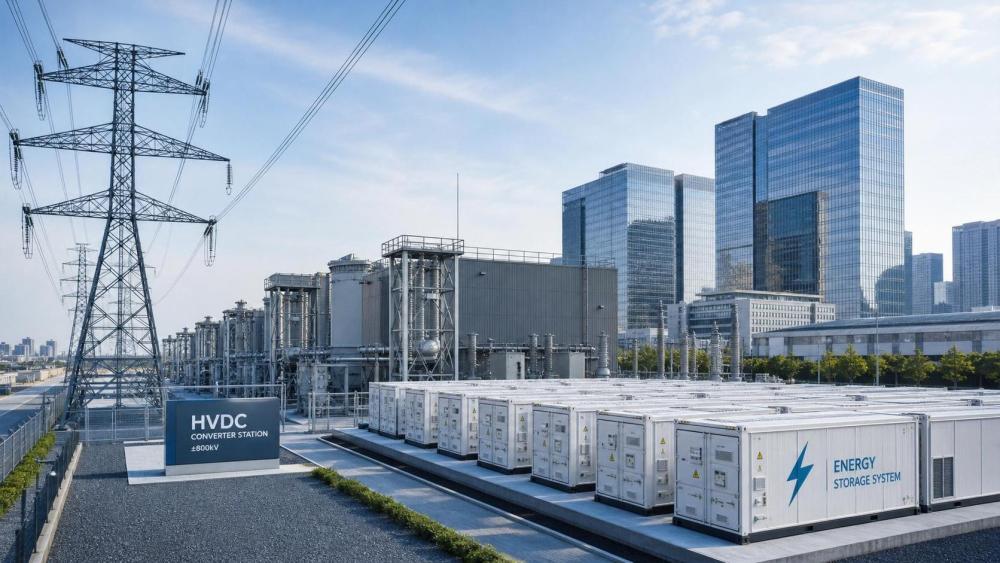
On June 17, 2026, the FOMC left interest rates unchanged but sharply raised its terminal rate expectation to 3.8%, reinforcing a higher-for-longer policy outlook. In the same quarter, the 2-year U.S. Treasury yield jumped by 64 basis points. For global power infrastructure, this matters because capital-intensive segments such as UHV transmission, HVDC converter valves, and large-scale energy storage are more exposed to overseas financing costs, PPA price negotiations, and longer investment decision timelines.
What was confirmed on June 17
The confirmed information is limited but consequential. At the June 17, 2026 FOMC meeting, the Federal Reserve kept rates on hold while significantly lifting its projected terminal rate to 3.8%. Over the quarter, the 2-year U.S. Treasury yield rose by 64 basis points. The direct market implication described in the event summary is that a higher-rate environment materially increases offshore financing costs for capital-heavy power infrastructure projects and makes PPA tariff negotiations more difficult, with project decision cycles extending as a result.
Where the pressure may appear first
Projects with heavy upfront capital needs
From an industry perspective, UHV transmission, HVDC converter valve deployment, and large-scale energy storage are the most immediately relevant areas because their economics are more sensitive to financing terms. The main pressure point is not only the absolute cost of capital, but also the way higher rates can affect the pace of internal approvals and investment screening.
Developers and project sponsors in overseas financing markets
Analysis shows that project sponsors relying on offshore funding may face tighter financing assumptions during project modeling and negotiation. The impact is likely to show up in funding structure discussions, return thresholds, and the timing of final investment decisions rather than in a single isolated cost item.
Equipment suppliers tied to project execution schedules
For manufacturers and service providers connected to UHV, HVDC, and large storage projects, the key risk is slower customer decision-making. Observably, when financing costs rise and PPA talks become harder, procurement timing, delivery planning, and order visibility may all require closer tracking.
Offtakers and counterparties in PPA discussions
The event summary specifically points to greater difficulty in PPA tariff negotiations. That means counterparties involved in pricing discussions may need to reassess how financing conditions are affecting project economics, especially where tariff expectations and capital recovery assumptions are closely linked.
What companies should watch now
Watch the policy signal separately from the rate hold
What deserves closer attention is the distinction between keeping rates unchanged and raising the expected terminal rate. For businesses, the signal to monitor is not only the current policy setting, but also the implication that financing conditions may stay restrictive for longer than previously assumed.
Recheck assumptions in cross-border project models
Companies involved in overseas power infrastructure projects may need to revisit financing assumptions, decision timelines, and negotiation parameters already embedded in ongoing projects. This is particularly relevant where project economics depend on long payback periods and disciplined tariff structures.
Prepare for longer commercial negotiation cycles
Analysis shows that the challenge is not limited to loan pricing. If PPA negotiations become harder, commercial teams, procurement teams, and delivery planners may all need to align around slower contracting progress and less predictable closing schedules.
Strengthen communication around execution readiness
For suppliers and service providers, current attention may be better placed on contract timing, supporting documentation, delivery windows, and customer communication. Where project decisions take longer, execution readiness can become part of the commercial discussion rather than a back-end operational issue.
Why this looks more like a financing signal than a one-day shock
Observably, this development is more appropriate to understand as a financing and decision-cycle signal than as a completed industry outcome. The confirmed facts point to higher expected rates and rising short-dated Treasury yields, while the industry consequence described in the event summary is increased financing pressure and more difficult PPA negotiations. That does not, by itself, establish a universal project slowdown, but it does suggest that capital-intensive power infrastructure should be watched through the lens of cost of capital and deal timing.
How to read this development at this stage
At this stage, the event is best understood as a meaningful near-term constraint on project financing conditions and commercial negotiations in parts of the power infrastructure chain. It is also a longer-horizon signal for businesses exposed to offshore funding and tariff-sensitive project models. A balanced reading is that the industry impact is credible and relevant now, but the full extent still depends on how financing markets and project negotiations evolve after this policy signal.
Basis of this article and points for follow-up
This article is based on the user-provided news title, event date, and event summary. For developments of this kind, commonly relevant source types include official central bank communications, company announcements, industry association updates, authoritative media reporting, and standard-setting or market documentation. A specific official source link was not provided in the input, so further verification remains necessary. Follow-up attention should remain on subsequent official communication, financing conditions for overseas projects, and whether longer decision cycles continue to affect PPA negotiations and capital-intensive power infrastructure segments.
Related News
- US Energy Department Offers $237 Million for Grid Component and Transformer Supply ChainsNov 02, 2026High-Voltage Grid Architect
- Gansu–Zhejiang UHV Line Completes Conductor Stringing Across the YangtzeOct 28, 2026High-Voltage Grid Architect
- Gansu–Zhejiang UHV Project Completes Yangtze River Crossing Conductor StringingOct 27, 2026High-Voltage Grid Architect
- How UHV transformer transport limits shape substation planningOct 20, 2026High-Voltage Grid Architect