
EU Tightens UHV Transformer Type Testing from Aug 2026
On 3 July 2026, the European Union signaled a concrete compliance change for UHV transformers by updating the technical specifications used in type testing for equipment at or above 800 kV. The revision matters not only for manufacturers, but also for exporters, certification teams, testing service providers, bidders, and project procurement functions, because it links new testing expectations to both future tenders and CE conformity work from 1 August 2026, with direct implications for shipment preparation and laboratory selection.
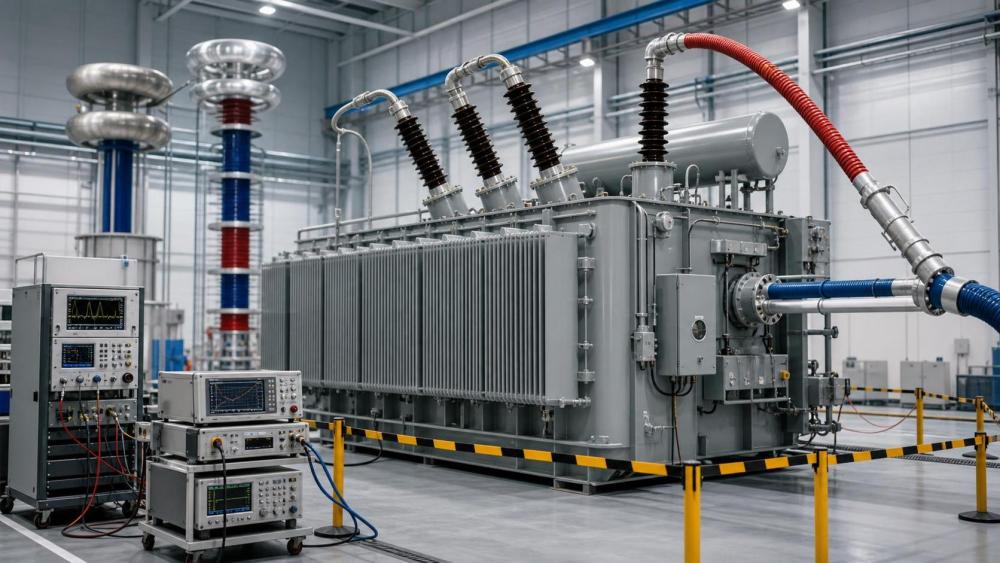
What has been formally updated
The EU’s Joint Research Centre (JRC) has published updated technical specifications for type testing of UHV transformers rated at 800 kV and above. According to the provided event summary, the updated requirements mandate enhanced partial discharge immunity and thermal cycling validation under IEC 60076-16:2026 Ed.2.
The reported effective date is 1 August 2026. The rules are stated to apply to all new tenders and CE conformity assessments. The same summary also states that the change will directly affect pre-shipment certification timelines and test lab selection for Chinese exporters.
Where the rule change may be felt first
Bid preparation and export documentation may tighten
From an industry perspective, exporters and bid teams are likely to feel the impact early because the new specifications are tied to new tenders and CE conformity assessments. That means technical bid alignment, supporting test documentation, and the timing of pre-shipment certification may need closer coordination once the August 2026 effective date arrives.
Testing capacity becomes a more practical issue
What deserves closer attention is the role of testing service providers and selected laboratories. Because the update specifically refers to enhanced partial discharge immunity and thermal cycling validation, affected companies may need to confirm whether their chosen labs can support the required test scope and documentation path in time for tender participation and conformity review.
Procurement and delivery planning may need earlier locking
For procurement teams and project delivery functions, the issue is not only technical compliance but also scheduling. Analysis shows that when a rule change is applied at the tender and conformity stage, any mismatch between product documentation, test arrangements, and required validation can influence procurement sequencing and delivery planning, especially where shipment readiness depends on test completion.
Certification-related service chains may face new review points
Certification support firms, compliance managers, and quality documentation teams may also need to adjust their review focus. Observably, the rule change points toward greater scrutiny of test evidence connected to IEC 60076-16:2026 Ed.2, which could affect how technical files, test reports, and conformity materials are prepared and checked before submission.
What companies should watch in the coming months
Check whether existing test plans still match tender needs
Analysis shows that companies involved in UHV transformer exports should review whether current type-testing arrangements remain suitable for tenders launched after 1 August 2026. The key issue is not to assume that earlier test preparation will automatically satisfy future procurement documents once the new specifications are in force.
Review CE conformity workflows before shipment milestones
Because the update is stated to apply to CE conformity assessments, compliance teams should pay attention to whether internal approval steps, external review timing, and shipment release milestones still line up with the revised testing expectations. The provided information does not define the full execution method, so this remains an area that requires close monitoring rather than assumption.
Reconfirm laboratory selection and test scheduling
What deserves closer attention is test lab selection. The event summary explicitly links the new rules to laboratory choice, which suggests companies should examine lab capability, scheduling availability, and document readiness early in the project cycle. This is particularly relevant where test completion affects tender eligibility or export timing.
Track how tender documents begin to reflect the update
Companies should also monitor how new tender documents refer to the revised specifications and IEC 60076-16:2026 Ed.2. Since the input does not provide detailed implementation language beyond the effective date and scope, changes in procurement wording, requested reports, or conformity references should be treated as an important follow-up signal.
Why this looks like an execution signal, not just a technical note
Observably, this update is more than a narrow standards adjustment because it is tied to two operational gateways: new tenders and CE conformity assessments. That gives it immediate relevance for market access and transaction timing. At the same time, it is more appropriate to understand this as a rule now entering the execution phase rather than a fully settled end state, because the supplied information does not yet show how different market participants will apply the requirements in practice or how quickly procurement language will standardize around them.
From an industry perspective, the most useful reading at this stage is that companies should watch for downstream effects in testing arrangements, conformity review, and bid documentation, while avoiding overstatement until more execution feedback appears.
How the market is likely to read this change
In practical terms, the July 2026 update signals that compliance for UHV transformers entering EU-facing tender and conformity processes is becoming more tightly connected to specific type-testing expectations under IEC 60076-16:2026 Ed.2. The immediate significance is procedural rather than rhetorical: affected companies may need to revisit certification timing, laboratory choices, and document preparation.
Current observation suggests this is best understood as a landed compliance change with near-term operational consequences, while some elements of implementation still warrant continued watching through tender language, conformity practice, and industry response.
Basis of this article and items that still need verification
This article is based on the user-provided news title, event date, and event summary. For developments of this kind, relevant source categories usually include official notices, regulator or public research body publications, trade or customs authority information, industry association updates, standards organization documents, certification-related materials, and reporting by established industry media.
No specific official source link was provided in the input, so the precise official publication path still needs to be verified on an ongoing basis. Observably, the areas that merit continued checking include any further implementation detail, conformity assessment interpretation, tender document updates, laboratory practice, and feedback from companies affected by the August 2026 effective date.
Related News
- US Energy Department Offers $237 Million for Grid Component and Transformer Supply ChainsNov 02, 2026High-Voltage Grid Architect
- Gansu–Zhejiang UHV Line Completes Conductor Stringing Across the YangtzeOct 28, 2026High-Voltage Grid Architect
- Gansu–Zhejiang UHV Project Completes Yangtze River Crossing Conductor StringingOct 27, 2026High-Voltage Grid Architect
- How UHV transformer transport limits shape substation planningOct 20, 2026High-Voltage Grid Architect