
EU Draft Sets 2027 Rules for UHV Transformers
On 4 July 2026, the European Commission released the draft Annex VI to Regulation (EU) 2019/2021, setting out new eco-design requirements for new UHV transformers above 800 kV that are placed on the EU market from 1 January 2027. The draft matters well beyond a narrow compliance issue: it directly concerns transformer manufacturers, EU grid buyers, EPC contractors, and cross-border supply chains, because units that do not meet the proposed requirements would be barred from import.
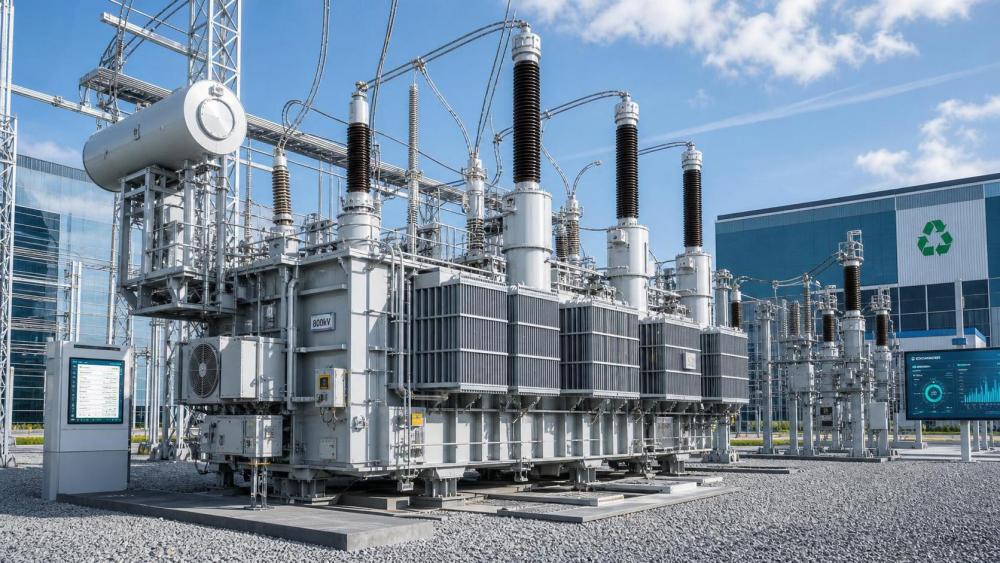
What the draft formally introduces
According to the information provided, the draft Annex VI covers new UHV transformers above 800 kV placed on the EU market. It introduces mandatory requirements in three areas: energy efficiency, recyclability, and digital twin readiness. The effective date referenced in the draft is 1 January 2027. The information provided also states that non-compliant units will not be allowed to enter the EU market through import.
Where the impact is likely to be felt first
Export-oriented transformer manufacturing
From an industry perspective, manufacturers supplying UHV transformers to the EU are the most directly exposed group. The reason is straightforward: the draft links market access to compliance. The business impact would likely appear first in product design, technical documentation, and bid qualification for projects involving EU buyers.
Grid operators and EPC procurement chains
EU grid operators and EPC contractors may also be affected because procurement decisions for new UHV transformers would need to reflect the proposed Annex VI requirements. Analysis shows that the practical issue is not only equipment selection, but also whether suppliers can demonstrate readiness on the specified efficiency, recyclability, and digital twin-related criteria.
Chinese OEMs serving EU projects
The information provided explicitly points to Chinese OEMs supplying EU grid operators and EPC contractors. Observably, this raises attention around export eligibility, customer communication, and order planning. What deserves closer attention is whether existing product pipelines for the EU market align with the new direction implied by the draft.
Trade and delivery coordination
Supply-chain and trade service participants may also need to watch the change closely. Analysis shows that when import access depends on compliance, the pressure can move upstream into contract terms, shipment readiness, and supporting documentation, even before the rule takes effect.
What companies should track now
Watch the official wording as the draft develops
What deserves closer attention is the exact regulatory language as the draft progresses. At this stage, companies should distinguish between the confirmed headline requirements already signaled and any later clarifications on how those requirements are to be demonstrated in practice.
Review EU-facing product scope
For companies with exposure to the EU market, the immediate practical question is which new UHV transformer models above 800 kV could fall within the draft's scope from 1 January 2027. This is less about broad portfolio review and more about identifying specific products, tenders, and customer commitments tied to EU placement.
Prepare for customer-side documentation requests
Analysis shows that commercial pressure may emerge before formal enforcement if EU buyers begin asking suppliers to explain compliance readiness in advance. Enterprises should therefore pay attention to how they present technical materials, qualification files, and project communications related to the three stated requirement areas.
Separate policy signal from immediate execution
It is more appropriate to understand this draft as both a policy signal and a pending operational issue. Companies should avoid treating every implication as already final, but they also should not wait until the effective date to assess exposure, especially where EU tenders or long delivery cycles are involved.
Why this is more than a narrow product update
Observation: this development suggests that UHV transformer access to the EU market is being discussed through a broader eco-design and digital-readiness framework, not only through conventional equipment performance considerations. That does not yet establish the final market outcome, but it does indicate that compliance expectations may increasingly extend across product efficiency, end-of-life considerations, and data-related readiness.
Observation: it is more appropriate to understand this as a concrete regulatory signal with real commercial implications, while still recognizing that the information provided concerns a draft. The industry therefore has reason to follow it closely, but should avoid overstating final effects before the rule path is fully confirmed.
How this news is best understood at this stage
At this point, the draft should be read as an actionable policy development rather than a routine headline. The confirmed information already points to a clear direction: new UHV transformers above 800 kV entering the EU market from 1 January 2027 would face mandatory requirements tied to energy efficiency, recyclability, and digital twin readiness, with import access at stake. A neutral reading is that this is both a near-term compliance topic for exposed suppliers and a longer-term signal about how market entry expectations may be evolving.
Basis of this article
This article is based on the user-provided news title, event date, and event summary. For this type of development, common source categories usually include official government or regulatory announcements, company disclosures, industry association updates, authoritative media coverage, and standards-related documents. A specific official source link was not provided in the input, so the exact document trail still requires ongoing verification. Continued attention should focus on any updated official wording, implementation details, and how market participants respond in procurement and supply arrangements.
Related News
- US Energy Department Offers $237 Million for Grid Component and Transformer Supply ChainsNov 02, 2026High-Voltage Grid Architect
- Gansu–Zhejiang UHV Line Completes Conductor Stringing Across the YangtzeOct 28, 2026High-Voltage Grid Architect
- Gansu–Zhejiang UHV Project Completes Yangtze River Crossing Conductor StringingOct 27, 2026High-Voltage Grid Architect
- How UHV transformer transport limits shape substation planningOct 20, 2026High-Voltage Grid Architect