
EU Carbon Label Rule Hits UHV Transformer Exports
On August 18, 2026, a new compliance threshold takes effect for certain UHV transformers exported into the EU when they are integrated into industrial energy storage systems above 2kWh, such as grid-forming BESS step-up stations. The key change is not only technical documentation, but also the need for a certified carbon footprint declaration and an EN 15804+A2-compliant performance grade label. For exporters, system integrators, certification-related service providers, and procurement teams, this is worth close attention because non-compliant products may be blocked from CE conformity completion, refused customs clearance, or removed from the market.
What the rule now requires
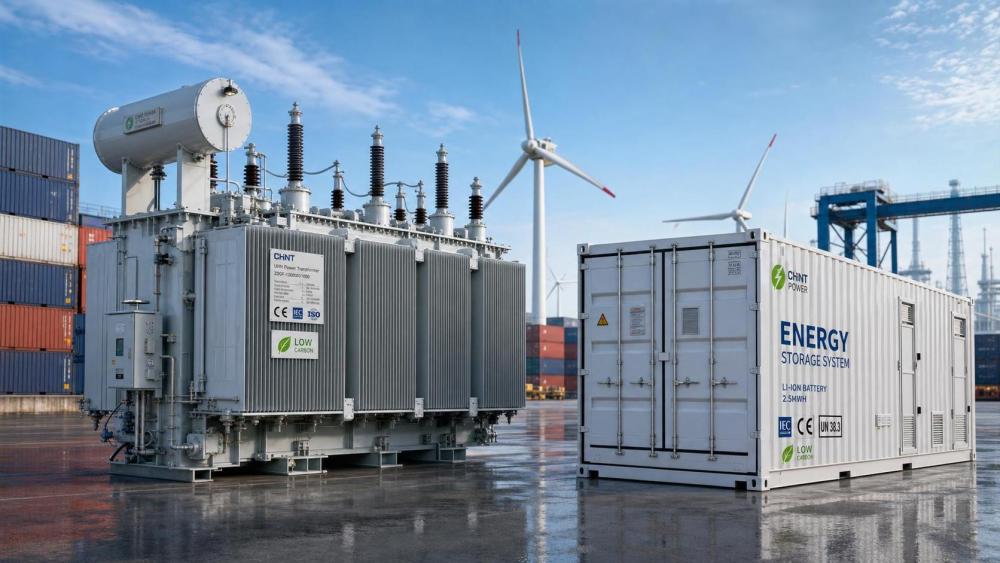
The confirmed event is tied to the extension of Regulation (EU)2023/1542 from August 18, 2026 to supporting equipment used with industrial energy storage systems with capacity above 2kWh. Where a UHV transformer is integrated into that type of system, the product must be accompanied by a certified carbon footprint declaration and carry a performance grade label compliant with EN 15804+A2.
The compliance consequence stated in the event summary is direct: if the product does not meet these requirements, it cannot complete CE conformity documentation or the EU Declaration of Conformity. The stated risks are refusal of entry at customs and removal from the market.
Where the pressure is likely to appear first
Export projects linked to integrated storage systems
For exporters, the impact is likely to center on product scope review and shipment readiness. A UHV transformer that may previously have been handled mainly as electrical equipment now requires closer review when it is part of an industrial storage configuration covered by the rule extension. What deserves closer attention is whether export documentation, conformity files, and product labeling remain aligned at the project level rather than only at the component level.
System integration and delivery coordination
For integrators and project delivery teams, the practical effect is likely to appear in interface management between transformer supply, storage system configuration, and final conformity documentation. Analysis shows that once the transformer is part of a covered BESS application, carbon footprint and labeling requirements may become a delivery gate rather than a post-shipment formality.
Procurement and supplier qualification
For procurement teams and buyers, the rule change may affect supplier screening, document review, and acceptance criteria. The immediate issue is not only price or lead time, but whether the supplier can provide the certified declaration and the required EN 15804+A2-compliant label in time for contract execution and handover.
Certification and testing support work
For certification-related companies and testing service providers, the change increases the importance of document consistency and evidence readiness. From an industry perspective, the operational pressure may shift toward how technical files, certification materials, and labeling outputs are coordinated so that CE-related declarations are not delayed.
Practical compliance points companies should watch
Check whether the product falls within the extended application
Companies should first verify whether a UHV transformer is being supplied as part of an industrial energy storage system above 2kWh, especially in applications such as grid-forming BESS step-up stations mentioned in the event summary. This scope judgment is a prerequisite to deciding whether the carbon footprint and labeling requirements apply.
Review document packages before shipment and declaration
Where the rule applies, companies should closely review whether the certified carbon footprint declaration, performance grade label, CE-related files, and EU Declaration of Conformity materials are prepared in a consistent way. The event summary does not provide a detailed enforcement workflow, so this should be treated as a compliance checkpoint that still requires careful verification in practice.
Reassess procurement and delivery timing
Observably, the addition of certification and labeling steps may affect document lead times and final delivery sequencing. For ongoing or upcoming export orders, companies should pay closer attention to whether supplier qualification, contract specifications, bid documents, and handover schedules reflect the new requirement.
Track follow-up wording and market execution
The event summary establishes the compliance direction, but it does not set out all operational details. Companies should therefore continue watching for later wording used in official notices, conformity practice, tender documents, and customer-side acceptance requirements before treating any single interpretation as final.
Why this looks like an execution signal
Analysis shows that this development is more than a general sustainability message. It connects carbon footprint disclosure and performance labeling directly to CE conformity completion and market access risk for covered products. That makes it more appropriate to understand this as an execution-level compliance signal for affected export scenarios, while still recognizing that some implementation details may require further observation.
From an industry perspective, the most important point is that the requirement appears at the intersection of product compliance, trade clearance, and project delivery. That combination tends to move the issue from policy awareness into contract review, document control, and shipment planning.
How the market should read this update
The industry significance of this event lies in the fact that a covered UHV transformer may now face an added market-entry condition when supplied within certain industrial storage systems in the EU. The immediate takeaway is not to assume a broad change for every transformer application, but to identify the covered use case accurately and prepare the required declaration and label where applicable.
At this stage, it is more appropriate to read the update as a concrete compliance change with direct trade and conformity consequences for relevant projects, while continuing to monitor how implementation language and market practice develop.
Basis of this article and what still needs checking
This article is generated based on the user-provided news title, event date, and event summary. For developments of this kind, commonly relevant source types may include official regulatory notices, releases by supervisory authorities, customs or trade administration information, industry association updates, standard organization documents, and reporting by authoritative media.
No specific official source link was provided in the input, so the exact official reference path still needs to be verified on an ongoing basis. What still requires observation includes detailed implementation wording, certification practice, conformity interpretation, tender document changes, market feedback, and how affected companies carry out compliance in actual export and delivery processes.
Related News
- US Energy Department Offers $237 Million for Grid Component and Transformer Supply ChainsNov 02, 2026High-Voltage Grid Architect
- Gansu–Zhejiang UHV Line Completes Conductor Stringing Across the YangtzeOct 28, 2026High-Voltage Grid Architect
- Gansu–Zhejiang UHV Project Completes Yangtze River Crossing Conductor StringingOct 27, 2026High-Voltage Grid Architect
- How UHV transformer transport limits shape substation planningOct 20, 2026High-Voltage Grid Architect