
DOE UHV Transformer Import Rule Takes Effect
On 2026-08-12, the U.S. Department of Energy began enforcing a new import compliance order for ultra-high-voltage transformers rated at 800 kV or above, linking market access to both an energy-efficiency verification under IEC 60076-20:2025 Annex D and a cybersecurity architecture assessment under NIST SP 800-82 Rev.3. For exporters, certification bodies, and buyers tied to U.S. federal procurement and major utility supply chains, this is more than a documentation update: it changes which products can clear entry requirements and which suppliers can remain eligible.
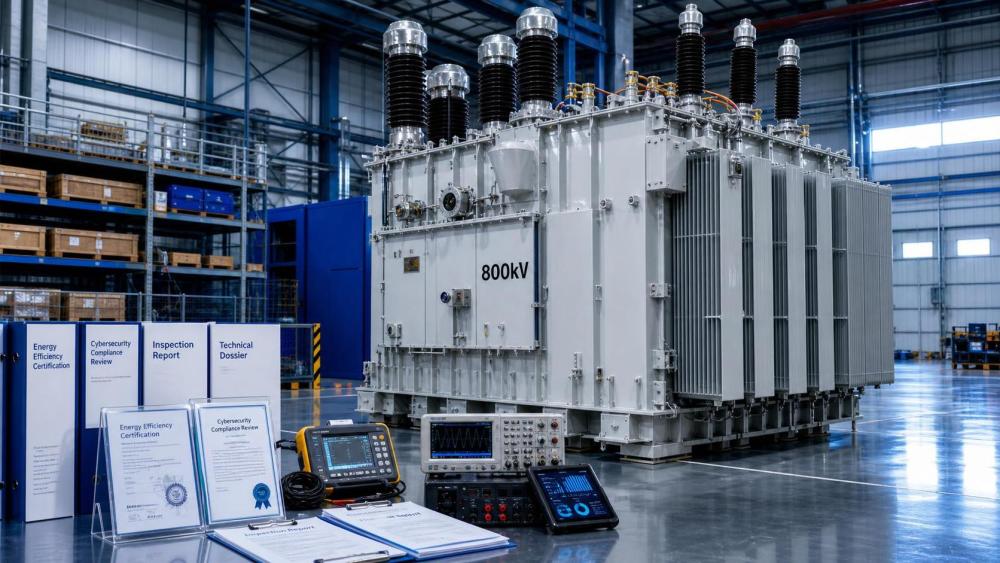
What the new entry condition actually requires
As confirmed in the event summary, the DOE has formally implemented the “High-Voltage Transmission Equipment Import Compliance Enhancement Order” on 2026-08-12. The rule applies to UHV transformers with a rated voltage of 800 kV or higher and requires dual compliance from the same date: DOE energy-efficiency verification referencing IEC 60076-20:2025 Annex D, and a cybersecurity architecture assessment referencing NIST SP 800-82 Rev.3. The same information also states that products without the required certification will not be able to enter the U.S. federal procurement list or the supply chains of major grid companies such as AEP and Duke Energy.
How the rule may rewire commercial and compliance workflows
Exporters now face a certification gate before shipment planning
For UHV transformer exporters, the immediate pressure is on access rather than pricing alone. The rule ties eligibility to certification status, so sales, contract signing, and delivery planning may need to be aligned with the two named verification tracks before a product can be treated as acceptable for the U.S. channel. The practical concern is not only whether the unit meets technical specifications, but whether the compliance file is complete enough to support procurement review.
Testing and certification bodies become part of the transaction path
Because the requirement explicitly includes both an efficiency verification and a cybersecurity architecture assessment, testing and certification-related work moves closer to the front of the trade process. That affects how manufacturers prepare technical documentation, how they sequence validation, and how they manage evidence for buyers or procurement teams that need proof of compliance. What matters here is not a general compliance narrative, but the specific linkage between certification results and market access.
Buyers and grid supply chains may tighten qualification checks
For federal procurement and utility buyers, the rule gives a clearer screening basis. If a product cannot show the required DOE and NIST-linked verification, it may no longer be treated as eligible for these purchasing channels. In that sense, the rule changes the qualification layer before commercial negotiation even begins, especially where supplier lists, tender documents, or approved-vendor reviews depend on formal compliance evidence.
Cross-border delivery risk shifts toward documentation and timing
For trade and supply-chain service providers, the risk is likely to concentrate around document readiness, handoff timing, and the ability to align certification records with shipment schedules. Where a product is technically built but not yet certified, the bottleneck is no longer just production capacity. It is the ability to move a compliant file through the procurement and acceptance process without delay or rejection.
What companies should watch in the near term
Confirm how the two referenced standards are being applied
Companies involved in UHV transformer exports should closely track how DOE-linked efficiency verification and the NIST cybersecurity assessment are being interpreted in practice. The event summary gives the standard references, but not the detailed execution steps. That means the key watch item is whether buyers, certifiers, and procurement teams apply the rule in a uniform way or request additional supporting materials.
Review technical files before commercial commitments
Manufacturers and exporters should check whether their technical dossiers, test reports, and cybersecurity architecture materials are ready to be matched against the new requirement set. For a product category with long lead times and high project value, late-stage document gaps can affect contract performance as much as product defects can.
Align tender response and supplier qualification packages
Where the target customer is a federal buyer or a utility supplier within the named chains, tender packs and qualification files may need to reflect the new certification requirement explicitly. The main issue is not only passing a test, but presenting compliance evidence in a format that procurement teams can review without ambiguity.
How to read this signal now
Analysis shows that this is best understood as an enforcement signal with immediate market-access consequences for a defined product class, rather than a broad industry trend statement. It is already described as effective as of 2026-08-12, but the operational details still deserve close monitoring because the real commercial impact will depend on how certification, procurement review, and supplier qualification are handled in practice. From an industry perspective, the important change is that compliance has moved from a back-end requirement to a front-end entry condition.
Where this information comes from
This article is generated from the user-provided title, event date, and event summary. The input does not include a specific official source link, so the underlying DOE notice, related standard documentation, procurement language, and any subsequent implementation guidance still need to be verified directly. For continued monitoring, the most relevant source types are official DOE releases, NIST standard documents, procurement notices, utility supplier requirements, standards-body publications, and authoritative trade coverage. The next items to watch are the detailed enforcement wording, certification review practice, tender-file requirements, and feedback from affected exporters and buyers.
Related News
- US Energy Department Offers $237 Million for Grid Component and Transformer Supply ChainsNov 02, 2026High-Voltage Grid Architect
- Gansu–Zhejiang UHV Line Completes Conductor Stringing Across the YangtzeOct 28, 2026High-Voltage Grid Architect
- Gansu–Zhejiang UHV Project Completes Yangtze River Crossing Conductor StringingOct 27, 2026High-Voltage Grid Architect
- How UHV transformer transport limits shape substation planningOct 20, 2026High-Voltage Grid Architect