
USTR Tariff Review Flags HVDC and GIS Equipment
On July 1, 2026, the U.S. tariff review announced by the Office of the United States Trade Representative (USTR) moved into effect for relevant products after a June 2 notice launched a new round of reviews covering 60 economies under Section 122 of the Trade Act of 1974. For the power equipment and smart grid supply chain, the point drawing the closest attention is that HVDC converter valves and GIS gas-insulated switchgear were explicitly identified as high-risk categories for supply chain security, with related products exported from China to the United States subject to the highest tariff tier. This matters not only to exporters, but also to procurement teams, manufacturers, project planners, and supply chain service providers monitoring delivery, cost, and compliance exposure.
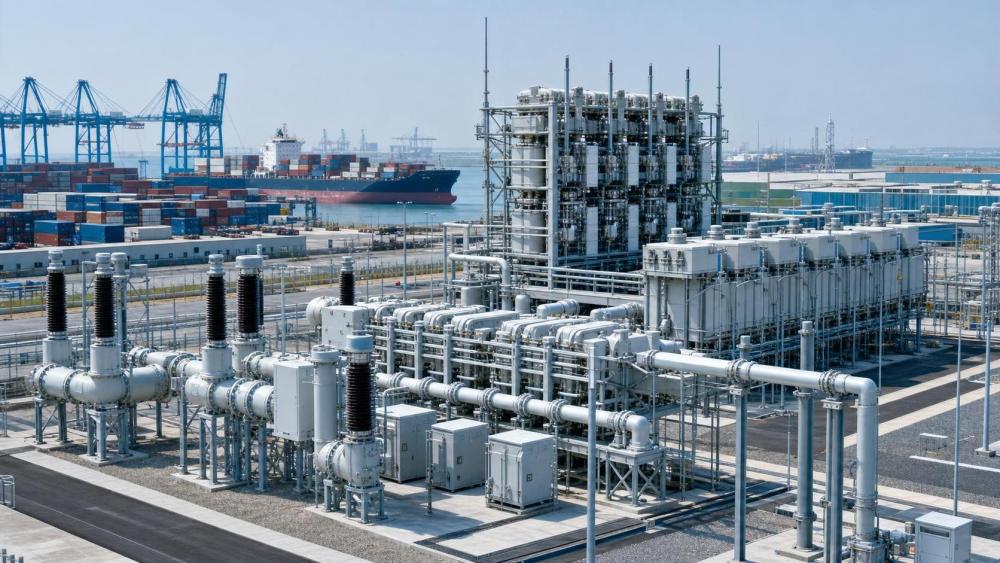
What the U.S. review officially covers
According to the information provided, USTR announced on June 2 that it had initiated a new tariff review covering 60 economies under Section 122 of the Trade Act of 1974. The notice explicitly placed key smart grid equipment, including HVDC converter valves and GIS gas-insulated switchgear, into a supply chain security high-risk category. For related products exported from China to the U.S. market, the highest tariff tier applies, with an effective date of July 1.
Where the pressure may appear across the supply chain
Export-facing equipment suppliers may face immediate pricing questions
From an industry perspective, companies directly shipping affected equipment to the U.S. are the first group likely to feel the impact. The main pressure point is not only tariff cost itself, but also how quotations, contract execution, and shipment planning are handled once the highest tariff tier is in force. What deserves closer attention is whether existing U.S.-bound business involves the listed product categories and how those categories are defined in actual transactions.
Manufacturing and order management teams may need to revisit execution risks
For manufacturers serving export business, the issue may extend into production scheduling, order prioritization, and delivery commitments. Analysis shows that when products are explicitly marked as high-risk from a supply chain security perspective, internal review of order exposure, lead times, and customer communication usually becomes more important than routine shipment processing.
Procurement and project participants may need to reassess sourcing assumptions
For procurement organizations, project owners, and downstream users involved with HVDC or GIS-related supply chains, the review matters because it can affect cost expectations and sourcing continuity for U.S.-linked business. Observably, the most relevant business links are supplier selection, cross-border procurement planning, and the timing of commercial decisions tied to affected equipment.
Supply chain service providers may see higher documentation sensitivity
Logistics, trade compliance, and related service providers may also need closer monitoring. Their potential exposure lies in product classification, documentation handling, and communication around tariff treatment. From an industry perspective, this is a case where operational detail may become more important once policy language is translated into shipment-level execution.
What companies should watch next
Track whether official wording changes in follow-up notices
Analysis shows that the current signal is important, but companies should continue watching how the relevant product scope is described in subsequent official language. For affected businesses, small differences in wording can matter in practice when determining whether a shipment falls within the reviewed categories.
Check which U.S.-bound business lines involve the listed equipment
What deserves closer attention is the mapping between the announced high-risk categories and actual product portfolios. Companies involved in HVDC converter valves, GIS gas-insulated switchgear, or adjacent smart grid equipment should review which orders, quotations, or customer discussions are directly tied to the U.S. market.
Separate policy signal from contract-level execution
Observably, a policy announcement and business execution do not always move at the same pace. Companies should pay attention to how tariff treatment affects contracts already under discussion, shipment schedules, delivery terms, and customer expectations, rather than relying only on headline interpretation.
Prepare documentation and customer communication early
For exporters and service providers, practical attention should go to product documentation, transaction records, delivery timelines, and customer-facing explanations. From an industry perspective, early communication may help reduce confusion where tariff status, product scope, and fulfillment timing intersect.
Why this looks like more than a one-day trade headline
This section is an observation rather than a statement of fact. Analysis shows that the inclusion of HVDC converter valves and GIS gas-insulated switchgear on a supply chain security high-risk list is meaningful because it points to scrutiny on specific categories of grid-related equipment, not just a broad tariff action in general. It is more appropriate to understand this as both an immediate business change for relevant China-to-U.S. trade and a policy signal that industry participants should continue to monitor, especially where cross-border supply chains depend on specialized power equipment.
How the industry may best read the development now
At this stage, the most balanced interpretation is that the July 1 effective date creates a real near-term operating issue for directly affected trade, while the broader industry significance still requires continued observation. From an industry perspective, the development should not be reduced to a simple cost story. It also raises questions around product scope, supply chain review intensity, and how companies manage customer commitments in markets touched by the new tariff treatment.
Basis of this article and points requiring continued verification
This article is generated based on the user-provided news title, event date, and event summary. The facts used here are limited to the provided information about the USTR action, the listed equipment categories, the application of the highest tariff tier to relevant China-to-U.S. exports, and the July 1 effective date. For this type of development, commonly relevant source types may include official notices, company disclosures, industry association updates, authoritative media reporting, and standards-related documents. A specific official source link was not provided in the input, so continued verification remains necessary. Follow-up attention should focus on any later official wording, implementation details, and changes affecting product scope or practical execution.
Related News
- What to verify before selecting a TBEA HVDC converter valveOct 19, 2026High-Voltage Grid Architect
- How converter valves affect HVDC station availabilityOct 18, 2026High-Voltage Grid Architect
- When is HVDC transmission more economical than HVAC for long links?Sep 05, 2026High-Voltage Grid Architect
- EU PPWR Takes Effect for Power Equipment PackagingAug 12, 2026High-Voltage Grid Architect