
USTR Opens 301 Probe, Flags HVDC and GIS Gear
On March 12, 2026, the Office of the United States Trade Representative (USTR) launched a new Section 301 investigation covering 60 economies, including China, on the stated ground that imports made with forced labor had not been prohibited. HVDC converter valves, GIS switchgear, and other key smart transmission and distribution equipment were placed in the first group of priority review categories. For manufacturers, exporters, distributors, and buyers tied to cross-border power equipment trade, the development matters because it is already showing up in trade execution: some Chinese companies have received CBP detention notices, while some European distributors have paused orders pending compliance checks.
What Has Been Confirmed So Far
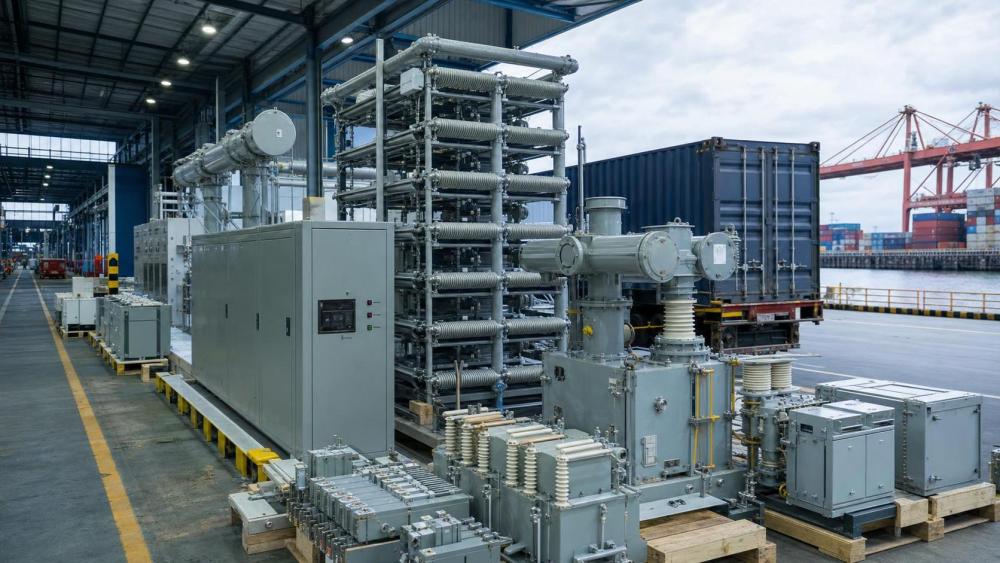
The confirmed facts are limited but commercially significant. USTR initiated the new Section 301 investigation on March 12, 2026, Eastern Time, and the action covers 60 economies, including China. The stated reason is the failure to prohibit imports made with forced labor. Among the first products identified for focused review are HVDC converter valves and GIS switchgear, both of which are critical categories within smart power transmission and distribution equipment. In parallel, multiple Chinese companies have already received detention notices from CBP, and some European distributors have suspended purchasing until compliance verification is completed.
Why the Impact Extends Beyond One Shipment
Export-facing equipment suppliers may face immediate transaction friction
From an industry perspective, the most direct pressure falls on companies shipping affected equipment into U.S.-linked trade channels. The issue is not only whether a product falls within a reviewed category, but whether customs clearance, document review, and delivery timing become less predictable. What deserves closer attention is that CBP detention notices indicate the risk is no longer theoretical for some exporters.
Distributors and channel partners may slow purchasing decisions
The pause by some European distributors suggests that the effect can spread beyond direct U.S. importers. Analysis shows that channel partners may delay orders, request additional compliance materials, or hold contracts until they are more comfortable with product traceability and trade exposure. In practice, this can affect booking cycles, inventory planning, and near-term revenue visibility even before any final regulatory outcome is known.
Procurement and project teams may need to reassess delivery assumptions
For buyers and project-side procurement teams, the main concern is continuity of supply for critical grid equipment. Observably, when high-value and technically specific equipment such as HVDC converter valves or GIS switchgear is placed under early scrutiny, procurement teams may need to review lead-time assumptions, acceptance milestones, and substitute sourcing options where possible. The key issue is operational certainty rather than price alone.
Supply-chain service providers may see more compliance-heavy workflows
Logistics, customs, and trade-compliance service providers may also be affected because additional review usually shifts work toward document preparation, origin tracing, and communication among suppliers, importers, and downstream customers. Even without confirmed broader restrictions, the combination of a Section 301 investigation and actual CBP detentions can increase the burden on shipment management and exception handling.
What Companies Should Watch Next
Track official wording and scope changes closely
Companies involved with HVDC converter valves, GIS switchgear, or adjacent smart grid equipment should closely monitor how USTR and related enforcement bodies describe product scope, review priorities, and compliance expectations in subsequent statements. Analysis shows that wording changes can matter materially for how businesses classify exposure.
Separate policy signal from immediate business effect
It is important to distinguish between a policy process and an already finalized trade outcome. The investigation itself is a confirmed fact, and CBP detention notices are a confirmed operational development for some firms. However, it is more appropriate to understand broader market consequences as still evolving rather than settled across the entire sector.
Review documentation and supplier-facing verification
What deserves closer attention is whether current documentation can withstand heightened scrutiny. Companies may need to review supplier qualifications, product documentation, transaction records, and traceability materials linked to affected product lines. The practical issue is not generic compliance management, but readiness for questions tied specifically to detention risk and order verification.
Prepare customer communication around timing and execution
For exporters, distributors, and project suppliers, customer communication may become as important as customs handling. Where orders are delayed or paused, businesses may need clearer updates on shipment status, review procedures, and delivery risk. In this situation, execution discipline and communication consistency matter more than broad market messaging.
How This Development Is Best Understood
Observably, this news should not be read only as a narrow customs issue affecting a few transactions. It also signals that smart transmission and distribution equipment can become part of a wider compliance and trade-risk discussion. At the same time, analysis shows that it is still too early to treat the event as a fully defined long-term market outcome for all affected categories. The more balanced reading is that this is an active policy and enforcement signal with immediate case-level effects and potentially wider implications that still require verification.
A Cautious Reading for the Power Equipment Trade
For the power equipment supply chain, the current significance lies in the combination of three confirmed elements: a new USTR Section 301 investigation, early designation of HVDC converter valves and GIS switchgear as priority review items, and real-world shipment disruption through CBP detention notices and distributor order pauses. It is more appropriate to understand this development as a near-term trade and compliance warning with possible longer-term implications, rather than as a final market conclusion. Continued attention is warranted because the next changes may come through enforcement practice, scope clarification, or customer-side procurement behavior.
Basis of This Article and Ongoing Verification
This article is based on the user-provided news title, event date, and event summary. For developments of this type, relevant source categories typically include official government announcements, company statements, industry association updates, authoritative media reporting, and trade or standards-related documents. No specific official source link was provided in the input, so the exact primary-source documentation still needs to be continuously verified. Follow-up attention should focus on any further USTR wording, additional CBP enforcement signals, and whether order suspensions or compliance checks broaden across related equipment categories.
Related News
- What to verify before selecting a TBEA HVDC converter valveOct 19, 2026High-Voltage Grid Architect
- How converter valves affect HVDC station availabilityOct 18, 2026High-Voltage Grid Architect
- When is HVDC transmission more economical than HVAC for long links?Sep 05, 2026High-Voltage Grid Architect
- EU PPWR Takes Effect for Power Equipment PackagingAug 12, 2026High-Voltage Grid Architect