
EU Sets EN 50160:2026+A1:2026 Rule for HVDC Valves
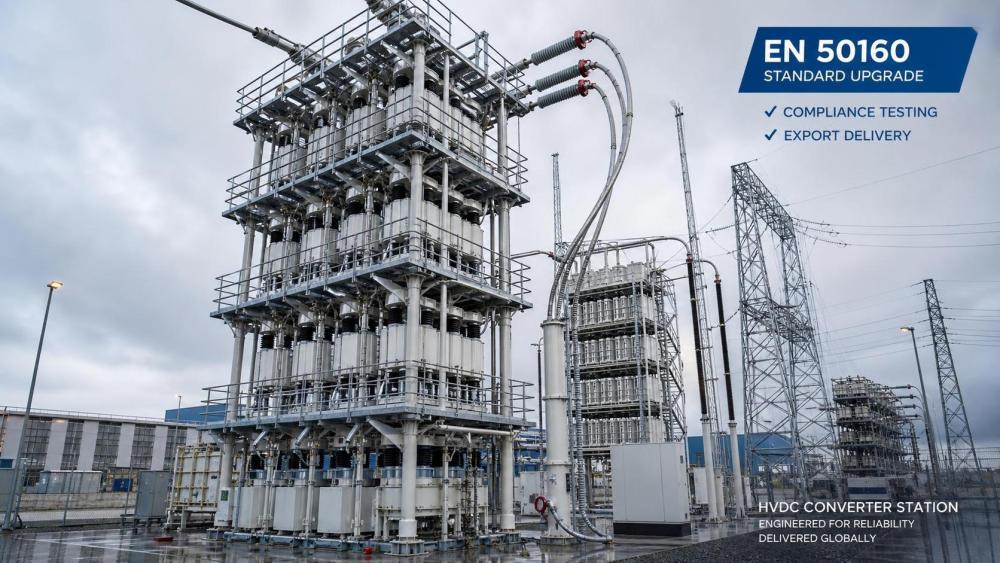
On July 23, 2026, the European Commission issued an implementing regulation that changes the market-entry requirements for HVDC Converter Valves sold into the EU. From October 1, 2026, imported products in this category will need to meet the updated EN 50160:2026+A1:2026 power quality standard. For manufacturers, exporters, distributors, procurement teams, and certification-related service providers, the immediate relevance is not only the rule change itself, but also its effect on compliance review, technical documentation, testing arrangements, delivery timing, and the handling of stock already positioned for the EU market.
What the new EU requirement formally changes
According to the provided event summary, the European Commission on July 23, 2026 formally released Commission Implementing Regulation (EU) 2026/1489. The notice states that, starting on October 1, 2026, all HVDC Converter Valves entering the EU market must comply with the revised EN 50160:2026+A1:2026 standard.
The update specifically adds testing and compliance focus on harmonic injection limits, transient overvoltage withstand capability, and black-start coordinated response. The same summary also indicates that the certification requirement will directly affect export lead times and type-testing costs for Chinese suppliers, while overseas distributors need to review the compliance status of existing inventory and revise technical specifications for new orders.
Where pressure is likely to appear in the supply chain
Export shipments face a tighter compliance gate
From an industry perspective, exporters of HVDC Converter Valves are likely to feel the impact first because the rule applies to products entering the EU market after the effective date. The main business effect is expected around pre-shipment compliance readiness, test documentation, certification planning, and delivery scheduling. What deserves closer attention is whether current product files and technical submissions are already aligned with the updated standard rather than an earlier specification basis.
Manufacturing and engineering teams may need specification adjustments
For manufacturing and engineering functions, the added focus on harmonic injection limits, transient overvoltage withstand, and black-start coordinated response points to possible pressure on design verification and type-test preparation. Analysis shows that even where a product line is already accepted in the market, the transition to an updated standard can shift the burden toward renewed testing, document revision, and closer coordination between technical and commercial teams during order execution.
Distributors and channel operators need to assess stock exposure
The provided information explicitly notes that overseas distributors should immediately evaluate the compliance position of existing inventory. That means the issue is not limited to new production. It may also affect stock allocation, sales commitments, and the technical basis on which products are offered into the EU market. Observably, channel participants should pay attention to whether inventory records, product certificates, and supporting technical papers match the revised requirement before further distribution.
Buyers and project procurement teams may revisit contract language
Procurement teams, project owners, and parties preparing new tenders or purchase orders may also be affected because the technical agreement for new orders may need revision. The practical issue here is less about abstract policy awareness and more about specification alignment: bid documents, purchase terms, and acceptance requirements may need to reference EN 50160:2026+A1:2026 consistently if the delivery destination is the EU market after the stated effective date.
What companies should review now
Check whether certification paths still match the new standard basis
Analysis shows that companies should first verify whether existing certification, test reports, and technical files are based on a version that will remain acceptable after October 1, 2026. Where the provided information does not define the detailed execution method, it is more appropriate to treat this as a priority review item rather than assume that earlier approvals will continue unchanged.
Revisit lead times and testing budgets in active export planning
The event summary already indicates direct pressure on export delivery cycles and type-testing costs for Chinese suppliers. Companies with active EU-bound orders should therefore pay close attention to scheduling, laboratory coordination, internal approval timelines, and commercial commitments tied to shipment dates. This is particularly relevant where order acceptance is being negotiated close to the effective date.
Update technical agreements and bid documents for new orders
For new business, the stated need to revise technical agreements should be treated as a near-term practical task. Exporters, distributors, and buyers should review whether tender texts, procurement specifications, compliance declarations, and product documentation clearly reflect the updated EN 50160:2026+A1:2026 requirement and its added test items.
Keep watching for execution language and market interpretation
Because the input does not provide detailed enforcement guidance, companies should continue tracking how the requirement is described in official communications, certification practice, and order documents. What deserves closer attention is not only the rule itself, but also the eventual compliance interpretation used in transactions, acceptance checks, and market access review.
Why this reads as an execution signal, not just a policy headline
Observably, this development is better understood as a rule that has moved into an implementation phase rather than a distant policy direction. The reason is that the event includes a formal release date, an identified implementing regulation, a named standard update, and a defined effective date. At the same time, analysis shows there is still room for continued observation because the provided information does not include detailed operational guidance on documentation handling, stock treatment, or certification workflow under the revised standard.
How the market should read the next few months
Current evidence supports a measured reading of the event. It signals a concrete compliance threshold for HVDC Converter Valves entering the EU market, with immediate relevance for certification planning, order specifications, inventory review, and export delivery management. It is more appropriate to understand this as a landed regulatory change with follow-through risk in execution, rather than as a fully settled end state with all compliance details already visible.
Basis of this article and what still needs verification
This article is based on the user-provided news title, event date, and event summary. For developments of this kind, commonly relevant source types may include official notices, releases from regulatory authorities, customs or trade administration information, industry association updates, standard-setting documents, and reporting by established professional media. A specific official source link was not provided in the input, so the exact publication record and any supporting implementation documents still require ongoing verification. Further observation should focus on detailed policy wording, certification execution practice, changes in tender documents, market feedback, and how affected companies carry out compliance adjustments.
Related News
- What to verify before selecting a TBEA HVDC converter valveOct 19, 2026High-Voltage Grid Architect
- How converter valves affect HVDC station availabilityOct 18, 2026High-Voltage Grid Architect
- When is HVDC transmission more economical than HVAC for long links?Sep 05, 2026High-Voltage Grid Architect
- EU PPWR Takes Effect for Power Equipment PackagingAug 12, 2026High-Voltage Grid Architect