
EU Rule Sets New HVDC Valve Certification Bar
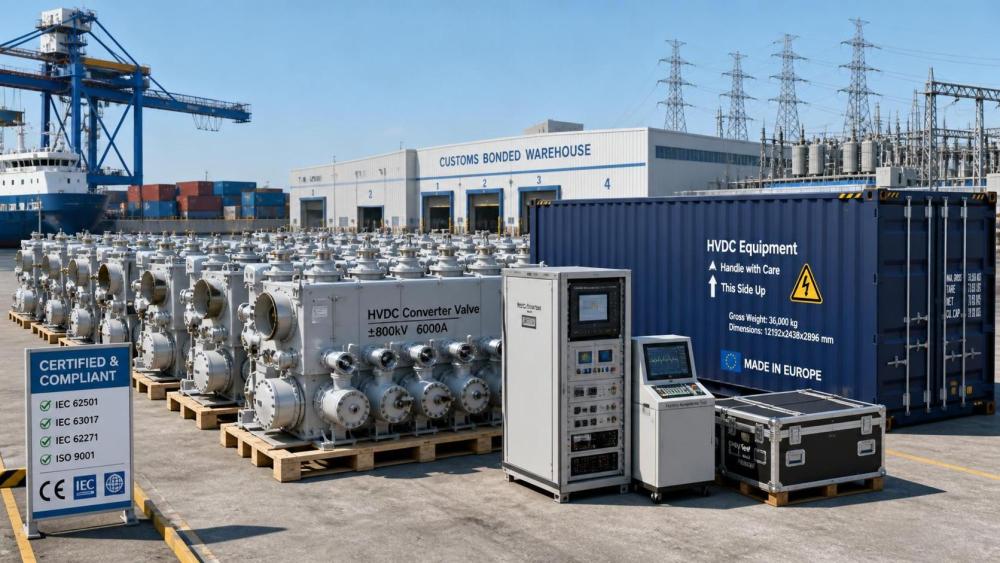
From October 1, 2026, HVDC Converter Valves imported into the European Union will face a new market-entry requirement tied to EN 62543:2026+A1:2026 certification. The change follows a supplementary directive issued by the European Commission on August 10, 2026, and matters directly to exporters, buyers, certification-related service providers, and supply chain teams handling deliveries into the EU, because products without the required certification will not clear customs.
What the new requirement formally changes
The confirmed change is narrow but operationally significant. Under the supplementary directive to the Green Access Regulation for Grid Equipment released by the European Commission on August 10, 2026, all HVDC Converter Valves imported into the EU must, from October 1, 2026, obtain certification to the updated EN 62543:2026+A1:2026 standard.
The event summary also makes clear that the revised standard adds mandatory testing for IGBT module thermal cycling durability and fault ride-through capability. It further states that the requirement directly affects the export compliance path and delivery scheduling of major Chinese suppliers, and that products lacking certification will be refused customs clearance.
Where the pressure is likely to appear first
Export shipments now hinge on certification status
For companies shipping HVDC Converter Valves into the EU, the most immediate exposure is at the trade and customs stage. Because uncertified products will be denied clearance, compliance is no longer a supporting document issue alone; it becomes a shipment release condition. From an industry perspective, exporters need to pay closer attention to whether certification materials, technical files, and shipment documentation are aligned before dispatch.
Procurement and project delivery may face tighter timing constraints
Buyers and project procurement teams are also exposed because the rule links product eligibility to a revised certification standard with added mandatory tests. Analysis shows that procurement planning, supplier qualification review, and delivery scheduling may all require closer coordination, particularly where orders were prepared under earlier compliance assumptions. The practical concern is less about the existence of the rule itself and more about how it may affect order timing and acceptance readiness.
Testing and certification workflows become a gating step
For certification-related firms and testing service providers, the added mandatory tests for IGBT module thermal cycling durability and fault ride-through capability point to a more demanding review path for affected products. Observably, the key business impact is that testing and certification move closer to the front of the delivery chain, rather than remaining a downstream formality.
Supply chain service teams need cleaner document control
Logistics coordinators, trade compliance teams, and after-sales support functions may also need to adjust. Where customs clearance depends on proof of certification, document completeness, product traceability, and consistency between technical declarations and shipment files become more sensitive operational points. This is especially relevant for businesses managing cross-border delivery commitments into the EU.
Practical issues companies should monitor now
Review whether current product files match the new standard path
Analysis shows that affected companies should first examine whether existing compliance documentation for HVDC Converter Valves is built around earlier certification assumptions. What deserves closer attention is whether product files, test records, and certification status can support EN 62543:2026+A1:2026+A1:2026 requirements as stated in the event summary, especially around the newly mandatory test items referenced in the input.
Check contract and tender language for certification alignment
Where procurement or bidding documents reference technical standards, companies should watch for updated wording tied to the revised EN standard. This is not yet a statement about how every buyer will implement the rule, but it is a practical point of attention for exporters and suppliers whose order acceptance depends on specification alignment.
Reassess delivery planning against compliance lead time
The event summary explicitly links the rule change to export compliance routes and delivery schedules. Observably, businesses should therefore revisit shipment timing, factory release planning, and customer delivery commitments for products bound for the EU. The point here is not to assume a uniform delay, but to recognize that certification readiness may become a scheduling constraint.
Track how enforcement language is reflected in trade execution
Because the confirmed fact is that uncertified products will be refused customs clearance, companies should continue monitoring how this requirement is reflected in trade documentation review, import procedures, and counterpart expectations. The input does not provide full enforcement detail, so this remains an area for continued verification rather than a settled implementation map.
How this should be read at this stage
From an industry perspective, this development is better understood as an implemented market-access requirement rather than a distant policy discussion, because the effective date and the customs consequence are both stated in the input. At the same time, it is also appropriate to treat the operational details as still requiring observation, particularly around certification handling, documentary expectations, and how market participants adapt their procurement and delivery processes.
Analysis shows that the most important signal is not simply that a standard has been updated, but that compliance with that updated standard is directly tied to import eligibility. That changes the practical role of certification from a technical requirement in the background to a commercial condition affecting shipment execution.
Why this matters beyond the headline
This update matters because it connects a revised technical standard to immediate import access for a defined category of grid equipment. In practical terms, it is more appropriate to understand this as a live compliance threshold for EU-bound HVDC Converter Valves, with likely implications for exporter preparation, buyer qualification checks, and delivery planning. The broader market impact still needs to be observed through execution, but the rule signal itself is already clear.
Basis of this article and what still needs verification
This article is generated from the user-provided news title, event date, and event summary. For events of this type, relevant source categories usually include official regulatory notices, releases from supervisory authorities, customs or trade administration information, industry association updates, standard-setting documents, and reporting by authoritative trade media.
No specific official source link was provided in the input, so the exact official publication path still needs to be verified on an ongoing basis. What also merits continued monitoring includes detailed implementation language, certification enforcement practice, any changes in tender documentation, market feedback from affected participants, and how companies execute compliance and delivery arrangements after the rule takes effect.
Related News
- What to verify before selecting a TBEA HVDC converter valveOct 19, 2026High-Voltage Grid Architect
- How converter valves affect HVDC station availabilityOct 18, 2026High-Voltage Grid Architect
- When is HVDC transmission more economical than HVAC for long links?Sep 05, 2026High-Voltage Grid Architect
- EU PPWR Takes Effect for Power Equipment PackagingAug 12, 2026High-Voltage Grid Architect