
EU Moves to Add CBAM Costs to HVDC Valves
On June 30, 2026, the European Commission formally proposed extending the Carbon Border Adjustment Mechanism (CBAM) to HVDC converter valves, with the change set to take effect in October 2026. For exporters outside the EU, the proposal matters because it would introduce embedded-emissions reporting and the need to buy CBAM certificates for this product category. For grid projects that rely on HVDC equipment, the issue is not only regulatory compliance but also how procurement, supplier evaluation, and delivery planning may change once carbon reporting becomes part of commercial decision-making.
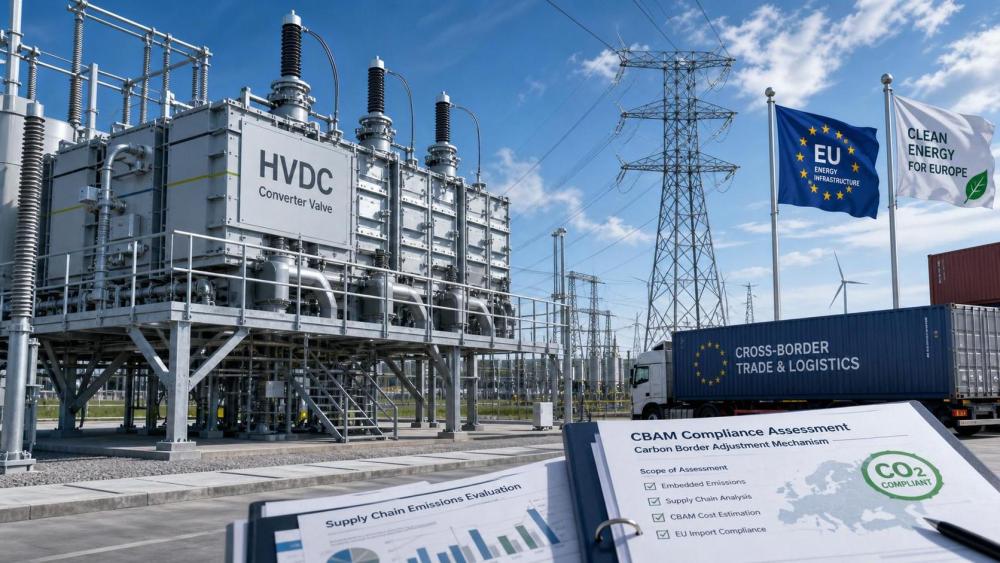
What the proposal changes for HVDC valve trade
Based on the information provided, the confirmed development is that the European Commission has formally proposed bringing HVDC converter valves into the scope of CBAM, and that the intended effective time is October 2026. HVDC converter valves are described here as critical components in UHV transmission systems. The proposal means that exporters from China and other non-EU countries would be required to report embedded emissions and purchase CBAM certificates. The summary also indicates that this would add both compliance cost and administrative burden, and that the change directly affects procurement decisions by EU grid operators and system integrators sourcing these products.
Where the pressure is likely to appear first
For exporters selling into the EU market
From an industry perspective, exporters are the first group likely to feel the change because the proposal links market access more closely to emissions reporting and certificate purchasing. The practical impact is likely to show up in trade documentation, internal compliance review, and the ability to explain product-level emissions information during customer communication. What deserves closer attention is whether existing export workflows and technical files are prepared to support CBAM-related reporting expectations once the rule is applied.
For manufacturers involved in delivery and technical coordination
Manufacturers connected to HVDC valve supply may face pressure not only on cost but also on coordination across production, technical documentation, and delivery planning. Analysis shows that where a product is used in complex grid projects, any added reporting or certificate-related step can influence bid preparation, contract discussions, and handover schedules. Companies in this position should pay attention to whether customer requests begin to include new emissions-related data points, compliance statements, or updated specification language.
For EU buyers and system integrators
EU grid operators and system integrators are directly mentioned in the event summary, which suggests that procurement decisions may change as CBAM cost and reporting obligations become part of sourcing evaluation. Observably, buyers may need to compare suppliers not only on technical fit and delivery capability but also on the ease of compliance support. That creates a practical procurement issue: the quality and readiness of supplier documentation may start to matter more in tender review and supplier selection.
For supply chain and compliance support functions
Supply chain service teams and compliance-related service providers may also be affected because the proposal increases administrative work around cross-border delivery. Analysis shows that even without detailed execution rules in the input, the reporting obligation alone can create more demand for document checking, traceability review, and coordination between commercial, logistics, and technical teams. This is especially relevant where delivery milestones depend on complete and consistent product records.
Practical points companies should track now
Readiness of emissions-related records
What deserves closer attention is whether existing product files, internal records, and customer-facing documentation can support embedded-emissions reporting for HVDC converter valves. The input does not provide the detailed reporting method, so this should be treated as a compliance preparation issue rather than a settled execution requirement.
Changes in tender and procurement language
Companies involved in bidding or supplier qualification should watch for changes in tender documents, procurement requirements, and technical-commercial clarification requests. Analysis shows that even before full implementation, a formal proposal can influence how buyers frame sourcing conditions and how suppliers prepare responses.
Cost allocation and contract discussions
The requirement to purchase CBAM certificates points to a potential shift in how cost is discussed between suppliers and buyers. At this stage, it is more appropriate to understand this as a point for contract and quotation review, not as a confirmed market outcome. Businesses should therefore monitor how customers address compliance cost, pricing structure, and delivery responsibility in ongoing negotiations.
Follow-up signals from official wording and market practice
Because the input confirms a formal proposal but does not include detailed implementation language, companies should continue tracking later official wording, execution interpretations, and market feedback. This includes any changes in compliance expectations, documentary practice, and sourcing behavior around HVDC valve procurement.
Why this looks more like a policy signal than a closed case
Analysis shows that this development should not be read simply as a routine product-scope update. It signals that carbon-related trade compliance may move further into equipment categories tied to major power infrastructure projects. At the same time, it is more appropriate to understand the current event as a formal regulatory signal with clear commercial relevance, while still recognizing that detailed execution practice remains something the industry needs to watch. That distinction matters because companies should prepare for compliance impact without overstating what has already been operationally defined.
How the market may need to interpret this stage
In practical terms, the proposal matters because it connects carbon compliance more directly with procurement and cross-border supply of HVDC converter valves. The immediate significance is not that every downstream consequence is already fixed, but that exporters, manufacturers, and EU buyers now have a clearer reason to review documentation readiness, sourcing criteria, and cost discussions. Current conditions make it more appropriate to understand this event as a meaningful rule-development signal with direct supply-chain implications, while the final shape of execution still requires continued observation.
Basis of this article and what still needs verification
This article is based on the user-provided news title, event date, and event summary. For developments of this kind, source types commonly relevant to verification include official announcements, releases from regulatory authorities, customs or trade administration information, industry association updates, standard-setting documents, and reporting from authoritative media. A specific official source link was not provided in the input, so the underlying document trail still needs to be checked on an ongoing basis. What still deserves continued observation includes later policy detail, compliance interpretation, tender-document changes, market feedback, and how companies actually implement the new requirements in export and procurement workflows.
Related News
- What to verify before selecting a TBEA HVDC converter valveOct 19, 2026High-Voltage Grid Architect
- How converter valves affect HVDC station availabilityOct 18, 2026High-Voltage Grid Architect
- When is HVDC transmission more economical than HVAC for long links?Sep 05, 2026High-Voltage Grid Architect
- EU PPWR Takes Effect for Power Equipment PackagingAug 12, 2026High-Voltage Grid Architect