
ASEAN Bans SF6 in GIS from 2027; China's Zero-GWP Alternatives Gain Traction
On May 7, 2026, energy regulators from Thailand, Vietnam, Malaysia, Indonesia, and the Philippines jointly launched a landmark environmental policy targeting high-global-warming-potential (GWP) gases in power infrastructure. The move directly impacts the gas-insulated switchgear (GIS) sector across Southeast Asia — a market valued at over USD 1.2 billion annually — and accelerates global momentum toward fluorinated gas alternatives.
Event Overview
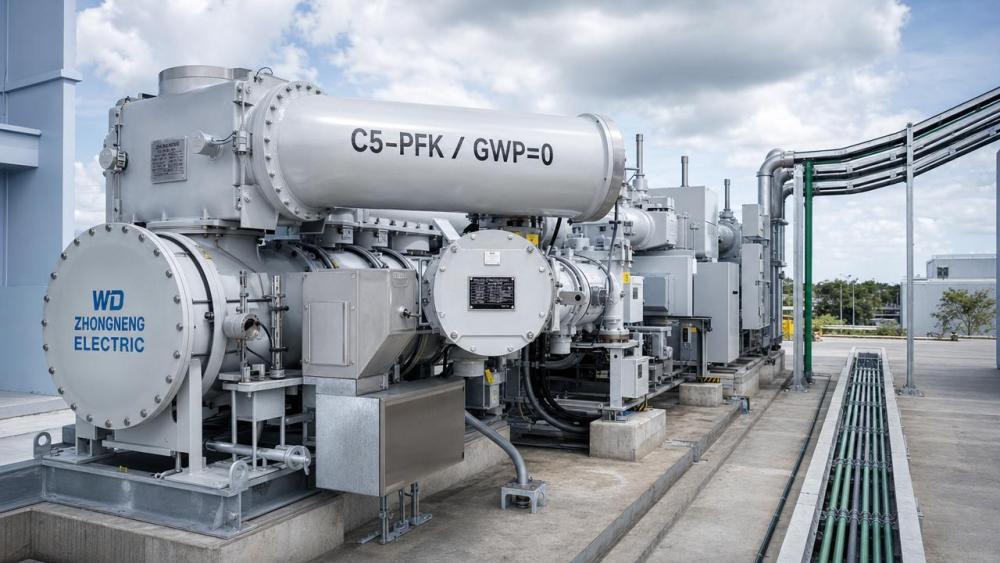
On May 7, 2026, the energy regulatory authorities of Thailand, Vietnam, Malaysia, Indonesia, and the Philippines signed the ASEAN SF6 Phase-Out Roadmap, mandating that all newly constructed substation GIS equipment must be SF6-free starting January 1, 2027. Separately, Chinese GIS manufacturers utilizing zero-GWP alternative gases — including C5-PFK and cyclo-C4F8O (c-C4F8O) — have secured pre-certification from Singapore’s Energy Market Authority (EMA), positioning them as top-tier technical candidates for regional procurement evaluations.
Industries Affected
Direct trading enterprises face immediate shifts in export compliance frameworks and tender eligibility criteria. With ASEAN’s unified phase-out timeline, exporters must now verify gas composition certifications, third-party GWP verification reports, and regional type-approval status — not just CE or IEC marks — to remain competitive in public-sector tenders.
Raw material procurement enterprises are under growing pressure to secure stable, traceable supplies of certified alternative insulating gases. Unlike SF6 — which has mature global supply chains and standardized purity grades — C5-PFK and c-C4F8O are still produced at limited scale, with fewer than five ISO 8573-compliant suppliers globally. Procurement lead times and batch-to-batch consistency are emerging as critical risk factors.
Equipment manufacturing enterprises must adapt design validation protocols, especially for dielectric performance, thermal stability, and long-term decomposition behavior under tropical operating conditions (e.g., ambient temperatures exceeding 45°C and humidity >90%). Field testing cycles in ASEAN countries — previously optional — are now de facto prerequisites for EMA pre-certification renewal.
Supply chain service enterprises, including logistics providers, customs brokers, and certification consultants, are seeing demand surge for SF6-specific documentation audits (e.g., F-gas import declarations, GWP-weighted transport manifests) and cross-border conformity assessments aligned with ASEAN’s harmonized technical annexes. Standardized labeling of gas fill types (e.g., “C5-PFK blend, GWP = 0”) is becoming mandatory on shipping manifests and OEM nameplates.
Key Focus Areas and Response Measures
Verify and upgrade product certification portfolios
Manufacturers exporting to ASEAN must go beyond IEC 62271-203 compliance: EMA pre-certification requires full test reports on partial discharge under humid tropical conditions, arc-quenching lifetime data (>10,000 operations), and gas leakage rate validation (<0.1% per year). Retrospective retesting of legacy designs is increasingly common during tender due diligence.
Secure dual-sourcing pathways for alternative gases
Given current concentration risk — over 70% of commercial-grade c-C4F8O is supplied by two EU-based chemical firms — procurement teams should initiate qualification of secondary sources, including domestic Chinese producers now scaling under MIIT’s Green Manufacturing Incentive Program. Contracts must include GWP verification clauses and batch-level analytical certificates (e.g., ASTM D7422).
Align documentation with ASEAN’s Harmonized Technical Annex
The Roadmap references Annex B-3 of the ASEAN Power Grid Interconnection Guidelines, which mandates bilingual (English + local official language) technical datasheets specifying exact gas formulation, fill pressure, residual moisture limits, and end-of-life gas recovery instructions. Automated translation tools are insufficient; regulatory-reviewed localization is required.
Editorial Perspective / Industry Observation
Observably, this ASEAN initiative is less a standalone environmental measure and more a strategic alignment with the EU’s F-gas Regulation (EU) No 517/2014 — particularly its 2026 ban on SF6 in medium-voltage switchgear. Analysis shows ASEAN regulators deliberately avoided prescribing specific alternative gases, instead prioritizing GWP ≤ 10 and atmospheric lifetime < 1 year as threshold criteria. This leaves room for innovation but also increases technical due diligence burden on buyers. From an industry perspective, the EMA pre-certification is functioning less as a quality stamp and more as a de facto market access gate — one that favors vertically integrated Chinese OEMs with in-house gas synthesis and GIS engineering capabilities.
Conclusion
This policy signals a structural inflection point: SF6 is transitioning from an industrial standard to a legacy substance in tropical grid infrastructure. Rather than a short-term compliance hurdle, the 2027 deadline reflects a broader recalibration of technical sovereignty, where regional regulators increasingly define performance baselines — and Chinese manufacturers, by meeting those baselines early, are gaining asymmetric advantage in technology adoption pathways. A rational interpretation is that ASEAN’s coordinated action may catalyze similar timelines in India, South Africa, and Latin American markets within 18–24 months.
Source Attribution
Primary source: ASEAN SF6 Phase-Out Roadmap, signed May 7, 2026, published by the ASEAN Centre for Energy (ACE) and accessible via aseanenergy.org. EMA pre-certification status confirmed via Singapore Energy Market Authority Notice EMA/NT/2026/017 (issued May 6, 2026). GWP values and atmospheric lifetimes cited per IPCC AR6 Annex III. Note: National implementation guidelines (e.g., Indonesia’s MEMR Decree draft, Vietnam’s EVN Technical Circular revision) remain pending and are under active monitoring.
Related News
- Which Asian Grid Code Differences Affect Substation Equipment Selection?Sep 11, 2026
- U.S. Imposes Four-Year Safeguard Duty on Quartz CountertopsAug 15, 2026
- EU Sets New GIS F-Gas Rule From August 15Aug 04, 2026
- IEC 62271-305:2026 Takes Effect for EU-Bound GISJul 20, 2026