
UK AR8 CfD Round Tightens Offshore Wind Supply Timelines
On June 12, 2026, the UK’s move to open the AR8 offshore wind Contracts for Difference (CfD) bidding round in July signaled more than a routine project cycle: it pointed to a near-term procurement window that could affect equipment exporters, technical bid teams, certification review work, and cross-border delivery planning. With up to 18 projects expected to participate and demand set to rise for submarine cables using XLPE, GIS switchgear, and HVDC converter valves, the development is worth close attention because it links policy-driven project allocation directly to supplier qualification and delivery speed.
What Has Been Confirmed So Far
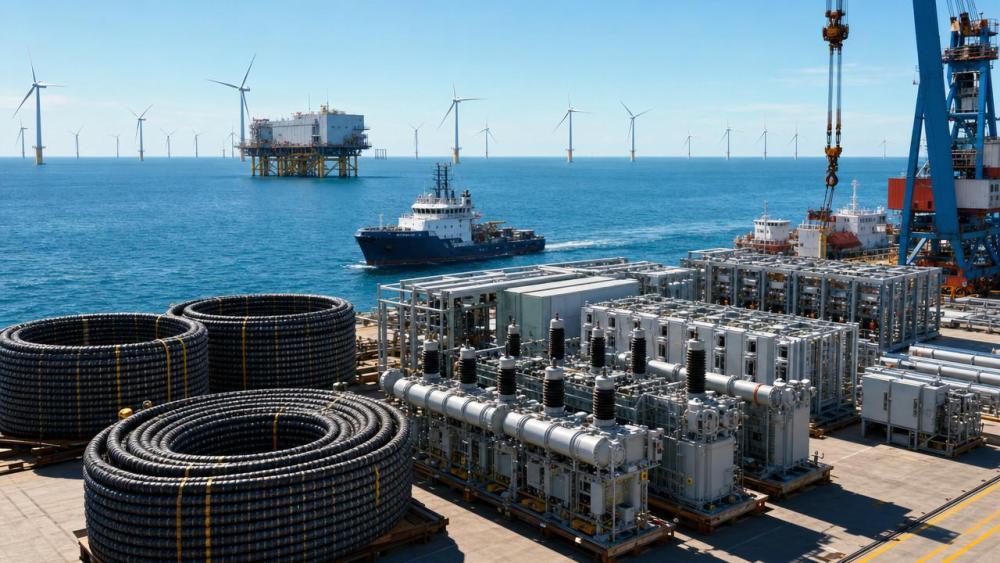
The confirmed information is limited but commercially meaningful. The UK government announced in June 2026 that a new offshore wind CfD bidding round, AR8, will begin in July. Up to 18 projects are expected to take part in that round. The event is described as directly increasing demand for key equipment including submarine cables based on XLPE, GIS switchgear, and HVDC converter valves.
It is also confirmed that Orient Cables and Pinggao Electric have obtained pre-certification eligibility. At the same time, the delivery window has tightened to 9 to 12 months, highlighting that supply chain response speed has become a critical factor in international award outcomes.
Why the Procurement Signal Matters Across the Chain
For equipment exporters, qualification now connects more closely with delivery readiness
From an industry perspective, exporters of offshore power transmission and grid-connection equipment may feel the impact first because the AR8 timetable turns policy allocation into a practical sourcing schedule. The main pressure point is not only whether a product category is needed, but whether the supplier can support bid-stage qualification, document review, and shipment planning within a compressed timeline. What deserves closer attention is the interaction between pre-certification status, technical file completeness, and the ability to align production and export documentation with buyer requirements.
For manufacturers, the timing risk sits in production planning and technical alignment
Manufacturing companies linked to XLPE submarine cable systems, GIS equipment, and HVDC-related components may need to pay closer attention to specification alignment and internal scheduling. Analysis shows that when the delivery window narrows to 9 to 12 months, pressure can shift from pure manufacturing capacity to earlier stages such as bid documentation, technical clarification, and release sequencing. In practical terms, the business impact is likely to appear in procurement coordination, order acceptance discipline, and the management of delivery commitments made during tender discussions.
For supply-chain and service providers, responsiveness becomes part of competitiveness
Supply-chain service providers, export coordinators, and after-sales support teams may also be affected because a compressed award-to-delivery cycle reduces room for correction once a project moves forward. Observably, this increases the importance of document accuracy, logistics coordination, traceability records, and service response preparation. Even where the rule change does not create a new formal compliance requirement in the information provided, it still raises the commercial value of being able to support execution without delay.
What Companies Should Track in the Next Stage
Watch how pre-certification translates into bid execution
Analysis shows that pre-certification should not be read as the end of compliance work. Companies involved in these product categories should continue tracking how qualification requirements are reflected in tender documents, technical review language, and buyer-side acceptance expectations. This matters because the available information confirms pre-certification eligibility, but does not provide the full execution framework.
Prepare technical and trade documents for tighter review windows
What deserves closer attention is the readiness of technical documents, test records, product descriptions, and bid-related files that may be required during tendering and contract execution. Since the available information points to a tighter 9 to 12 month delivery window, companies may need to reduce avoidable delays in document circulation, specification confirmation, and export handover processes.
Reassess procurement and supplier coordination around delivery commitments
For companies supplying into these equipment chains, the immediate issue may be whether procurement plans and supplier arrangements can support shorter execution cycles. This is especially relevant where delivery timing affects competitiveness. It is more appropriate to understand this as a reminder that procurement discipline, supplier qualification management, and internal coordination can influence international award performance alongside price and technology.
Keep an eye on execution language rather than assuming a final market outcome
The confirmed information shows a bidding launch and a demand signal, but it does not yet confirm final awards, actual order conversion, or full implementation details. Companies should therefore monitor later official wording, tender file updates, and any changes in technical or delivery expectations before treating the current development as a completed commercial outcome.
How This Should Be Read at This Stage
Observably, this development is better understood as an execution signal tied to a live procurement framework rather than as a fully settled market result. The policy mechanism matters because it opens a defined bidding round, but the practical industry significance lies in how that timetable feeds into qualification screening, equipment sourcing, and delivery management. From an industry perspective, the most important takeaway is that responsiveness is becoming more visible in cross-border competition for offshore wind equipment supply.
Analysis also shows that caution is still necessary. The available information does not provide the full downstream tender terms, nor does it establish how each participating project will convert demand into specific purchase decisions. That means market participants should watch subsequent documentation and feedback rather than assume uniform opportunities across all equipment segments.
A Near-Term Signal, Not a Final Outcome
This event carries clear industry relevance because it connects the UK’s new AR8 CfD bidding round with immediate attention on exportable offshore wind equipment and the speed of supply execution. The confirmed facts point to stronger demand interest in submarine cables, GIS switchgear, and HVDC converter valves, while also showing that pre-certification and compressed delivery timing are moving closer to the center of competition.
It is more appropriate to understand this development as a near-term implementation signal with real procurement implications, while still requiring continued observation of tender documents, qualification language, delivery expectations, and actual market response. That is the most neutral and practical reading for companies assessing export, sourcing, and compliance priorities.
Basis of This Article and What Still Needs Verification
This article is generated based on the user-provided news title, event date, and event summary. For events of this type, relevant source categories usually include official announcements, regulatory releases, trade or customs information, industry association updates, standard-setting documents, and reporting by established industry media. No specific official source link was provided in the input, so the underlying official reference path still requires follow-up verification.
Further observation is still needed on detailed policy language, certification and pre-certification application in execution, tender document changes, market feedback, and how companies ultimately carry out delivery and project support under the stated timeline.
Related News
- National Grid to Invest Up to £400 Million in Extending IFA Link to 2050Oct 30, 2026Transmission Materials Fellow
- Is Submarine Cable Repair More Expensive per Kilometer Than Overhead Line Repair?Sep 10, 2026Transmission Materials Fellow
- Which maintenance practices support offshore cable failure prevention?Oct 18, 2026Transmission Materials Fellow
- EU Requires EN 50684:2026 for XLPE Subsea CablesAug 02, 2026Transmission Materials Fellow