
Tianjin Jinlan Cable Gains Key Certifications, 48-Hour Shipping
A disclosure published on June 10, 2026 shows that Tianjin Jinlan Cable Co., Ltd. has obtained Class A flame-retardant, MA mining, and ISO9001 certifications across its full product line, while standard orders can be shipped within 48 hours. The exact time of the underlying event was not specified in the input. For cable importers, distributors, manufacturers, and procurement teams—especially those serving emerging markets such as the Middle East, Southeast Asia, and Latin America—the combination of compliance credentials and short delivery cycles is worth attention because it may affect supplier screening, order planning, and market-entry efficiency.
What the disclosure confirms
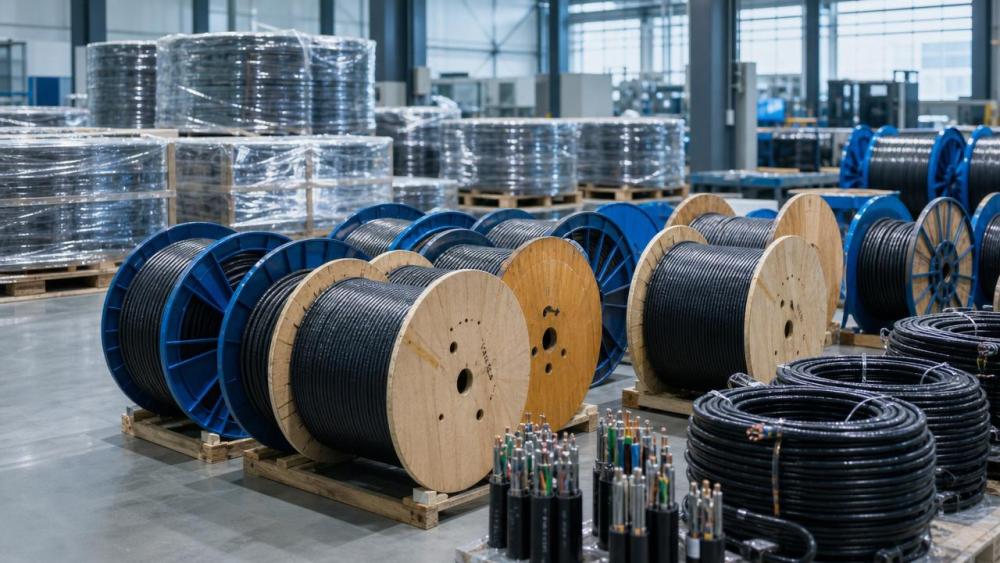
According to the provided information, the company’s full product line has passed Class A flame-retardant, MA mining, and ISO9001 certifications. The same disclosure states that standard orders can be shipped within 48 hours. In product manufacturing, the company uses 99.99% high-purity oxygen-free copper and a three-layer co-extrusion process, with consistency reaching 99.5%.
The provided summary also states that, for importers in the Middle East, Southeast Asia, and Latin America, this certification combination covers most mandatory market-entry thresholds, and when paired with faster delivery, it forms a cost-effective sourcing option.
Why this matters across the supply chain
For importers assessing market access
From an industry perspective, import-focused trading companies may pay close attention because certification is often the first filter in cross-border sourcing. Where buyers must clear multiple compliance checks before placing orders, a supplier with several recognized certifications may reduce document preparation time and simplify early-stage qualification review. What deserves closer attention is whether procurement teams begin prioritizing suppliers that can combine compliance coverage with shorter lead times.
For distributors and channel operators managing inventory
Distributors may be affected mainly at the inventory and replenishment level. If standard orders can indeed move within 48 hours, channel businesses may adjust stocking strategies for routine products and rely less on long safety buffers. Analysis shows the practical issue is not only speed itself, but whether delivery promises remain stable under recurring orders and destination-specific documentation requirements.
For manufacturers and project-based buyers
Processing manufacturers and end-use procurement teams may focus on consistency and specification reliability. The disclosed use of 99.99% high-purity oxygen-free copper, together with a three-layer co-extrusion process and 99.5% consistency, may matter in supplier comparison where buyers are balancing compliance, product uniformity, and fulfillment timing. Observably, this type of information is most relevant in supplier selection, tender preparation, and substitution reviews rather than in headline pricing alone.
For supply chain service providers
Logistics, documentation, and trade service providers may also need to watch how certification-led sourcing changes shipment patterns. If buyers in emerging markets place greater weight on ready-to-ship compliant products, service providers may see more demand for faster documentation matching, customs preparation, and order coordination tied to standardized cable categories.
What companies should watch now
Check whether certifications match target-market requirements
Companies should not treat a certification list as automatically sufficient for every transaction. The more practical step is to compare the disclosed Class A flame-retardant, MA mining, and ISO9001 coverage against the actual entry, project, or customer-side requirements in each target market and product category.
Focus on documents as much as product capability
For procurement and trade teams, supplier qualification is not only about technical claims. What deserves closer attention is whether certification documents, product specifications, and shipment-related paperwork can be aligned smoothly in customer communication, especially where importing markets require strict consistency between commercial and compliance documents.
Evaluate delivery promises in operational terms
The 48-hour shipment claim is commercially relevant, but businesses should assess how it applies in routine ordering. Analysis shows buyers may need to clarify which products count as standard orders, how lead time is defined, and how fulfillment timing interacts with order volume, destination handling, and internal procurement cycles.
Prepare for faster supplier comparisons
Where multiple suppliers compete on similar product categories, the combination of certification coverage and shorter lead time may compress decision windows. Procurement teams and channel businesses may need updated comparison frameworks that weigh compliance readiness, consistency indicators, and delivery responsiveness together rather than reviewing them separately.
How this is best understood at this stage
Analysis shows this disclosure is more meaningful as a market-readiness signal than as proof of a broader industry shift. The confirmed facts point to a supplier profile built around certification coverage, product consistency, and faster standard-order fulfillment. However, it is more appropriate to understand this as a competitive sourcing signal for specific buyers—particularly in emerging markets—rather than a confirmed change in overall cable trade patterns.
Observably, the reason the industry may keep watching this development is that procurement decisions in cable trade are often influenced by a narrow set of practical factors: compliance thresholds, supply reliability, and delivery speed. When these factors appear together in one disclosure, they can shape shortlist decisions even before wider market effects become visible.
What the update suggests for the near term
At present, this development is best read as a practical sourcing update with potential relevance for importers, distributors, and project procurement teams. The confirmed information does not by itself establish long-term market restructuring, but it does highlight how certification breadth and fulfillment speed can become deciding variables in supplier evaluation. In that sense, the update is less a final industry conclusion and more a signal worth tracking through actual order execution and customer adoption.
Basis of this article
This article is based on the user-provided news title, event timing note, and event summary. The specific official source link was not provided in the input, so further verification is still necessary. For this type of development, commonly relevant source categories may include official company announcements, corporate disclosures, industry association information, authoritative media coverage, and standard-related documentation. If follow-up reporting appears, the main points to watch are whether the certification scope is described in more detail, how the 48-hour shipment standard is defined in practice, and whether market-facing procurement requirements in the Middle East, Southeast Asia, and Latin America align with the disclosed compliance combination.
Related News
- National Grid to Invest Up to £400 Million in Extending IFA Link to 2050Oct 30, 2026Transmission Materials Fellow
- Is Submarine Cable Repair More Expensive per Kilometer Than Overhead Line Repair?Sep 10, 2026Transmission Materials Fellow
- Which maintenance practices support offshore cable failure prevention?Oct 18, 2026Transmission Materials Fellow
- EU Requires EN 50684:2026 for XLPE Subsea CablesAug 02, 2026Transmission Materials Fellow