
SCA Bans XLPE/HTLS Cable Spools (>20 km) via Suez
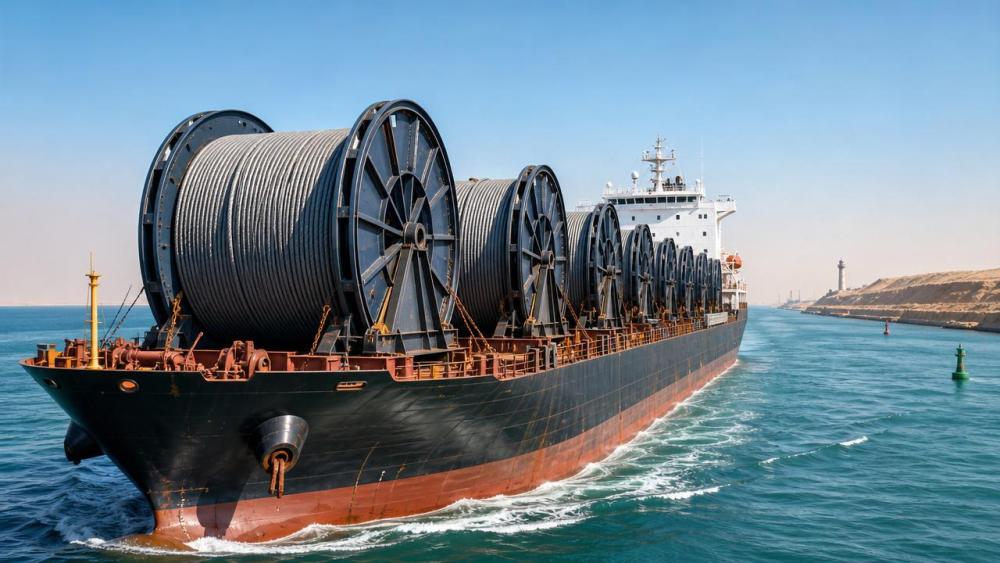
On 17 May 2026, the Suez Canal Authority (SCA) issued an emergency notice prohibiting the transit of cross-linked polyethylene (XLPE) submarine cables and high-temperature low-sag (HTLS) conductors in full spools — defined as single reels ≥20 km — through the Suez Canal. Citing thermal expansion risks that may compromise vessel stability during transit, the measure has immediate implications for global submarine cable logistics, particularly for manufacturers and system integrators serving the offshore wind, interconnector, and telecom infrastructure sectors.
Event Overview
The Suez Canal Authority announced the restriction effective immediately on 17 May 2026. The ban applies exclusively to intact spools of XLPE-insulated submarine cables and HTLS conductors measuring 20 km or longer per reel. No exemptions or phased implementation were specified. Affected shipments must now reroute via alternate maritime or multimodal corridors. Initial industry reports confirm delays averaging 12–18 days for XLPE submarine cable deliveries between Asia and Europe.
Industries Impacted
Direct trading enterprises: Exporters and importers engaged in turnkey submarine cable supply contracts face extended lead times and contractual exposure. Since XLPE cable delivery schedules are tightly synchronized with offshore installation windows (e.g., wind farm commissioning), unplanned transit delays risk liquidated damages, insurance claim complexities, and renegotiation pressure from project owners.
Raw material procurement enterprises: Firms sourcing copper, aluminum, and polymer compounds for XLPE/HTLS production are indirectly affected. While raw material flows remain unaffected, procurement planning must now incorporate buffer timelines for finished-goods logistics — increasing working capital requirements and complicating just-in-time inventory models.
Manufacturing enterprises: Submarine cable producers — especially those headquartered in China, Italy, and Norway — report urgent reconfiguration of dispatch protocols. Re-spooling cables into shorter segments (<20 km) incurs added labor, quality assurance overhead, and potential insulation integrity verification costs. Some manufacturers are evaluating dual-reel packaging designs compliant with SCA’s new threshold.
Supply chain service providers: Freight forwarders, marine insurers, and port terminal operators handling cable logistics must update compliance checklists, revise transshipment SOPs, and reassess vessel compatibility assessments. Notably, insurers have begun reviewing clauses covering thermal-related cargo incidents, signaling possible premium adjustments for high-risk spool configurations.
Key Considerations and Response Measures
Evaluate routing alternatives beyond Cape Horn
While Cape Horn remains the primary maritime alternative, voyage duration increases by ~14–16 days versus Suez, and draft restrictions at certain South American ports may limit access for heavy-lift vessels. Stakeholders should concurrently assess feasibility of combined rail-sea routes via Central Asia or the Middle Corridor, especially for HTLS conductor shipments not requiring marine-grade environmental protection.
Validate spool redesign options with third-party certification
Re-spooling into sub-20 km units is operationally viable but requires recertification of mechanical integrity, moisture barrier performance, and bending radius compliance. Manufacturers should engage notified bodies early to avoid validation bottlenecks before Q3 2026 shipment peaks.
Review contract force majeure and delay clauses
Parties to EPC or supply agreements should audit whether SCA’s regulatory action qualifies as a covered event under force majeure or change-in-law provisions. Legal counsel should assess jurisdiction-specific interpretations — particularly under English law (common in offshore projects) versus Chinese or German governing law clauses.
Editorial Perspective / Industry Observation
Observably, this restriction marks a shift from purely navigational safety governance toward proactive risk-based cargo classification — one that treats physical properties (e.g., thermal behavior under ambient conditions) as operational constraints. Analysis shows the SCA’s decision reflects growing scrutiny of non-standardized heavy-lift cargo, not just hazardous materials. From an industry perspective, it signals rising regulatory fragmentation across key chokepoints: what was once a uniform transit regime is evolving into a patchwork of technical thresholds. Current evidence does not suggest coordinated alignment with Panama Canal or Strait of Malacca authorities — meaning parallel compliance strategies will likely be required.
Conclusion
This policy underscores how localized infrastructure regulations can exert outsized influence on globally integrated energy and digital infrastructure supply chains. Rather than a temporary disruption, it highlights structural dependencies on narrow maritime corridors — and the need for diversified logistics architecture. A rational interpretation is that resilience, not just cost or speed, is becoming the primary metric for cable logistics strategy.
Sources and Monitoring Notes
Source: Official Notice No. SCA/OPS/2026/0517, issued by the Suez Canal Authority on 17 May 2026 (publicly accessible via www.suezcanal.gov.eg).
Monitoring focus: Potential extension of the restriction to other thermoplastic-insulated cables; upcoming SCA technical guidelines on spool thermal modeling (expected Q3 2026); updates from IMO Sub-Committee on Carriage of Cargoes and Containers (CCC) regarding harmonization proposals.
Related News
- National Grid to Invest Up to £400 Million in Extending IFA Link to 2050Oct 30, 2026Transmission Materials Fellow
- Is Submarine Cable Repair More Expensive per Kilometer Than Overhead Line Repair?Sep 10, 2026Transmission Materials Fellow
- Which maintenance practices support offshore cable failure prevention?Oct 18, 2026Transmission Materials Fellow
- EU Requires EN 50684:2026 for XLPE Subsea CablesAug 02, 2026Transmission Materials Fellow