
Red Sea Crisis Extends XLPE Subsea Cable Lead Times by 6–8 Weeks
As of early May 2026, the ongoing Red Sea shipping crisis has significantly increased maritime logistics costs and extended delivery timelines for cross-continental XLPE (cross-linked polyethylene) subsea cables—key infrastructure components for offshore wind and HVDC transmission projects. This development directly impacts manufacturers, project developers, and supply chain stakeholders across Asia and Europe.
Event Overview
According to Alphaliner’s latest data released on May 6, 2026, the average port delay for vessels rerouting around the Red Sea reached 19.3 days during the first week of May. Concurrently, Suez Canal transit fees rose by 22%. As a result, sea freight costs for XLPE subsea cables shipped from Asia to Europe surged by 37%. Major Chinese cable exporters report that standard order lead times have lengthened from the typical 12 weeks to 18–20 weeks. Some European offshore wind project developers have initiated contingency plans—including overland transport combined with local assembly—and are now requesting modular delivery formats from Chinese flexible HVDC cable suppliers.
Impact on Specific Industry Segments
Direct Exporters & Cable Manufacturers
Manufacturers exporting XLPE subsea cables face direct pressure on delivery commitments and working capital cycles. Extended vessel dwell times and higher freight rates compress margins and strain production scheduling, especially where contracts include fixed-price or time-bound delivery clauses.
Offshore Wind Project Developers (Europe)
European developers relying on imported Chinese HVDC cables encounter schedule slippage risks for grid connection milestones. Delayed cable deliveries may trigger contractual penalties, financing delays, or forced redesigns—particularly in projects tied to government subsidy deadlines or interconnection windows.
Supply Chain & Logistics Service Providers
Freight forwarders, customs brokers, and multimodal integrators servicing the high-value subsea cable trade must adapt to tighter coordination windows, elevated insurance premiums, and more complex documentation requirements arising from both route diversions and modular packaging specifications.
Local Assembly & Integration Partners
European firms offering final assembly, testing, or termination services for imported cable segments are seeing renewed demand—but only under strict technical interoperability and certification alignment. The shift toward modular delivery introduces new quality control and interface management responsibilities.
What Stakeholders Should Monitor and Act On
Track official updates on Suez Canal fee structures and Red Sea navigation advisories
Alphaliner’s reported 22% Suez Canal fee increase and 19.3-day average delay are confirmed as of May 6, 2026. Stakeholders should monitor subsequent announcements from the Suez Canal Authority and IMO regarding potential further adjustments or security-related restrictions.
Assess exposure to XLPE cable shipments via Red Sea–Suez corridor
Companies should audit current and upcoming orders for XLPE subsea cables moving between Asia and Europe. Those with shipments scheduled between May and Q3 2026 should prioritize route scenario planning—including cost-benefit analysis of alternative routing (e.g., Cape of Good Hope) versus modal shifts (e.g., rail + short-sea).
Evaluate feasibility of modular delivery and local integration pathways
The emergence of European demand for modular cable delivery reflects an operational adaptation—not a long-term substitution. Firms should assess whether their product design, packaging standards, and certification documentation support split-delivery models without compromising type approval or grid code compliance.
Update internal procurement and contract management protocols
Procurement teams should review force majeure clauses, delivery tolerance windows, and penalty structures in active cable supply agreements. Legal and commercial functions should jointly prepare fallback language for future tenders referencing extended lead times and route-related risk allocation.
Editorial Observation / Industry Insight
Observably, this is not merely a transient logistics hiccup but a structural stress test for globally distributed energy infrastructure supply chains. Analysis shows that the 6–8 week extension in XLPE cable lead times reflects compounding bottlenecks—not just higher freight costs, but also constrained vessel availability, port congestion, and revised insurance underwriting criteria. From an industry perspective, the growing interest in modular delivery signals a longer-term recalibration: rather than full-system imports, buyers are beginning to treat subsea cables as configurable systems requiring regionalized final integration. Current developments are best understood as an early-stage adaptation—not yet a systemic shift—but one that warrants continuous monitoring as Red Sea volatility persists beyond Q2 2026.
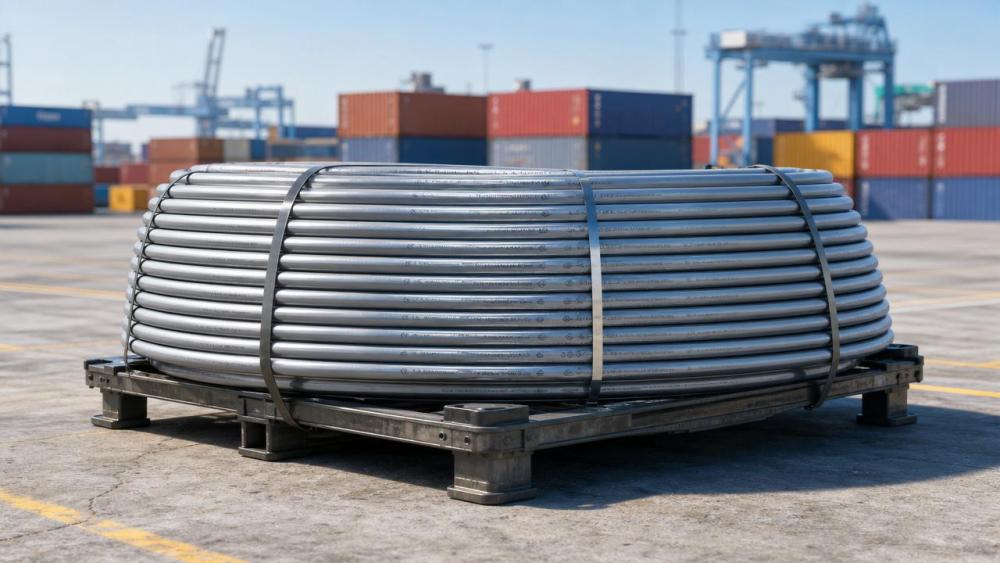
In summary, the Red Sea crisis has materially disrupted XLPE subsea cable logistics between Asia and Europe, introducing measurable schedule and cost pressures across multiple tiers of the offshore wind and HVDC value chain. Rather than signaling a permanent reconfiguration, this episode highlights how geographically concentrated maritime chokepoints can rapidly amplify lead-time risk for mission-critical energy infrastructure components. It is more appropriately understood as a near-term operational challenge demanding tactical supply chain adjustments—not a catalyst for wholesale strategic redirection.
Source: Alphaliner (data published May 6, 2026). Note: Ongoing monitoring is advised for updates on Suez Canal fee policy, Red Sea navigational safety assessments, and European grid project milestone revisions.
Related News
- National Grid to Invest Up to £400 Million in Extending IFA Link to 2050Oct 30, 2026Transmission Materials Fellow
- Is Submarine Cable Repair More Expensive per Kilometer Than Overhead Line Repair?Sep 10, 2026Transmission Materials Fellow
- Which maintenance practices support offshore cable failure prevention?Oct 18, 2026Transmission Materials Fellow
- EU Requires EN 50684:2026 for XLPE Subsea CablesAug 02, 2026Transmission Materials Fellow