
World's First Commercial Superconducting Cable System Goes Live
On May 11, 2026, the world’s first commercial 10 kV / 2 kA superconducting cable system entered grid operation in Berlin, Germany—marking a pivotal milestone for urban power infrastructure modernization. Its successful deployment signals growing international recognition of Chinese core technology in cryogenic control and quench protection, with direct implications for global power equipment trade, high-precision manufacturing, and smart grid supply chains.
Event Overview
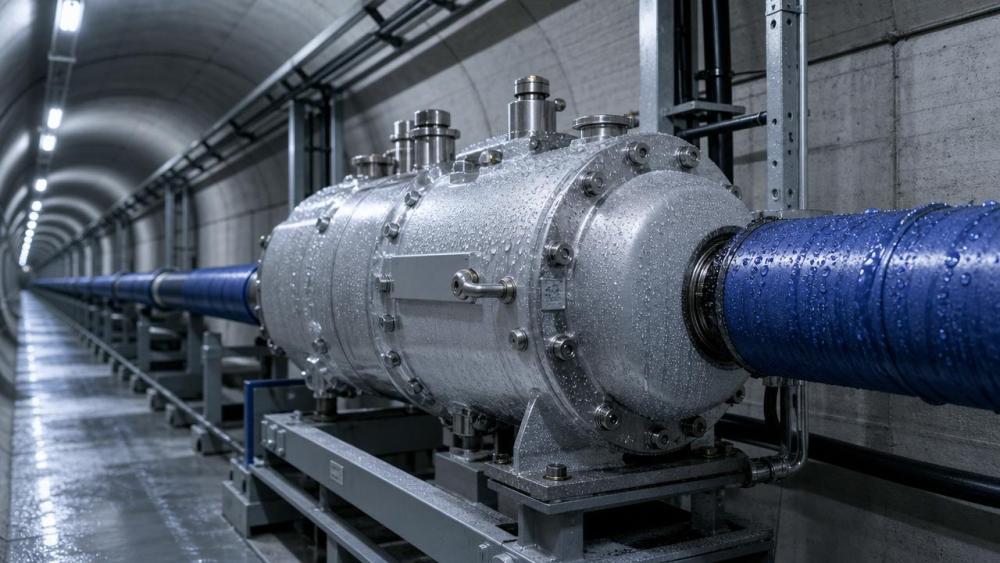
On May 11, 2026, Berlin Energieversorgung GmbH (BEV) announced the official grid integration of the world’s first commercial 10 kV / 2 kA superconducting cable system. The low-temperature constant-pressure control unit and millisecond-level quench protection module were fully supplied by Chinese enterprises. The system achieves a 300% increase in transmission capacity within existing underground utility corridors, offering a replicable technical pathway for aging urban grids in Europe and North America.
Industries Affected
Direct Export Enterprises
Companies engaged in high-value electrical equipment exports—particularly those certified to IEC 62271 and IEEE 1547 standards—are seeing renewed demand signals from EU grid operators. The BEV project validates China’s capability to meet stringent European safety and interoperability requirements, potentially accelerating qualification timelines for similar systems in France, the Netherlands, and the UK. However, export impact remains contingent on sustained compliance verification and local after-sales service infrastructure.
Raw Material Procurement Firms
Firms sourcing high-purity niobium-titanium (NbTi) alloy, magnesium diboride (MgB₂), or specialized cryogenic insulation materials face near-term upward pressure on procurement volumes. The BEV system uses NbTi-based conductors operating at ~4.2 K, requiring consistent batch quality and traceable metallurgical certification. Procurement teams must now prioritize suppliers with ISO/IEC 17025-accredited material testing labs—and anticipate tighter lead times due to concurrent R&D deployments in Japan and South Korea.
Advanced Manufacturing Enterprises
Manufacturers of cryogenic electronics, vacuum-jacketed terminations, and fault-current-limiting modules are experiencing intensified technical scrutiny. The millisecond-level quench response demanded by BEV requires sub-100 µs sensor-to-actuator latency—a threshold that pushes current industrial PLC architectures to their limits. Firms with in-house FPGA-based control firmware development capabilities hold a distinct advantage; others may need to re-evaluate third-party embedded software partnerships.
Supply Chain Service Providers
Certification consultants, cold-chain logistics specialists, and customs brokers supporting high-tech energy exports face new operational complexity. The system’s cryogenic components require EN 13480-compliant transport validation, IEC 60079-0 explosion-proof documentation for on-site commissioning zones, and dual-language (German/English) conformity declarations per EU Regulation (EU) 2016/426. Service providers lacking cross-border regulatory coordination experience risk delays in project handover windows.
Key Considerations and Recommended Actions
Validate Certification Pathways for EU Market Access
Exporters should initiate pre-audit reviews with TÜV Rheinland or DEKRA against VDE-AR-E 2700-100 (superconducting equipment) and DIN SPEC 91420 (cryogenic safety). The BEV deployment does not constitute automatic CE marking acceptance—each future order requires independent type testing.
Strengthen Local After-Sales Capability in Target Markets
Given BEV’s multi-year maintenance contract framework, firms must assess feasibility of establishing certified field-service hubs in Germany or partnering with Tier-1 EU engineering contractors. Remote diagnostics alone are insufficient for quench-protection system validation under VDE 0100-712.
Engage Early with Municipal Grid Operators on Corridor Integration Protocols
The 300% capacity uplift hinges on compatibility with legacy ductbank dimensions and thermal load models. Companies should co-develop technical white papers with city utilities—e.g., on transient heat dissipation during quench events—to de-risk adoption in dense urban environments.
Editorial Perspective / Industry Observation
Observably, this milestone reflects a structural shift—not just in export volume, but in technology sovereignty positioning. Unlike previous Chinese infrastructure exports focused on cost-driven scale, the BEV project centers on mission-critical subsystems where failure tolerance is measured in milliseconds. Analysis shows that German grid operators prioritized functional reliability over price: BEV’s procurement criteria weighted real-time control accuracy (±0.5% pressure stability) and quench localization precision (>95% node-level resolution) above unit cost. This suggests a longer-term trend: Western utilities are increasingly treating Chinese subsystems as ‘enablers’ rather than ‘components’—a distinction with profound implications for IP licensing models and joint venture structures.
Conclusion
This deployment does not herald immediate mass adoption—but it does redefine the credibility threshold for next-generation grid hardware. For the industry, the more meaningful takeaway is methodological: success hinged less on breakthrough physics than on rigorous systems integration across cryogenics, power electronics, and regulatory frameworks. A realistic outlook acknowledges that replication will require sustained investment in cross-disciplinary talent—not just engineering, but also EU regulatory affairs and localized service design.
Source Attribution
Primary source: Berlin Energieversorgung GmbH (BEV) Press Release, May 11, 2026 (publicly archived via www.bev.de/presse).
Technical specifications confirmed via IEC TC 90 Working Group 4 interim report (2026Q1, draft version circulated to member bodies).
Note: Ongoing monitoring required for EU Commission’s upcoming revision of Directive 2012/27/EU (Energy Efficiency Directive), expected Q4 2026, which may introduce mandatory superconducting readiness assessments for urban grid upgrade tenders.
Related News
- China Imposes Temporary Helium Export BanAug 14, 2026Transmission Materials Fellow
- TUV Rheinland names first IEC 63019:2026 labsJul 14, 2026Transmission Materials Fellow
- TUV Rheinland Enables Local IEC 63019 Testing in ChinaJul 13, 2026Transmission Materials Fellow
- IEC 62871-3:2026 Adds Mandatory Tests for EU ExportsJul 09, 2026Transmission Materials Fellow