
Japan Revises JIS C 8201-15: HTLS Importers Must Verify Chinese Factories’ Carbon Management Online
Effective 1 July 2026, Japan’s Ministry of Economy, Trade and Industry (METI) will enforce revised JIS C 8201-15, requiring real-time online verification of carbon management systems for all imported high-temperature low-sag (HTLS) conductors manufactured in China. This development directly affects exporters, importers, and supply chain stakeholders engaged in the overhead transmission conductor market — particularly those handling steel-cored aluminum conductors subject to Japanese regulatory compliance.
Event Overview
On 13 May 2026, the Japanese Industrial Standards Committee (JISC) announced the formal implementation of the mandatory enforcement provisions for JIS C 8201-15:2026. As confirmed in the official notice, from 1 July 2026 onward, all imports of high-temperature low-sag (HTLS) conductors into Japan must undergo real-time verification via the JIS-Verify online platform. Verification requires confirmation that the Chinese manufacturing facility holds a valid ISO 14064-1 greenhouse gas inventory report and PAS 2060 carbon neutrality certification. Products from Chinese factories not connected to or verified through JIS-Verify will be rejected at Japanese customs clearance.
Industries Affected
Direct Exporters & Importers of HTLS Conductors
These entities face immediate operational impact: customs declarations for HTLS products will require active JIS-Verify session records linking each shipment to an approved Chinese factory’s carbon documentation. Non-compliant shipments will fail import declaration, causing delays, rework, or rejection.
Chinese Manufacturing Facilities Producing HTLS Conductors
Factories supplying HTLS to the Japanese market must now maintain certified, up-to-date ISO 14064-1 reporting and PAS 2060 status — and ensure their data is registered and accessible via JIS-Verify. Absence from the system renders their output ineligible for Japanese import, regardless of product conformity with electrical performance standards.
Supply Chain & Logistics Service Providers
Freight forwarders, customs brokers, and logistics coordinators handling HTLS consignments must integrate JIS-Verify validation into pre-clearance workflows. Documentation checks now include dynamic platform verification — not just static certificate submission — increasing verification lead time and coordination requirements.
Raw Material & Component Suppliers to HTLS Producers
While not directly regulated under this rule, upstream suppliers may face increased audit requests from HTLS manufacturers seeking to substantiate Scope 1 and Scope 2 emissions data required for ISO 14064-1 reporting. Traceability of energy sources and input materials becomes more critical for supporting downstream verification.
What Enterprises and Practitioners Should Focus On Now
Monitor Official Updates from JISC and METI on JIS-Verify Platform Requirements
The JIS-Verify interface, registration process for foreign facilities, accepted report formats, and update frequency for carbon documentation remain subject to further technical guidance. Stakeholders should track official JISC bulletins and METI circulars issued after 13 May 2026.
Identify and Prioritize HTLS Production Lines Serving the Japanese Market
Not all Chinese HTLS production lines supply Japan. Enterprises should map current export destinations and isolate facilities whose outputs are destined for Japan — focusing verification readiness efforts only where required, avoiding unnecessary system-wide carbon certification rollout.
Distinguish Between Policy Signal and Operational Enforcement
This requirement applies exclusively to HTLS conductors covered by JIS C 8201-15:2026 — not general aluminum conductors, not non-HTLS variants, and not other JIS-covered cable types. Confusion with broader decarbonization initiatives (e.g., CBAM-like mechanisms) should be avoided; this is a product-specific, standard-based compliance gate.
Initiate Factory-Level Readiness Checks and Cross-Functional Coordination
Manufacturers should confirm whether existing ISO 14064-1 reports meet JIS-Verify’s scope and temporal validity (e.g., annual reporting cycle alignment), verify PAS 2060 certification remains active and covers the relevant HTLS product group, and assign internal roles for JIS-Verify account management and data updates.
Editorial Perspective / Industry Observation
Observably, this revision reflects a growing trend of embedding environmental accountability directly into national product standards — moving beyond voluntary ESG disclosures toward enforceable, transaction-level verification. Analysis shows it functions less as a broad carbon tariff and more as a targeted conformity checkpoint tied to a specific technical standard (JIS C 8201-15). From an industry perspective, it signals increasing regulatory convergence between product performance and environmental data integrity — especially for infrastructure-grade components entering mature markets. It is not yet evidence of wider application across wire & cable categories, but warrants close monitoring as a potential template for future JIS revisions involving climate-related claims.
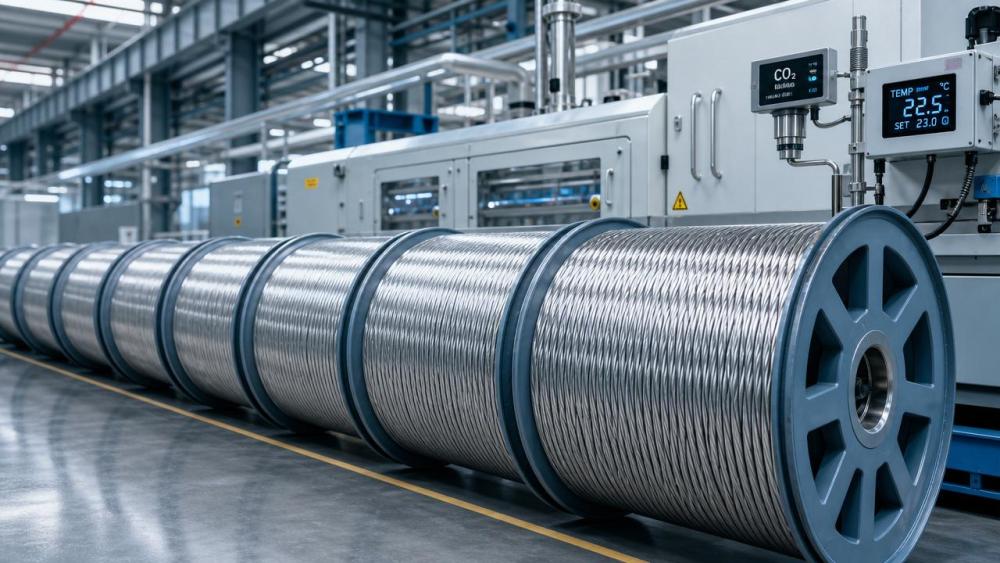
Conclusion: This amendment does not introduce new carbon reduction obligations per se, but institutionalizes verification as a prerequisite for market access. Its significance lies in shifting carbon data from a reporting exercise to a live, interoperable component of trade compliance. Currently, it is best understood as a narrowly scoped, standards-driven enforcement mechanism — not a generalized decarbonization policy — with implications concentrated among HTLS exporters and their Japanese trading partners.
Source: Japanese Industrial Standards Committee (JISC), official announcement dated 13 May 2026, regarding enforcement of JIS C 8201-15:2026. Further technical specifications for JIS-Verify integration and factory registration procedures remain pending official publication and are subject to ongoing observation.
Related News
- Do HTLS Conductors Require Existing Tower Structures to Be Replaced?Sep 09, 2026Transmission Materials Fellow
- How do HTLS conductors increase capacity without new towers?Sep 05, 2026Transmission Materials Fellow
- DOE HTLS Supplier List Adds 3 Chinese VendorsJul 12, 2026Transmission Materials Fellow
- DOE Tightens HTLS Import Review on CFCC TraceabilityJul 10, 2026Transmission Materials Fellow