
How Often Should SCADA Systems Be Upgraded for Cybersecurity?
SCADA systems should not be upgraded on a simple calendar schedule alone. For most power-sector operators, the more practical approach is a layered cycle: review cyber exposure continuously, apply validated security patches on a defined maintenance cadence, reassess architecture and vendor support at least annually, and plan larger platform modernization before the installed system approaches end of support.
That distinction matters because a SCADA environment cannot be treated like an office IT estate. A critical patch may need rapid action when it affects a remotely reachable engineering workstation, a historian connected to enterprise systems, or a gateway serving multiple substations. The same patch may require extensive testing and a carefully managed outage window when it touches control-room servers, protection interfaces, plant controllers, or high-availability communications paths.
For utilities operating UHV transmission assets, smart dispatching platforms, generation facilities, or grid-scale storage, the question is less “How many years can this SCADA system remain in service?” than “Can this system still be defended, recovered, and safely operated under the threats it now faces?”
A workable answer: different upgrade clocks for different changes
“Upgrade” covers several very different activities. Treating them as one event often leads either to excessive operational disruption or to dangerous delay.
Security patches are the shortest-cycle activity. Some can be applied in routine maintenance windows; others must be accelerated because a vulnerability is actively relevant to the environment. A platform upgrade is a larger undertaking involving compatibility testing, engineering tools, redundant servers, drivers, interfaces, operator displays, historical data, and possibly regulatory or change-control approvals. Replacing an obsolete architecture can take longer still, especially where the SCADA system coordinates geographically distributed substations or generation assets.
A utility that says its SCADA system was “upgraded three years ago” may still have an urgent cybersecurity problem if its remote-access software, workstation operating system, anti-malware capability, network devices, or vendor support status have changed since then. Conversely, a mature platform does not automatically need replacement simply because it is old. It may remain viable where it is supported, segmented, tightly controlled, and compatible with current security tooling.
Patch quickly when risk is immediate, but validate before touching operations
The most difficult operational decision is often whether a newly disclosed vulnerability requires an emergency patch. The answer should depend on exposure and operational consequence, not on the severity label alone.
A high-severity issue deserves urgent attention when the affected component is reachable through remote access, connected to business networks, exposed through a vendor support channel, or used widely across the fleet. Risk also rises when compromise could change setpoints, interrupt visibility, impair dispatch, disable alarms, alter engineering logic, or create a simultaneous impact across multiple sites.
Yet fast patching without validation can introduce a different failure mode. SCADA environments often depend on versions that have been qualified with specific PLCs, RTUs, protection relays, historians, HMIs, databases, time servers, and protocol gateways. An update that appears routine in IT can affect polling performance, failover behavior, display rendering, event sequencing, or device communications in the control environment.
The appropriate response is therefore a controlled one:
- Identify whether the vulnerable component is actually installed, enabled, and reachable in the operational architecture.
- Determine which systems depend on it, including redundant nodes, engineering workstations, remote access jump hosts, and data interfaces.
- Apply temporary controls when immediate patching is not operationally safe, such as restricting network paths, disabling unused services, tightening access rules, or removing unnecessary external connectivity.
- Test the vendor-approved fix against representative SCADA configurations before production deployment.
- Document the decision, residual exposure, and conditions that would require escalation.
Temporary controls are not a permanent substitute for patching. They are a way to reduce exposure while the operator prepares a safe change. A firewall rule, for example, may isolate a vulnerable service from known paths, but it does not restore vendor support or eliminate the underlying flaw.
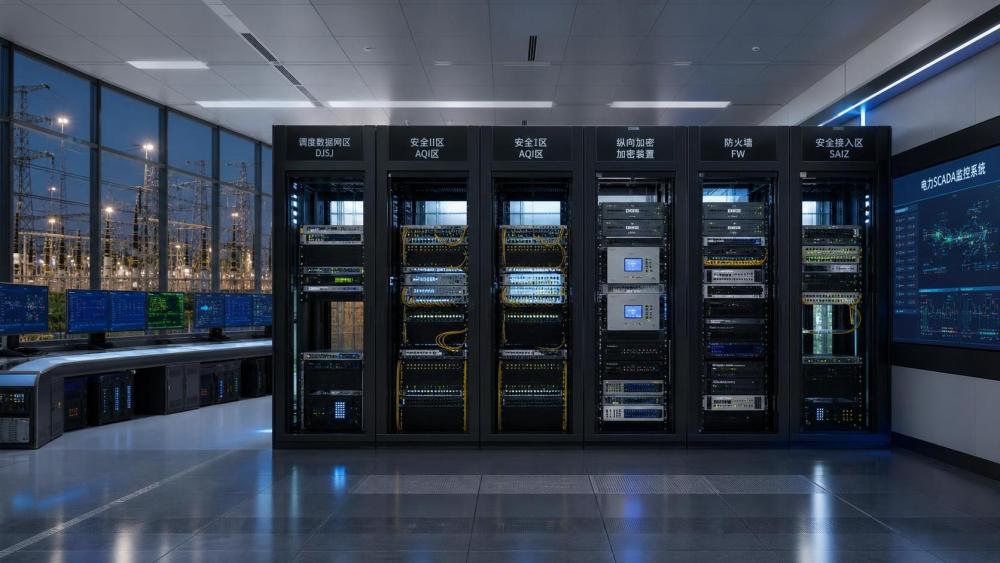
Annual review is the minimum discipline for the whole security posture
Even where major upgrades occur every few years, the SCADA cybersecurity posture should be reassessed at least annually. The review should be broader than a software inventory. It should ask whether the operating context has changed enough that controls designed several years ago are no longer sufficient.
For a power utility, relevant changes often include new renewable connections, energy storage integration, expanded remote operations, third-party maintenance access, consolidation of control centers, new data links to market or enterprise systems, and new analytics platforms. Each connection can alter the attack path into the control environment, even if the core SCADA application has not changed.
An annual review should establish clear answers to a limited set of operational questions:
- Which SCADA servers, workstations, communications devices, and supporting applications remain within vendor support?
- Where can users, contractors, or suppliers enter the OT environment, and are those paths authenticated, logged, time-limited, and segmented?
- Can the organization identify abnormal commands, unexpected configuration changes, failed logins, and unavailable communications quickly enough to act?
- Has the backup and recovery process been tested for control servers, HMI configurations, historian data, engineering files, and network equipment?
- Do current asset records accurately show software versions, dependencies, and ownership?
- Would a compromise at one site or business system propagate into multiple control zones?
This review often reveals that the most serious weakness is not the SCADA application itself. It may be an unmaintained engineering laptop, an undocumented modem, a shared administrator account, an aging remote-support appliance, or a restore process that has never been exercised under operational conditions.
End of vendor support should trigger a modernization decision
The clearest point at which a full upgrade becomes difficult to defer is the approach of end of support. Once a SCADA software version, operating system, database, or security appliance can no longer receive vendor fixes, the operator loses an important layer of defense. Compensating controls may buy time, but they become more fragile as new vulnerabilities and integration demands accumulate.
The right response is not always immediate replacement of the entire SCADA estate. In some cases, a phased program can separate the most exposed components from the deeper control layer. Remote-access gateways, domain services, operator workstations, perimeter firewalls, data exchange servers, and historian interfaces can sometimes be modernized first. This can reduce risk while the organization prepares the more complex migration of core control functions.
However, a phased approach only works if the target architecture is defined early. Replacing individual servers without addressing identity management, network zoning, remote access, backup design, and asset lifecycle ownership can produce a newer but still difficult-to-defend environment.
For UHV substations and other high-consequence assets, modernization planning should also account for the limited availability of outage windows. A system may be technically ready for replacement but operationally unable to tolerate an extended intervention during peak demand, major maintenance periods, or constrained grid conditions. That reality argues for starting the assessment well before end of support, rather than waiting until a vendor deadline forces the schedule.
Asset criticality should change the upgrade frequency
A single SCADA policy is rarely suitable for an entire utility portfolio. The required pace should reflect what each environment controls, how widely an incident could propagate, and how practical recovery would be.
A control platform coordinating transmission operations, interconnection flows, or large generating units generally warrants a more conservative lifecycle plan and more frequent security review than a locally isolated monitoring system with limited command capability. Grid-scale battery systems need similar scrutiny when their SCADA and energy management functions influence availability, state-of-charge management, or grid support behavior. Remote facilities can also carry elevated risk when communications are difficult to inspect or when field support is infrequent.
Criticality is not only about voltage level or asset size. A lower-voltage site may still be high consequence if it serves a hospital district, an industrial cluster, a strategic transport link, or a constrained network area. Likewise, a seemingly modest interface can be important if it provides a route into a larger control domain.
Useful prioritization considers four factors together: operational impact, external connectivity, software support status, and recovery capability. A system with moderate operational impact but unsupported software and broad remote access may deserve earlier action than a more critical system that is well segmented, supported, closely monitored, and recoverable.
Common upgrade assumptions that create avoidable exposure
“Air-gapped systems can wait.”
Many SCADA systems are less isolated than their operators assume. Data historians, engineering workstations, removable media, vendor access, corporate reporting links, and temporary maintenance connections can create bridges into OT networks. The question is not whether the system is described as air-gapped; it is whether the isolation is technically enforced, documented, and maintained as interfaces change.
“A firewall makes old software acceptable indefinitely.”
Segmentation is essential, but it does not turn unsupported software into supported software. A firewall can reduce exposure, particularly from enterprise networks and remote pathways. It cannot solve every issue arising from compromised credentials, internal movement, insecure removable media, or a vulnerable service needed inside the OT zone.
“Every critical patch must be installed immediately.”
Urgency must be balanced with system safety. An emergency patch may be justified where exploitation is plausible and consequence is severe, but deployment should still follow a defined operational decision process. When testing takes time, documented compensating controls and executive visibility are preferable to an informal delay.
“A major upgrade is an IT project.”
SCADA modernization is an operational resilience project. Control engineers, protection specialists, cybersecurity teams, operators, telecoms personnel, vendors, and outage planners may all need to participate. A technically successful software migration can still fail operationally if alarm behavior, operating procedures, failover, time synchronization, or recovery workflows have not been tested.
Build an upgrade roadmap around decisions, not dates
A defensible roadmap usually has three horizons. The first covers immediate exposure: unsupported remote access, critical vulnerabilities, shared accounts, missing backups, and unknown assets. The second covers the next planned maintenance cycle: validated patching, hardening work, network segmentation improvements, logging, recovery exercises, and vendor support renewals. The third covers lifecycle modernization: replacement of obsolete platforms, migration of operating systems and databases, redesign of remote operations, and retirement of legacy interfaces.
Each item should have an owner, a required outage or test window, dependencies, and an operational risk statement. That structure turns cybersecurity from a list of advisories into an actionable reliability program. It also helps leadership distinguish between work that must happen quickly and work that requires careful engineering preparation.
There is no universal rule that SCADA systems must be fully upgraded every three, five, or seven years. A better rule is to maintain a continuous security review, apply validated mitigations according to risk, conduct a formal annual posture assessment, and begin modernization before support loss or architectural weakness leaves the operator with no safe options. In power systems, the best upgrade schedule is the one that preserves both cyber resilience and control-room confidence when the grid is under stress.
Related News
- How to reduce interoperability risk in smart grid SCADA integrationOct 16, 2026Grid Automation Expert
- What data latency is acceptable for a smart grid SCADA system?Oct 15, 2026Grid Automation Expert
- How SCADA smart grid systems help operators respond to outagesOct 14, 2026Grid Automation Expert
- How Often Should SCADA Systems Be Upgraded for Cybersecurity?Sep 11, 2026Grid Automation Expert