
New Maritime Code Shifts No-Pickup Liability to Shippers, Reshaping XLPE Subsea Cable Exports
A major revision to China’s Maritime Code—effective 1 May 2026—reassigns primary liability for uncollected cargo at destination ports from consignees to shippers. This legal shift directly impacts international trade in high-value, long-lead products such as XLPE (cross-linked polyethylene) subsea cables, altering contractual risk allocation under FOB and CFR terms.
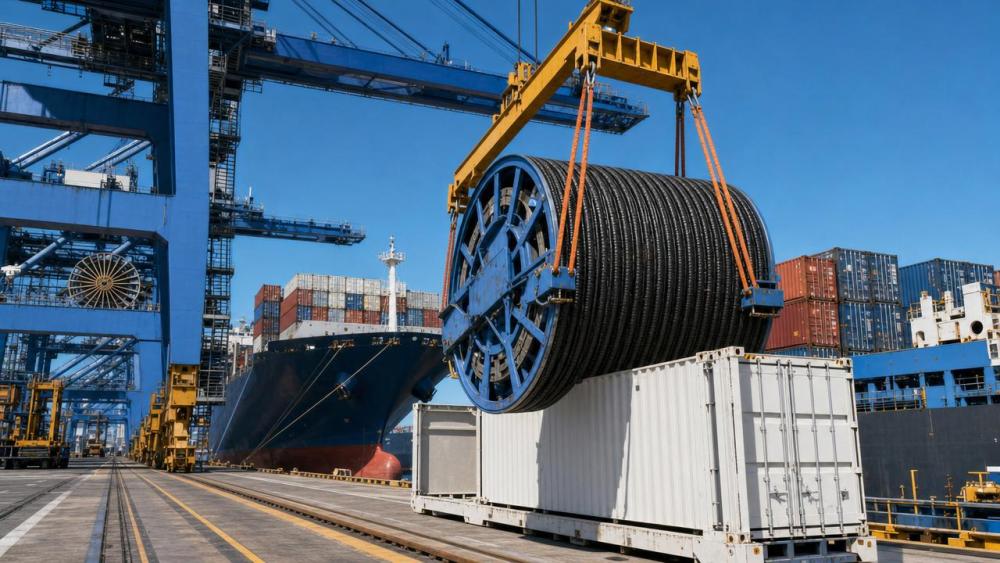
Legal Change Effective 1 May 2026
Article 93 of the newly revised Maritime Code, entering into force on 1 May 2026, establishes shipper-first responsibility for cargo left unclaimed at the discharge port. Previously, liability rested primarily with the consignee. The amendment applies uniformly across international maritime contracts governed by Chinese law and affects all shipments where Chinese entities act as exporters or shippers.
Impact Across Supply Chain Roles
Direct Trading Enterprises
Exporters of XLPE subsea cables now bear direct financial and operational exposure if overseas buyers fail to arrange timely pickup. Under FOB/CFR terms—which remain common for such capital-intensive goods—shippers must proactively monitor port clearance status, not just shipment dispatch. Unaddressed delays may trigger demurrage, forced cargo disposal, or documentary credit rejection.
Raw Material Procurement Firms
Procurement teams sourcing insulating compounds, copper conductors, or HDPE sheathing must now align lead times with enhanced post-shipment oversight requirements. Contracts with upstream suppliers may need revised clauses linking delivery milestones to downstream port readiness indicators.
Manufacturing Enterprises
Cable producers face tighter integration demands between production planning, logistics coordination, and documentation issuance. Factory release schedules must now account for extended visibility windows into destination port operations—not only manufacturing cycle time but also anticipated customs processing and consignee responsiveness.
Supply Chain Service Providers
Freight forwarders, customs brokers, and local destination agents are increasingly expected to deliver real-time pickup alerts and proactive intervention support—not just compliance filing. Their service scope is evolving toward end-to-end port-handling assurance, particularly for projects with fixed commissioning deadlines.
Key Operational Priorities for Exporters
Strengthen Destination Agent Coordination
Shippers must formalize service-level agreements with appointed destination agents covering early notification of arrival, weekly pickup status updates, and escalation protocols when consignee non-response exceeds 72 hours—especially critical for XLPE cables subject to moisture-sensitive storage conditions.
Revise Incoterms Risk Allocation in Contracts
New sales agreements should explicitly define responsibilities for port storage, insurance coverage during dwell time, and cost-sharing mechanisms for demurrage. Consider incorporating CIF or DAP terms where greater control over destination handling is operationally feasible.
Integrate Credit Risk Monitoring into Logistics Workflow
Pre-shipment due diligence must extend beyond buyer creditworthiness to include assessment of their local import infrastructure, recent port clearance history, and capacity to manage high-value, bulk cargo receipt—particularly relevant for emerging-market offshore wind or interconnector projects.
Update Documentary Compliance Protocols
Letters of credit and shipping instructions must now include mandatory fields confirming appointment of a verified destination agent, submission of pre-arrival pickup confirmation, and evidence of consignee readiness—reducing risk of bank refusal based on non-compliance with Article 93 obligations.
Industry Observation: From Transactional to Relational Trade Governance
Analysis shows this amendment reflects a broader regulatory trend: shifting from passive liability assignment to active stewardship expectations for Chinese exporters. It is more appropriate to understand this as a structural recalibration of international trade accountability—not merely a procedural update. Observably, manufacturers of long-cycle infrastructure products like XLPE subsea cables will need to institutionalize cross-border operational visibility, moving beyond factory-to-port execution toward port-to-commissioning continuity. What deserves closer attention is how certification bodies and classification societies begin referencing Article 93 compliance in project eligibility assessments for offshore energy tenders.
Strategic Implications for Global Infrastructure Supply Chains
This change does not eliminate FOB/CFR usage—but redefines its viability for high-stakes, mission-critical exports. Success hinges less on price competitiveness and more on demonstrable end-to-end supply chain governance. For XLPE cable suppliers, it signals an inflection point: commercial differentiation will increasingly stem from integrated logistics intelligence, not just technical specifications or manufacturing scale.
Source Attribution & Ongoing Monitoring
This article was generated exclusively from the provided title, effective date (1 May 2026), and factual summary. Specific official source links were not provided in the input and should be verified continuously. Stakeholders are advised to monitor forthcoming judicial interpretations, customs administrative guidance, and updates to ICC Uniform Customs and Practice for Documentary Credits (UCP 600) implementation notes—particularly regarding ‘shipper diligence’ benchmarks and evidentiary standards for pickup readiness verification.
Related News
- Vietnam Sets 2026 Standalone Storage Price Ceiling at VND 3,209.98/kWhNov 12, 2026Energy Storage Strategist
- Yangtze River Delta Issues Power-Sharing Rules Including Storage and Virtual Power PlantsNov 11, 2026Dr. Alistair Vaughn
- NTPC Green Energy Tenders 10 GW/40 GWh Storage Systems and Grid-Forming PCSNov 10, 2026Energy Storage Strategist
- Australia’s NEM Battery Storage Reaches Record 20.17 GWhNov 09, 2026Energy Storage Strategist