
When do mobile turbine solutions for grid peaking make economic sense?
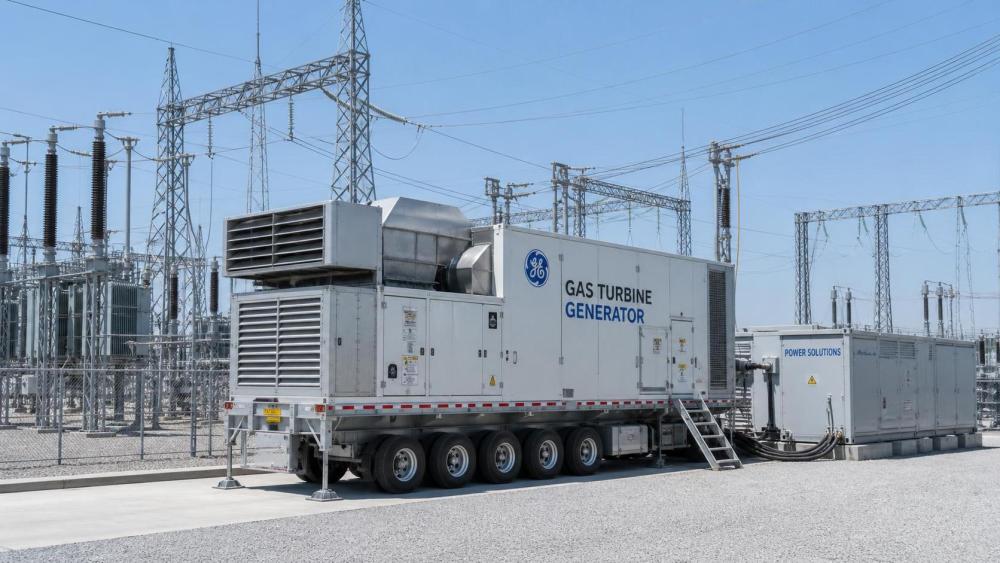
Mobile turbine solutions for grid peaking make economic sense when the system needs firm, dispatchable capacity at a constrained location, for a limited but high-value operating window, and when the alternative would require more time, network work, or revenue exposure than the turbine package. Their value is rarely defined by annual energy production. It is defined by the cost of being unavailable when demand, renewable volatility, or transmission limits create a shortfall.
A mobile unit is most defensible where capacity has a clear commercial value, the grid operator needs controllable output rather than only energy shifting, and the expected duty cycle remains compatible with turbine heat rate, maintenance intervals, and fuel logistics. A project that looks attractive from a simple capacity-price calculation can fail once interconnection upgrades, gas supply, emissions controls, temporary foundations, acoustic treatment, and standby staffing are included. The correct comparison is therefore a location-specific reliability case, not a generic comparison between turbines and batteries.
Start with the event that the asset must solve
Grid peaking is not one operating condition. A turbine intended to cover a few extreme summer evenings faces a different economic test from a unit supporting a weak industrial feeder during seasonal outages. Before selecting equipment, define the shortage event in operational terms: required megawatts at the point of connection, response time, minimum run duration, expected starts, annual hours, voltage support requirements, and the consequence of non-delivery.
The strongest use cases usually have a narrow constraint that cannot be relieved economically through the wider system. Examples include a substation with limited transformer capacity during a construction period, a remote load pocket exposed to transmission contingencies, or a renewable-heavy zone where evening ramps outpace local firm capacity. In these situations, the turbine is not competing with a theoretical average wholesale power price. It is competing with curtailment, expensive emergency imports, production interruption, reliability penalties, or a delayed grid connection.
Mobile equipment is particularly relevant when the need is temporary but not trivial. A permanent peaking plant may be difficult to justify for a two- or three-season transmission bottleneck, while a battery sized for the same output may have insufficient duration or become costly if it must repeatedly discharge through long peak periods. Conversely, a shortage lasting only minutes, with frequent cycling and a high need for instantaneous response, often favors storage, demand response, synchronous condensers, or a combined resource arrangement.
Capacity value must exceed the full cost of readiness
A mobile turbine can sit idle for long periods, yet its fixed costs continue. The economic model should separate the cost of being ready from the cost of running. Readiness includes lease or ownership charges, transport, site preparation, interconnection, controls integration, insurance, fuel reservation, planned maintenance, periodic test runs, and personnel or service coverage. Running costs include fuel, start fuel, variable maintenance, consumables, emissions-related charges where applicable, and any cost caused by operation outside preferred ambient conditions.
The important question is not simply whether dispatch revenue covers fuel. It is whether the annual value of committed capacity, avoided exposure, and dispatch margin covers readiness costs over the period for which the asset is required. A low-hour peaker can still be rational when failure to serve a small number of hours is financially severe. It becomes weak when the project relies on uncertain energy-market spikes while carrying substantial fixed site and interconnection costs.
Capacity payments should also be tested against performance obligations. A contract may require availability during specified seasons, minimum output at high ambient temperature, telemetry, ramp capability, black-start readiness, or fuel security. Nameplate output alone is a poor input for this test. Turbine power declines as ambient temperature rises, and the hottest hours are often the very hours in which peaking support is needed. The model should use guaranteed site-condition output, not the catalog rating at more favorable conditions.
Operating hours change the technology comparison
The dividing line between turbines, batteries, transmission reinforcement, and fixed generation is shaped by duration as much as by megawatt requirement. A mobile turbine produces as long as fuel is available and maintenance limits are respected. A battery produces until its usable stored energy is exhausted, then must recharge. That distinction matters when a peak event extends beyond the expected evening window, when a contingency overlaps with high demand, or when repeated events occur before storage can recharge at an acceptable cost.
Annual operating hours should not be viewed in isolation. Two sites with the same total hours can impose very different costs. A unit that runs in a small number of sustained events experiences a different start profile from one called every weekday. Frequent starts increase wear on hot-section components and raise the importance of start reliability. Repeated shallow dispatches also affect fuel consumption because warm-up, synchronization, and minimum-load operation consume fuel without necessarily producing high-value output.
Dispatch shape matters even more where a package includes multiple small turbine-generator sets. Modular units can match output to the net shortage and keep fewer machines online at lower demand. That improves operating flexibility, but it adds control complexity, more auxiliaries, more maintenance interfaces, and more potential points of failure. The value of modularity should be measured against the actual load duration curve rather than treated as an automatic advantage.
Fuel flexibility has a cost beyond the fuel price
Fuel choice often decides whether a project remains mobile in practice. Pipeline gas can offer clean operation and simpler on-site handling, but a constrained gas lateral or interruptible supply agreement can undermine availability exactly when peak demand is highest. Diesel or other liquid fuels can provide independence from pipeline constraints, yet they require storage tanks, delivery access, spill protection, fuel quality management, and space for safe transfer operations. Dual-fuel capability can reduce exposure to a single supply interruption, although it brings additional equipment, testing, maintenance, and operating procedures.
Fuel availability must be assessed at the same time resolution as the grid need. An annual gas transportation contract does not prove that gas will be available during a regional cold snap. A nominal tank volume does not prove that road access, unloading time, and supplier allocation will support a prolonged event. For a temporary installation, fuel trucking can be the hidden capacity limit: the turbine may have adequate mechanical output, while the site cannot replenish inventory fast enough during consecutive dispatch days.
Fuel quality deserves the same attention. Gas pressure variation, liquids in gas, water contamination in stored liquid fuel, and long-term storage degradation can affect starts, combustion stability, emissions performance, and maintenance. The commercial model should include conditioning, filtration, sampling, and contingency fuel management where the operating concept depends on stored inventory.
The interconnection can erase the speed advantage
A turbine package may arrive quickly, but the electrical path to usable capacity often takes longer. The site needs an interconnection study, protection coordination, grounding design, switchgear, step-up transformation, communications, revenue or operational metering, and control-room integration. A constrained feeder may also require a revised protection scheme because local generation changes fault current, reverse power flow, and islanding behavior.
For grid peaking, the useful question is whether the unit can deliver at the constrained electrical node without creating another limitation upstream or downstream. A plant connected behind a transformer that is already near its thermal limit may add little usable capacity. Similarly, a turbine located near a weak distribution network may need voltage-control capability, reactive support, or a carefully managed ramp rate. Active power alone does not ensure the grid receives the service being paid for.
Temporary installations frequently underestimate civil work. Transportable does not mean foundation-free. Equipment still needs a stable, level surface, drainage, access for cranes and maintenance, cable routing, fire separation, noise treatment, and clearance around air intake and exhaust systems. High ambient temperature, dust, salt spray, altitude, or flood risk can alter both available output and site design. These are not secondary engineering details; they determine the delivered capacity and the time required to commission it.
Compare alternatives at the same point of delivery
Battery storage, demand response, transmission upgrades, fixed reciprocating engines, and permanent gas turbines should be compared using the same boundary: dependable megawatts at the required location, during the required event, with the required response and duration. Comparing a battery's inverter rating with a turbine's nameplate rating, or comparing a transmission project's regional benefit with a turbine's local output, produces misleading conclusions.
Storage has advantages where response speed, frequency support, congestion relief for short intervals, and repeated cycling create stacked value. Its economic case becomes harder when the grid needs long-duration discharge, recharge is constrained after an event, or the same asset must preserve energy for a contingency later in the day. A mobile turbine has a clearer advantage where fuel-backed duration carries high reliability value and the expected use is too infrequent to recover the capital cost of a large energy-storage system.
Transmission reinforcement can be the better long-term answer when congestion is persistent and the upgrade provides broad network value. Yet construction lead times, land access, outage windows, and substation work can leave a reliability gap. A temporary turbine can be rational as a bridge only when its exit date is credible. If the network project has uncertain delivery, the temporary resource should be evaluated under a longer deployment scenario, including lease extension exposure, maintenance milestones, and changing fuel economics.
Contract structure can matter as much as equipment efficiency
For temporary capacity, commercial terms shape risk allocation. A low fixed charge paired with high dispatch charges may suit an uncertain peak need, while a high reservation payment may be preferable when availability obligations are strict and expected runs are limited. The agreement should define the output test conditions, required availability window, permitted fuel, planned-maintenance treatment, outage notification, spare-parts responsibility, and performance consequences when a unit cannot start.
Transport and demobilization terms deserve close review. Route surveys, oversize permits, escort requirements, crane availability, and seasonal access restrictions can affect both initial deployment and the ability to relocate the asset when grid conditions change. A nominally mobile package that requires extensive disassembly, specialized lifting, or site-specific exhaust treatment may be relocatable, but not rapidly relocatable.
Control interfaces should be specified early. The dispatch authority needs clear responsibility for start commands, synchronization, load setpoint changes, emergency trip logic, curtailment, and communications failure. Where multiple assets share a constrained node, the controls philosophy must prevent one resource from consuming the headroom needed by another. Poorly defined interfaces can turn a technically adequate turbine into an unreliable grid resource.
Use a downside case before approving the deployment
The most useful financial model is not the base case with a smooth forecast of peak hours. It is the case in which peak events are fewer than expected, fuel is less available during system stress, commissioning slips, and the grid upgrade is delayed. If the project remains defensible under these conditions because it avoids a defined reliability exposure or secures contracted capacity value, the deployment has a stronger foundation.
It is equally important to test the opposite outcome: more dispatch than planned. Higher run hours can improve revenue, but they also raise fuel spending, maintenance consumption, emissions exposure, and the chance that temporary equipment begins to operate like permanent generation without the corresponding efficiency or infrastructure. A resource selected for occasional peaking should have a clear escalation path if the grid begins to rely on it routinely.
Mobile turbine solutions for grid peaking are economically sound when mobility solves a real timing or location problem, firm duration is worth more than the full cost of readiness, fuel can be secured under stress conditions, and the interconnection delivers usable capacity where the constraint occurs. When those conditions are absent, rapid deployment can become an expensive substitute for a better-matched storage, network, or permanent generation investment.
Related News
- GE Vernova CEO Says Gas Turbine Prices Up 50%, Orders Extend to 2032Oct 29, 2026Power Generation Scientist
- Industrial Gas Turbine Types: Heavy-Duty vs. Aeroderivative DesignsOct 23, 2026Power Generation Scientist
- Sizing Gas Turbines: Rated Output Versus Site Power RequirementsOct 22, 2026Power Generation Scientist
- How to Compare the Total Cost of Ownership of Gas Turbine ModelsSep 08, 2026Power Generation Scientist