
India Raises Parboiled Rice Export Tax as UHV Backup Power Demand Jumps
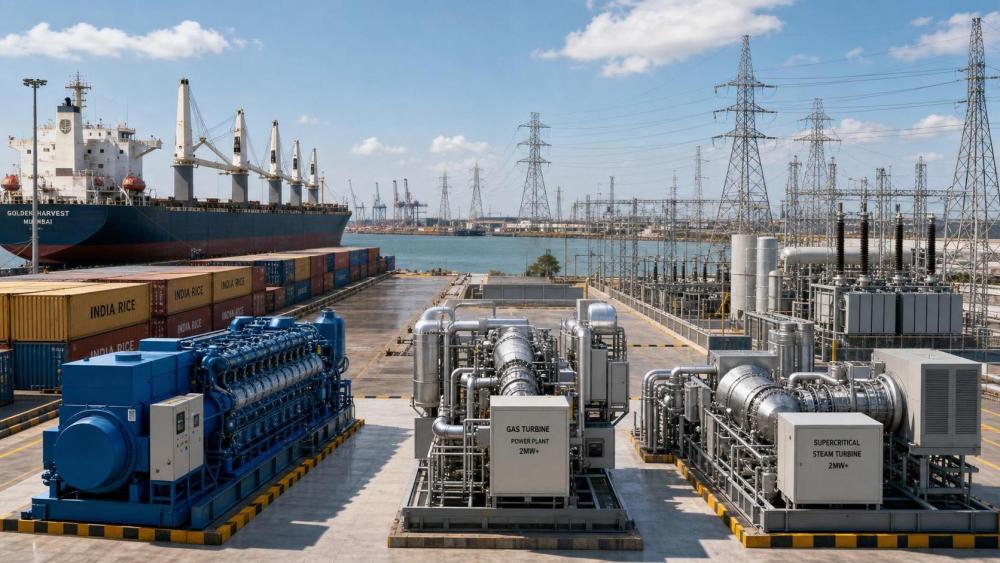
On June 17, 2026, India announced a 20% export tax on parboiled rice, while domestic rice output was also pressured by El Niño-related losses. At the same time, a widening national power load gap has triggered urgent backup power projects for UHV substations in multiple locations, sharply increasing import demand for high-capacity diesel generator sets powered by heavy-duty gas turbines and USC steam turbines at 2 MW and above. For companies involved in power equipment procurement, project delivery, industrial supply chains, and cross-border trade, the issue is worth close attention because it links a policy move in agricultural trade with immediate pressure on energy infrastructure timelines.
What Has Been Confirmed So Far
The confirmed facts are limited but clear. India announced on June 17, 2026 that it would impose a 20% export tax on parboiled rice. The event coincides with reduced domestic rice production linked to El Niño. The same summary also indicates that the national power load gap has widened, prompting the urgent launch of emergency power support projects for UHV substations in multiple areas. As a result, import demand has risen sharply for large diesel generator sets of 2 MW or above that are driven by heavy-duty gas turbines and USC steam turbines. Delivery lead times have already extended to 24 weeks.
Where Pressure Is Emerging Across the Chain
Power project procurement is moving from price focus to schedule focus
From an industry perspective, procurement teams for UHV-related emergency power projects may be among the first to feel the impact. The most direct issue is not only equipment availability, but also the ability to secure acceptable lead times for large-capacity units. What deserves closer attention is whether procurement plans, bid specifications, and delivery sequencing need to adjust around longer import cycles.
Equipment suppliers and integrators face tighter delivery coordination
For suppliers and system integrators handling high-power backup generation packages, the immediate pressure likely appears in order planning, import scheduling, and client communication. Analysis shows that once lead times stretch to 24 weeks, coordination risks can shift from simple equipment sales to broader delivery management, especially where turbine-driven diesel generator sets are tied to project milestones.
Trade and logistics participants may see higher execution complexity
Companies involved in import execution, shipping arrangements, documentation, and cross-border supply support may also be affected. The issue is less about a single transaction and more about whether urgent demand compresses normal execution windows. Observably, any business handling large, technically specific imported equipment should watch for changes in booking pressure, document readiness, and delivery sequencing.
What Companies Should Watch Now
Separate policy facts from project-side urgency
Companies should distinguish between the confirmed export tax measure on parboiled rice and the project-side acceleration in emergency power deployment. These are connected in the event summary, but they affect business decisions through different channels. One is a trade policy signal; the other is an infrastructure procurement reality already reflected in longer lead times.
Track whether official wording changes further
What deserves closer attention is whether any subsequent official statements refine the scope, duration, or implementation details of the export tax or related power measures. Even without additional confirmed changes at this stage, companies should avoid assuming that current wording fully defines future execution conditions.
Recheck delivery commitments and supplier readiness
For businesses already quoting or sourcing large-capacity generator sets, the practical focus should be on supplier qualification, technical document completeness, and realistic fulfillment timelines. Analysis shows that once lead times extend materially, contract communication and milestone planning become as important as price negotiation.
Prepare clients for longer procurement cycles
Service providers, procurement teams, and project coordinators should prepare for more frequent client communication around schedule risk. In this situation, it is more appropriate to understand lead-time extension as an operational issue that can affect tender pacing, acceptance planning, and contingency preparation.
Why This Matters Beyond a Single Announcement
Analysis shows that this development should not be read only as an agricultural trade update. It also points to how supply-side pressure, climate-linked production stress, and electricity shortfalls can quickly feed into infrastructure procurement behavior. At the current stage, it is more appropriate to understand this as a cross-sector warning signal rather than a fully settled long-term trend. The facts confirm urgent demand and longer delivery cycles, but the broader market impact still requires continued observation.
How to Read the Current Signal
In practical terms, this event matters because it shows a fast linkage between policy action, resource pressure, and power project execution. The confirmed rise in import demand for large backup generation equipment, along with 24-week lead times, suggests that affected businesses should focus first on procurement timing, supplier coordination, and delivery risk. From an industry perspective, this is best understood as a near-term operational shift with potential broader implications, rather than a final indication of a fixed long-term market direction.
Basis of This Article and Ongoing Verification
This article is based on the user-provided news title, event date, and event summary. For this type of development, commonly relevant source categories may include official announcements, company disclosures, industry association updates, authoritative media coverage, and technical or standards-related documentation. No specific official source link was provided in the input, so further verification remains necessary. Continued attention should focus on any follow-up official wording, changes in procurement execution, and whether extended lead times remain temporary or persist across subsequent project cycles.
Related News
- GE Vernova CEO Says Gas Turbine Prices Up 50%, Orders Extend to 2032Oct 29, 2026Power Generation Scientist
- Industrial Gas Turbine Types: Heavy-Duty vs. Aeroderivative DesignsOct 23, 2026Power Generation Scientist
- Sizing Gas Turbines: Rated Output Versus Site Power RequirementsOct 22, 2026Power Generation Scientist
- How to Compare the Total Cost of Ownership of Gas Turbine ModelsSep 08, 2026Power Generation Scientist