
Gas Turbine Lead Times Stretch to 2030
The timing of the event is not specified in the provided information, but the development is notable because it points to a shift in procurement and delivery expectations rather than a routine equipment update. In the heavy-duty gas turbine market, extended global lead times, new export wins by Chinese manufacturers, and growing attention to localization and hydrogen compatibility may affect buyers, exporters, supply-chain service providers, certification-related parties, and after-sales planning. What deserves closer attention is not only who is winning orders, but how delivery schedules, technical documentation, qualification reviews, and trade execution standards may be reassessed by market participants.
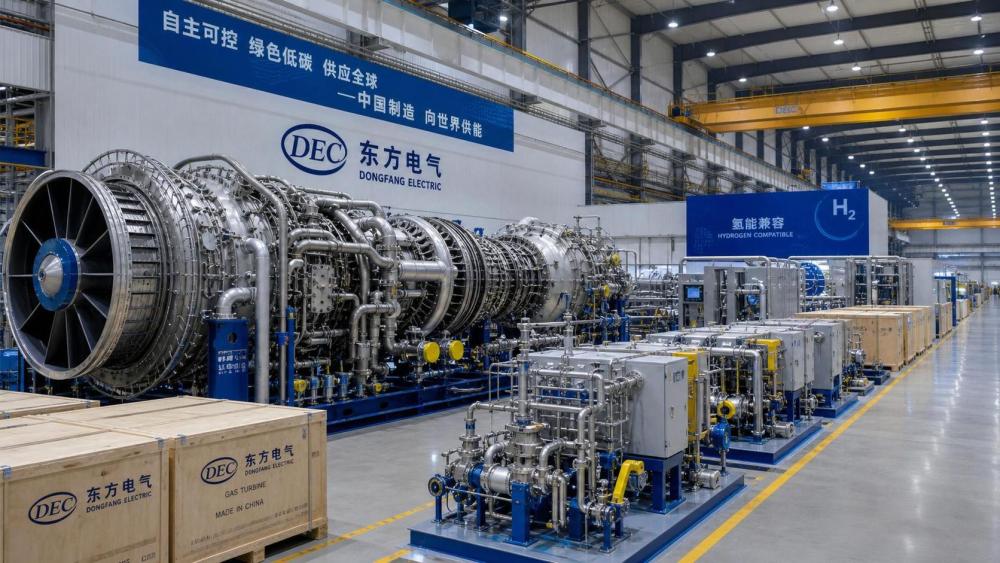
What the confirmed information shows
According to a CICC analysis published in April 2026, production capacity for gas turbines at major international suppliers including GE, Siemens, and Mitsubishi has already been booked through 2028, with delivery generally extending to around 2030. In the same period, Dongfang Electric's G50 entered commercial operation with 100% domestic localization, China State Shipbuilding's CGT40 secured an order from Russia worth more than RMB 10 billion, and a Canadian cloud services company made bulk purchases of domestically produced equipment.
The information provided also states that this supply-demand mismatch is prompting international buyers to reassess the substitute value of Chinese heavy-duty gas turbines in terms of cost, delivery flexibility, and hydrogen compatibility.
Why procurement and trade routines may now shift
Buyers may face tighter qualification and scheduling reviews
From an industry perspective, buyers are likely to be affected first because long delivery queues can change how procurement teams compare suppliers. The immediate impact may appear in tender scheduling, technical bid alignment, project delivery sequencing, and vendor prequalification reviews. In practice, purchasers may need to pay closer attention to whether supplier submissions clearly address lead time commitments, operating performance documentation, and compatibility statements tied to future fuel-transition requirements such as hydrogen use.
Export-facing manufacturers may see higher scrutiny on proof packages
For manufacturers pursuing overseas business, the reported export orders suggest that market access discussions may increasingly turn on documentary readiness rather than price alone. The business impact may center on technical files, test records, product specifications, contract deliverables, and any certifications or conformity materials requested by overseas customers. Observably, where buyers are reassessing alternatives, supplier credibility may depend on whether documents supporting localization, commercial operation, and product capability can stand up to cross-border review.
Supply-chain and delivery service providers may need to adjust execution assumptions
Logistics coordinators, contract service firms, and project delivery partners may also be affected because longer global lead times can reshape shipment timing, installation windows, and handover planning. The pressure point is less about a new formal rule already announced and more about the way delivery risk may be incorporated into procurement and contract execution. These parties should watch for changes in delivery milestones, acceptance documentation, spare-parts expectations, and after-sales coordination requirements in customer contracts and bid files.
Certification and testing-related participants may receive more market-driven inquiries
Certification-related companies and testing service institutions may see a change in demand if buyers increasingly compare Chinese equipment against established international suppliers. The likely impact is in requests for technical verification, compliance evidence, test reports, and specification matching during bid evaluation or supplier onboarding. Analysis shows that even without a newly cited regulation in the provided information, commercial substitution decisions can still raise the practical importance of documentation consistency and review standards.
Practical points companies should monitor now
Watch how qualification language evolves in tenders
The provided information does not establish a new formal rule, so it is more appropriate to treat current changes as an execution signal. Companies should therefore monitor whether tender documents, procurement terms, or customer qualification language begin to place more weight on delivery certainty, localization evidence, or hydrogen-related technical readiness.
Prepare technical and trade documents for deeper review
Where buyers are reassessing alternatives, technical dossiers, testing materials, specification sheets, and contract attachments may receive closer examination. Exporters and manufacturers should pay attention to whether their document sets are complete, internally consistent, and suitable for customer-side compliance checks, especially when discussions involve substitution away from incumbent suppliers.
Recheck delivery promises against supplier capacity
Given the reported extension of delivery timelines among major international suppliers, companies involved in procurement or project planning should closely compare contractual delivery promises with actual manufacturing capacity and supply-chain readiness. This is particularly relevant for businesses that must align equipment delivery with downstream construction, commissioning, or service obligations.
Do not separate sales progress from after-sales readiness
Observably, export momentum can create follow-on requirements in service response, quality traceability, and post-delivery support. Companies should therefore watch whether customer evaluation increasingly extends beyond initial equipment purchase to include service arrangements, spare-parts support, and traceability materials needed for long-cycle industrial assets.
How this signal should be read
Analysis shows that this development is better understood as a market execution signal than as a fully defined regulatory change. The confirmed facts point to a supply-demand imbalance, visible export traction for Chinese manufacturers, and a buyer-side reassessment of substitute options. What remains open is how this reassessment will translate into formal procurement language, qualification standards, certification expectations, and long-term supplier selection rules across different markets.
From an industry perspective, the key reason to keep watching is that commercial decisions often harden into practical market rules before they are reflected in any single public policy text. That means companies should continue tracking customer requirements, bid documentation changes, technical review criteria, and market feedback rather than assuming that current order activity alone confirms a stable new pattern.
What this means at this stage
At this stage, the development does not confirm a universal rule change, but it does indicate that delivery risk, localization progress, and technology positioning are becoming more influential in cross-border equipment decisions. A neutral reading is that the market is testing whether Chinese heavy-duty gas turbines can move from alternative option to qualified mainstream choice in selected projects and customer groups.
It is more appropriate to understand this as an early but concrete execution signal: confirmed order activity and extended incumbent lead times are creating conditions for procurement behavior to shift, while the durability of that shift still depends on customer acceptance, document review standards, and follow-through in delivery and service.
Basis of this article and points still requiring verification
This article is generated based on the user-provided headline, event timing, and summary. The specific official source links were not provided in the input, so they still need to be verified on an ongoing basis. For this type of development, commonly relevant source categories may include official announcements, regulatory releases, trade or customs authority information, industry association updates, standard-setting documents, tender materials, and reporting by authoritative media.
Further observation is still needed on any later policy detail, certification interpretation, tender document changes, industry feedback, and actual company-side execution. Because the provided information does not include full official texts or implementation rules, any market conclusion should be treated with appropriate caution.
Related News
- GE Vernova CEO Says Gas Turbine Prices Up 50%, Orders Extend to 2032Oct 29, 2026Power Generation Scientist
- Industrial Gas Turbine Types: Heavy-Duty vs. Aeroderivative DesignsOct 23, 2026Power Generation Scientist
- Sizing Gas Turbines: Rated Output Versus Site Power RequirementsOct 22, 2026Power Generation Scientist
- How to Compare the Total Cost of Ownership of Gas Turbine ModelsSep 08, 2026Power Generation Scientist