
FOMC Signals Higher-for-Longer, Lifting Power Project Funding Costs
On June 17, 2026, the first FOMC meeting chaired by the Federal Reserve’s new chair, Warsh, raised the median projected terminal rate for the end of 2026 to 3.8%, reinforcing a higher-for-longer policy signal. For the power industry, this is worth close attention because it directly affects the financing environment for capital-intensive projects tied to thermal peaking capacity, UHV transmission, and large-scale BESS, while also reshaping how developers, equipment suppliers, and procurement teams assess project timing, payback pressure, and technology choices.
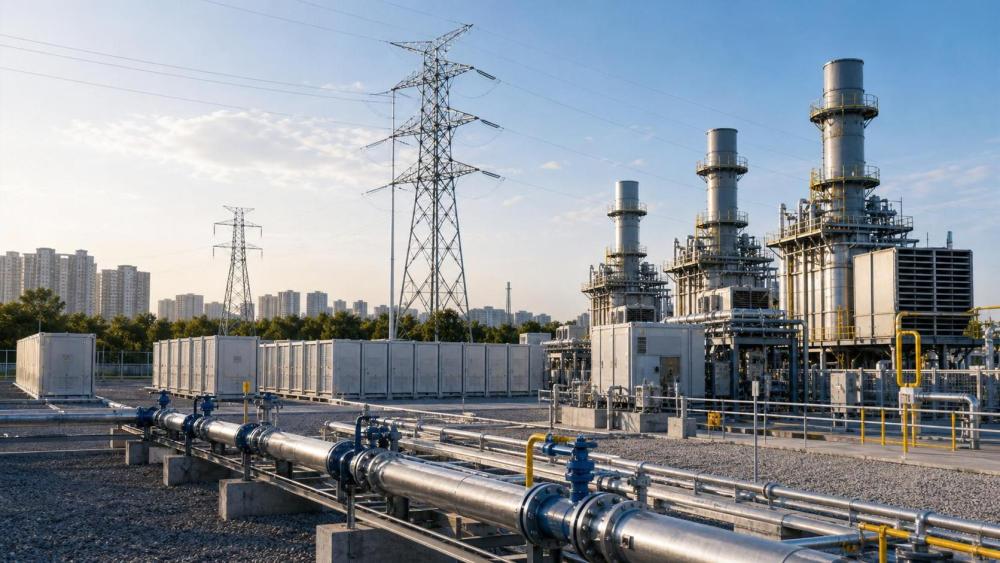
A Clear Rate Signal From the June 17 Meeting
Confirmed information shows that Warsh presided over his first FOMC meeting on June 17, 2026, and that the median projected terminal rate for the end of 2026 was lifted to 3.8%.
The policy message conveyed by that meeting was that interest rates are expected to stay higher for longer. Based on the provided event summary, this signal is expected to push up U.S. dollar financing costs and IRR pressure for capital-intensive power infrastructure projects, including thermal power peaking projects, UHV transmission, and large BESS deployments.
The same summary also indicates that this financing backdrop may accelerate a shift in multiple countries toward cost-effective domestic heavy-duty gas turbines and modular energy storage solutions with shorter construction cycles.
Where the Pressure May Show Up First
Project developers face tighter return assumptions
From an industry perspective, developers of large power infrastructure projects may feel the impact first because these projects rely heavily on long-cycle capital planning. The main pressure point is likely to appear in project financing structure, return thresholds, and investment pacing, especially where U.S. dollar funding is involved.
Equipment suppliers may see demand preferences change
Analysis shows that suppliers linked to thermal peaking equipment, UHV systems, and large BESS may need to watch not only order volume but also customer preference shifts. If financing costs rise, buyers may place greater weight on lower upfront cost, faster delivery, and shorter construction timelines rather than on larger or more capital-intensive configurations.
Procurement and commercial teams may revisit selection criteria
What deserves closer attention is that procurement functions and commercial managers may need to reassess how projects are screened and negotiated. The impact may be reflected in bid evaluation, payment terms, delivery schedules, and the balance between lifecycle value and near-term capital burden.
Supply chain service providers may need to monitor timing risk
Observably, service providers supporting delivery, project coordination, and cross-border supply arrangements may face greater timing sensitivity if customers delay decisions or re-sequence investments. The key issue is not a confirmed contraction in demand, but the possibility that project execution priorities shift under a more expensive funding environment.
What Companies Should Track Now
Watch for follow-up policy language, not just the headline rate signal
Analysis shows that companies should pay attention to how the higher-for-longer message is reinforced or adjusted in subsequent official communication. The current event provides a policy direction signal, but the practical effect on project decisions will depend on how consistently that tone is maintained.
Reassess exposure in capital-intensive product lines
For businesses tied to thermal peaking, UHV transmission, and large BESS, a practical focus is to review where financing sensitivity is highest. Product lines or bids that depend on long payback periods or larger upfront capital commitments may require closer commercial review.
Prepare for greater interest in shorter-cycle solutions
Based on the provided information, shorter construction-cycle options such as domestic heavy-duty gas turbines and modular storage solutions may receive more attention. Companies active in these areas may need to prepare for more detailed customer discussions around delivery schedules, cost structure, and implementation readiness.
Separate policy signaling from immediate order conversion
What deserves closer attention is the difference between a policy signal and a confirmed market result. Companies should avoid treating this event alone as proof of immediate procurement changes, while still preparing for adjustments in customer budgeting, financing assumptions, and project sequencing.
Why This Matters Beyond a Single Meeting
Observably, this development is more than a routine rate update for the power sector because it affects the economic logic behind large infrastructure decisions. Analysis shows that the event is best understood as a financing signal that can influence technology selection and project structure, rather than as a standalone confirmation of demand expansion or contraction.
It is more appropriate to understand this as an industry signal with both short-term and medium-term relevance. In the short term, it may increase caution around dollar-funded, capital-heavy projects. In a broader sense, it points market attention toward solutions that can reduce capital burden and shorten delivery cycles.
How the Market May Read This Signal
At this stage, the most reasonable interpretation is that the June 17 FOMC outcome raises the financing sensitivity of global power infrastructure projects rather than conclusively changing end-market demand on its own. For industry participants, the significance lies in how financing conditions may start to influence equipment preference, project sequencing, and commercial negotiation priorities.
Current observation suggests this should be treated as a meaningful policy and market signal that warrants continued tracking, especially for businesses exposed to thermal peaking, UHV transmission, and large BESS investment decisions.
Basis of This Article
This article is generated from the user-provided news title, event date, and event summary. The specific official source link was not provided in the input and still requires ongoing verification.
For this type of development, source categories that are typically relevant include official central bank communications, company announcements, industry association updates, authoritative media coverage, and standard-setting or policy-related documents. Further observation should focus on subsequent official policy wording and whether project-side procurement and financing behavior begins to reflect the higher-for-longer signal described in the provided information.
Related News
- GE Vernova CEO Says Gas Turbine Prices Up 50%, Orders Extend to 2032Oct 29, 2026Power Generation Scientist
- Industrial Gas Turbine Types: Heavy-Duty vs. Aeroderivative DesignsOct 23, 2026Power Generation Scientist
- Sizing Gas Turbines: Rated Output Versus Site Power RequirementsOct 22, 2026Power Generation Scientist
- How to Compare the Total Cost of Ownership of Gas Turbine ModelsSep 08, 2026Power Generation Scientist