
Vietnam EVN Suspends New Liquid-Cooled BESS Approvals Pending Fire Safety Standard
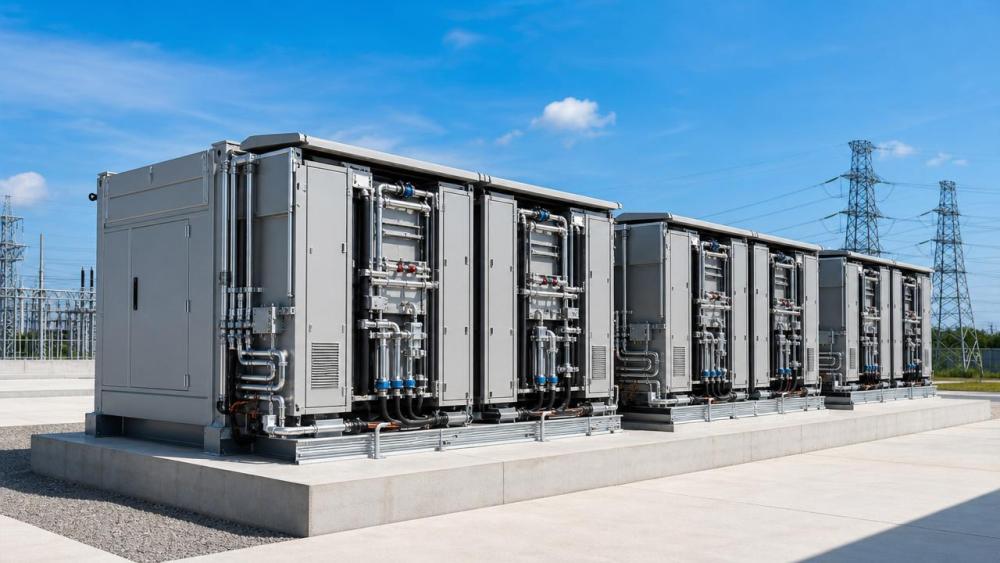
Vietnam Electricity Group (EVN) announced on May 16, 2026, an immediate suspension of approvals for all new liquid-cooled battery energy storage system (BESS) projects — a regulatory pause triggered by the pending release of Vietnam’s first national fire safety standard specifically for liquid-cooled battery enclosures. The move directly impacts domestic project development timelines and cross-border supply chains, particularly for Chinese BESS exporters targeting Vietnam’s rapidly expanding grid-scale storage market.
Event Overview
On May 16, 2026, EVN issued an official notice halting approval procedures for all newly proposed liquid-cooled BESS installations. The suspension remains in effect until the formal promulgation of the National Standard on Fire Safety for Liquid-Cooled Battery Enclosures. According to EVN, the standard is expected to be published in June 2026. Key technical requirements under draft review include a minimum thermal runaway propagation time of ≥30 minutes and end-to-end EMS-localized response latency of ≤200 ms. Chinese liquid-cooled BESS exporters are required to align delivery schedules and update technical documentation submissions accordingly.
Industries Affected
Direct Export Trading Companies: Firms engaged in BESS equipment export from China to Vietnam face immediate delays in project commissioning and contractual milestone fulfillment. Approval suspension impedes bankability of projects under negotiation, affecting letter-of-credit issuance and advance payment terms. Documentation re-submission — especially for EMS integration protocols and thermal test reports — will incur additional compliance overhead.
Raw Material Procurement Enterprises: Suppliers of specialized components — including dielectric coolants, flame-retardant thermal interface materials, and high-integrity gasketing — may experience short-term order volatility. Demand forecasting becomes less reliable as project pipelines stall; however, longer-term procurement strategies may shift toward pre-certified, Vietnam-compliant material grades once the standard is finalized.
Manufacturing Enterprises: BESS system integrators and OEMs must temporarily hold production ramp-up for Vietnam-bound units. Design validation cycles — particularly for cell-to-pack thermal management architecture and fire suppression interface logic — require re-evaluation against the upcoming national criteria. Factories with dual-market (e.g., EU/UL + Vietnam-targeted) production lines may prioritize certification alignment ahead of resumption.
Supply Chain Service Providers: Third-party testing labs, certification consultants, and local Vietnamese technical representatives face increased demand for gap analysis and pre-standard verification support. However, actual certification workload remains deferred until post-publication. Logistics and customs brokers may observe reduced near-term BESS-related import declarations, impacting ancillary service volumes.
Key Considerations and Recommended Actions
Monitor Official Standard Release Timing Closely
While EVN indicates a June 2026 publication window, historical precedent shows Vietnamese national standards often undergo inter-ministerial review delays. Exporters should track updates via the Ministry of Science and Technology’s National Standards Portal and maintain direct liaison with EVN’s Grid Planning Division.
Pre-validate EMS Integration Architecture
The ≤200 ms local EMS联动 (local EMS联动 translated as ‘local EMS-triggered response’) requirement implies stringent hardware-software co-design. Exporters should verify real-time control loop latency across BMS–EMS–fire detection subsystems using third-party benchmarking tools — not just vendor-provided simulation data.
Update Technical Dossiers with Vietnam-Specific Test Evidence
Anticipate that EVN will require localized thermal runaway propagation test reports conducted under Vietnamese ambient conditions (e.g., 35–40°C average ambient, high humidity). Preparing such evidence in advance — even if provisional — accelerates post-standard submission processing.
Editorial Perspective / Industry Observation
Observably, this suspension reflects Vietnam’s maturing regulatory posture: rather than adopting international norms wholesale (e.g., UL 9540A or IEC 62933-4), it is developing context-specific performance thresholds aligned with local grid infrastructure constraints and fire brigade response capacity. Analysis shows that the 30-minute propagation threshold is significantly more conservative than current ASEAN regional benchmarks — suggesting Vietnam intends to position itself as a high-safety-tier market. This trend is unlikely to reverse; instead, it signals a broader regional shift toward nationally tailored BESS safety governance.
Conclusion
This regulatory pause is not a signal of market contraction but rather a transitional inflection point — one that rewards proactive compliance readiness over speed-to-market alone. For international suppliers, the episode underscores that technical interoperability and safety sovereignty are now inseparable dimensions of energy storage market access in emerging economies.
Source Attribution
Official notice issued by Vietnam Electricity Group (EVN), dated May 16, 2026 (reference no. EVN/TC-2026/087); draft standard referenced in Minutes of the National Technical Committee on Energy Storage Systems (TC 32), April 2026. Standard final text remains pending publication at the Vietnam Standards and Quality Institute (STAMEQ). Ongoing monitoring advised for amendments to Decree No. 13/2023/ND-CP on renewable energy investment incentives, which may be updated to reflect new BESS safety prerequisites.
Related News
- Vietnam Sets 2026 Standalone Storage Price Ceiling at VND 3,209.98/kWhNov 12, 2026Energy Storage Strategist
- NTPC Green Energy Tenders 10 GW/40 GWh Storage Systems and Grid-Forming PCSNov 10, 2026Energy Storage Strategist
- Australia’s NEM Battery Storage Reaches Record 20.17 GWhNov 09, 2026Energy Storage Strategist
- India Approves ₹145 Billion VGF Plan for 92 GWh of Energy StorageNov 07, 2026Energy Storage Strategist